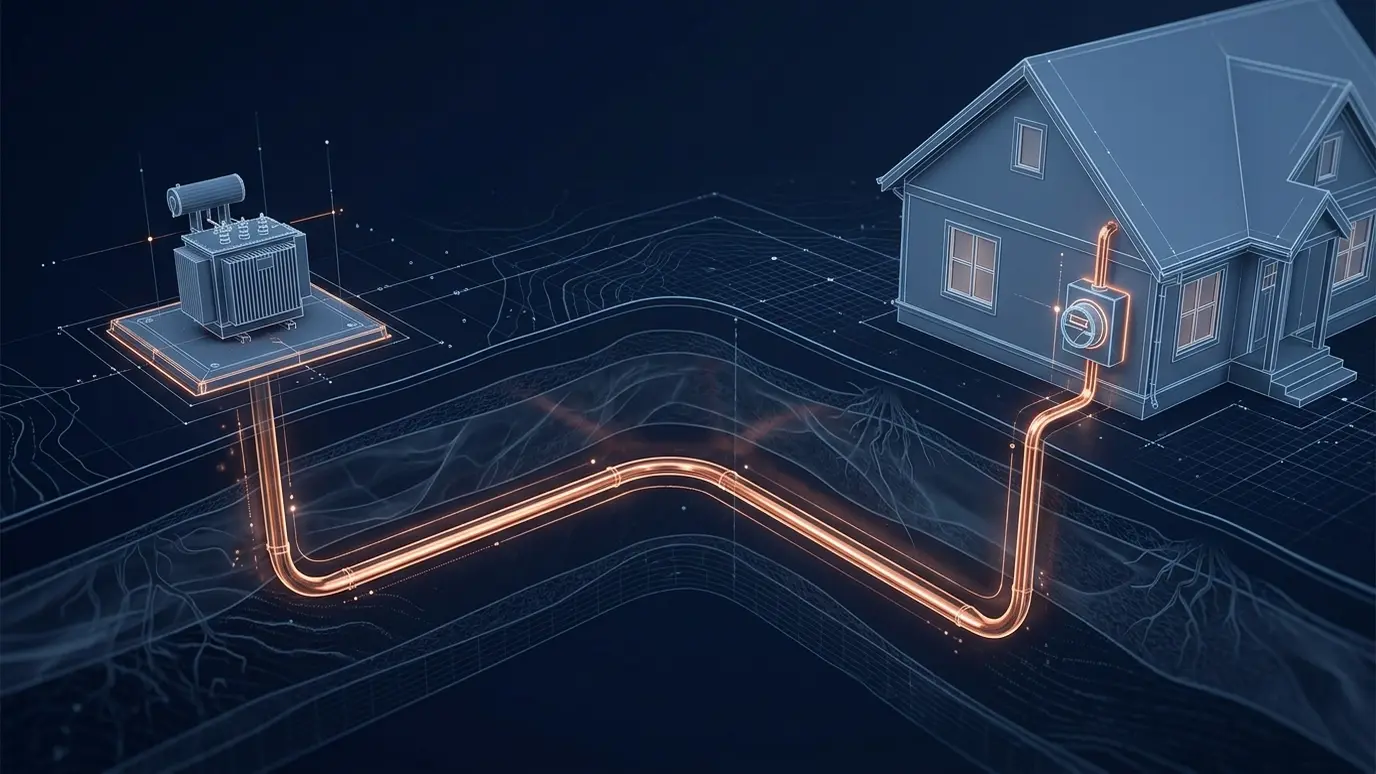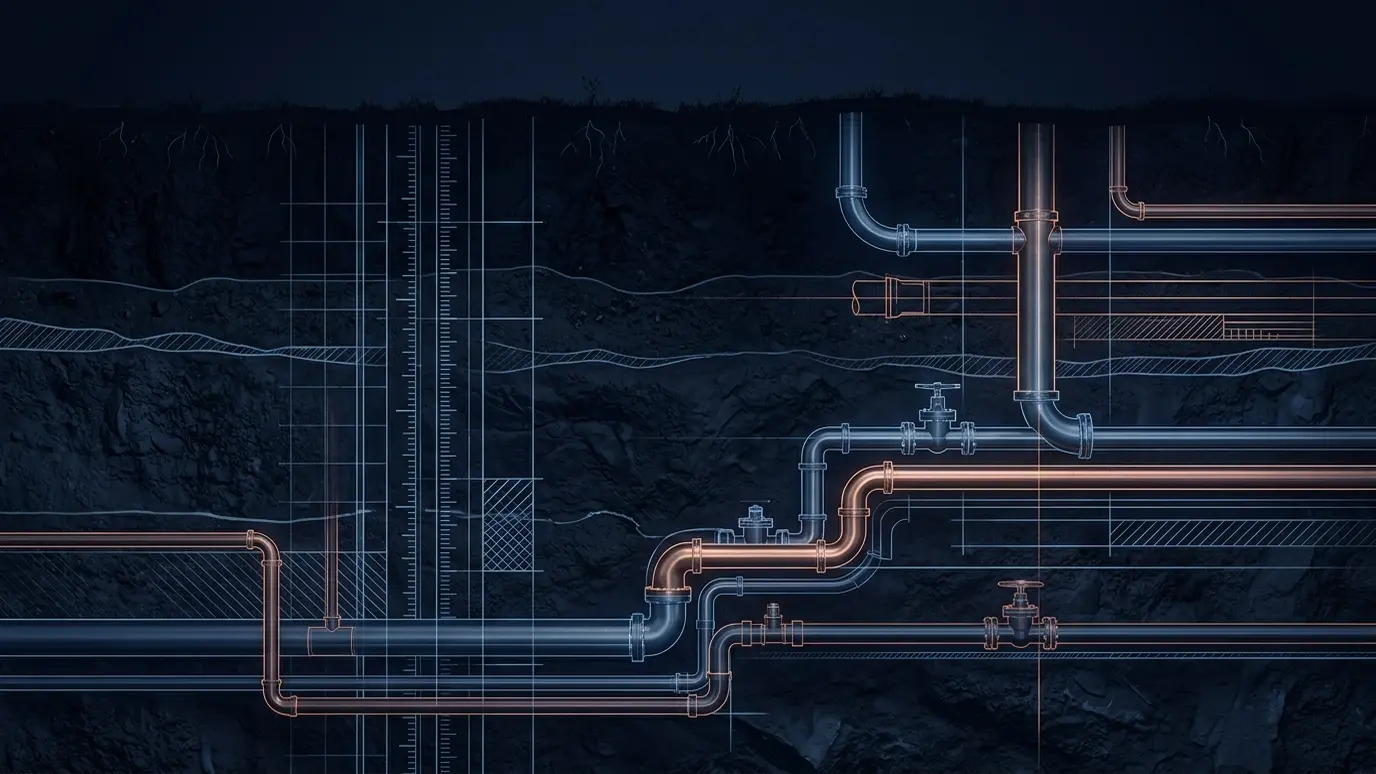
Single conduits and multi-duct banks, spaced, supported and encased so cable can be pulled now and added later.
Conduit is inexpensive compared with the cost of digging again. A well-planned duct bank gives a property room to grow: more power, new data lines, extra circuits for a future building. The trick is to build it so that cable can actually be pulled through it years later.
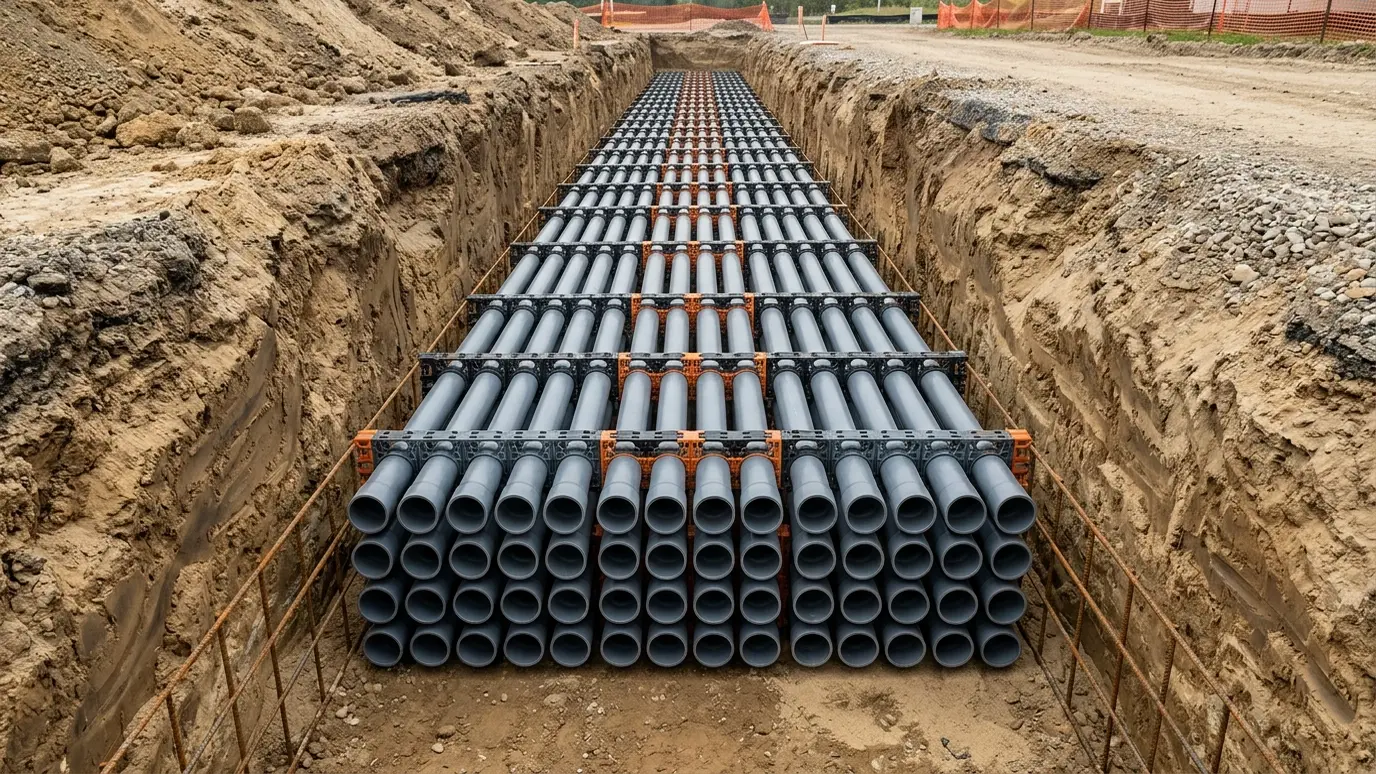
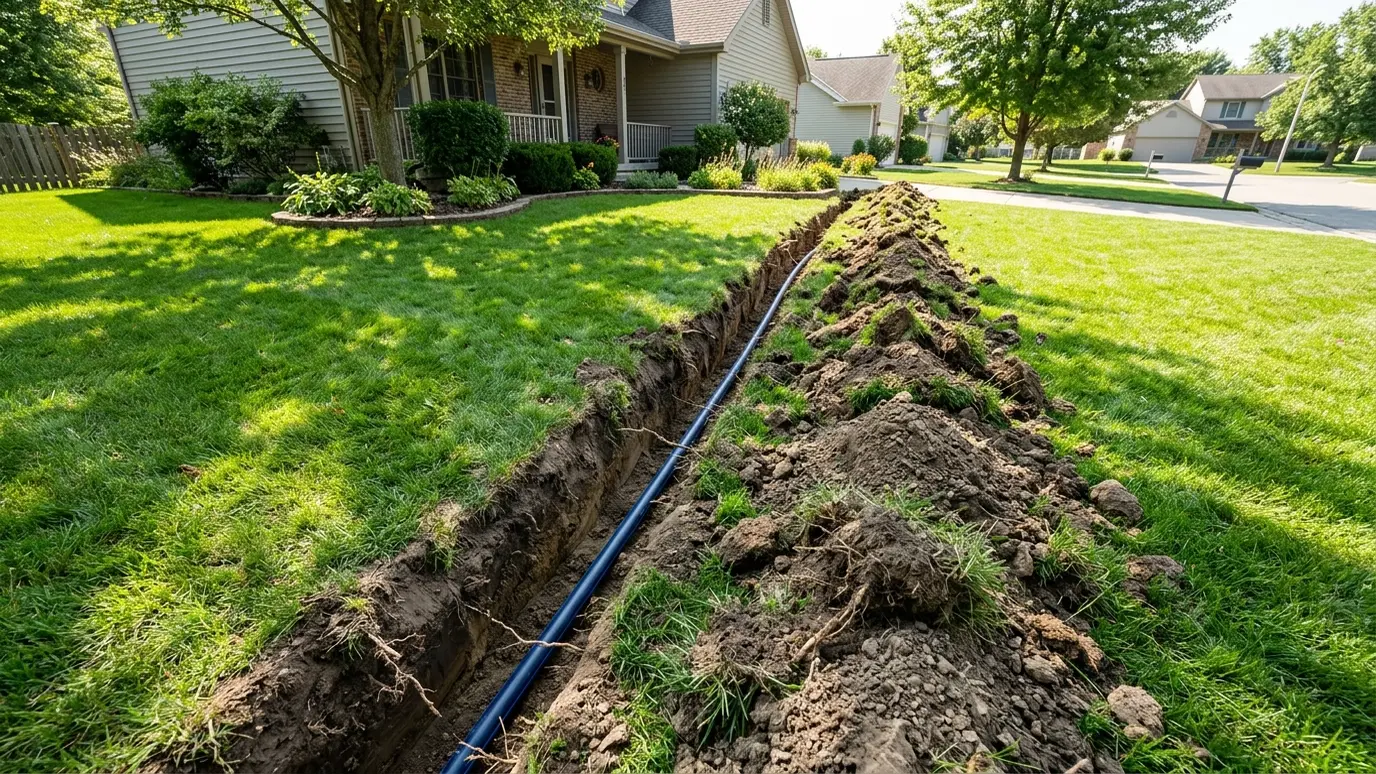
We install PVC and rigid conduit in single runs and in multi-duct banks. Ducts are held apart with spacers, joints are cemented and supported, and the bank is encased in concrete or backfilled with the specified material where the plans require. Pull strings go into every empty duct, and ends are capped so dirt and water stay out.
Spacers keep ducts at the right distance and prevent floating when concrete is placed. Without them, the bank ends up uneven and cable pulls get harder.
Ducts stay clear only if we protect them. We cap the ends, run a pull string and mark each duct so electricians know which is which.
Adding a spare duct while the trench is open costs very little. Opening the ground again later costs a great deal, so we usually suggest one or two spares.
A duct bank that nobody can find is a hazard to the next digger. We provide a route record and use warning tape and markers so the bank can be located and respected.
Drag the handle to compare.
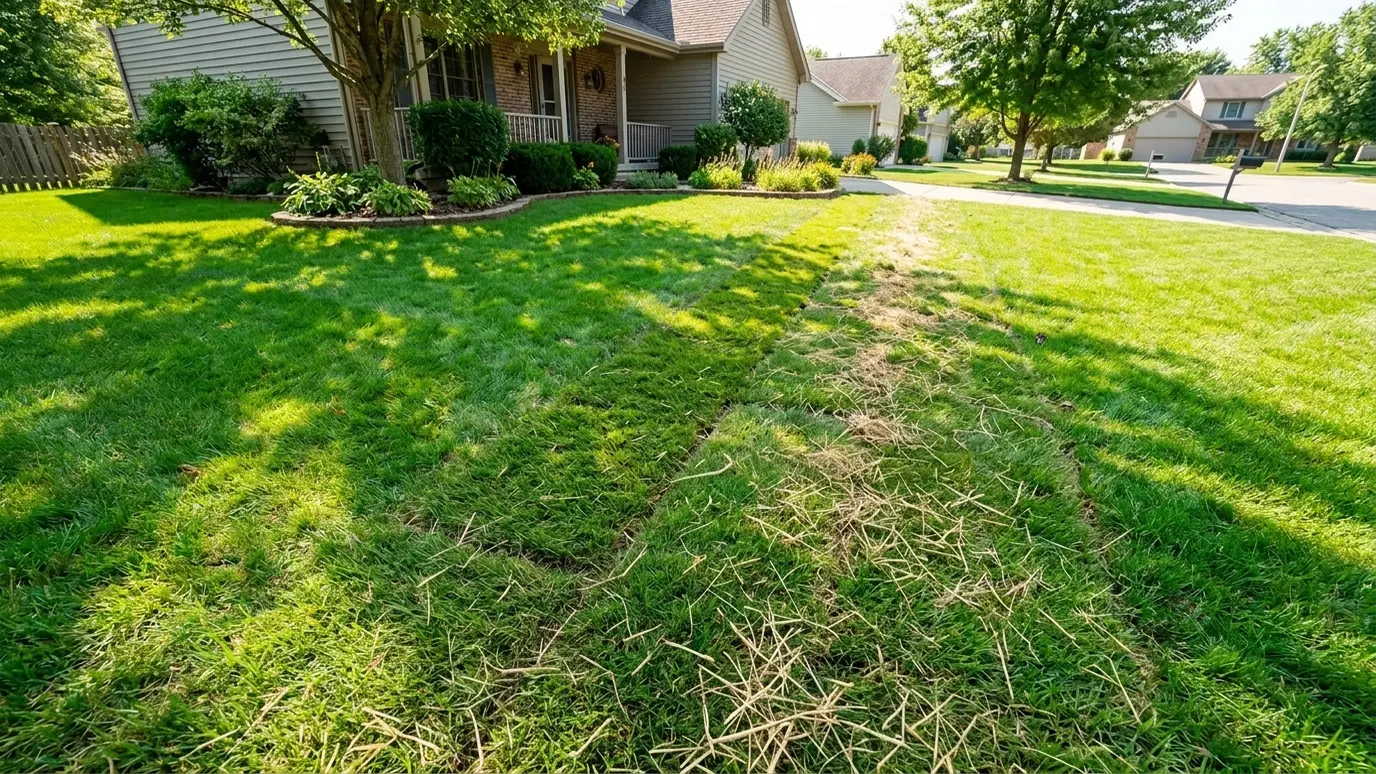
 BeforeAfter
Ducts held at the right distance.
Gentle bends for easy pulls.
Concrete and backfill to the plan.
Every duct ready for cable.
Clean ducts and clear labels.
Room for future cable.
Every topic has its own page with what to expect and how we approach it.
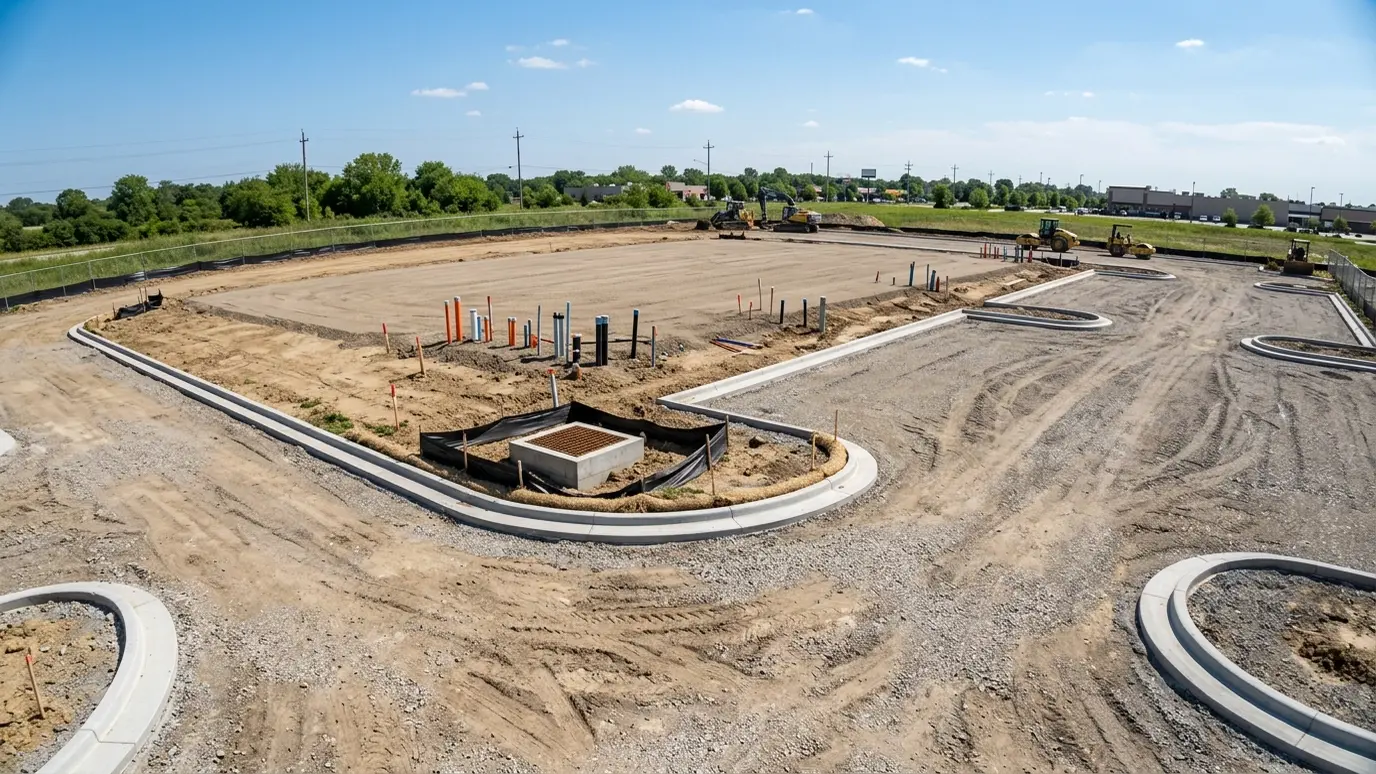 SituationCommercial and IndustrialUtilities for stores, offices and industrial sites: fire lines, vaults, sewer, storm, power and conduit, built to the…Learn more
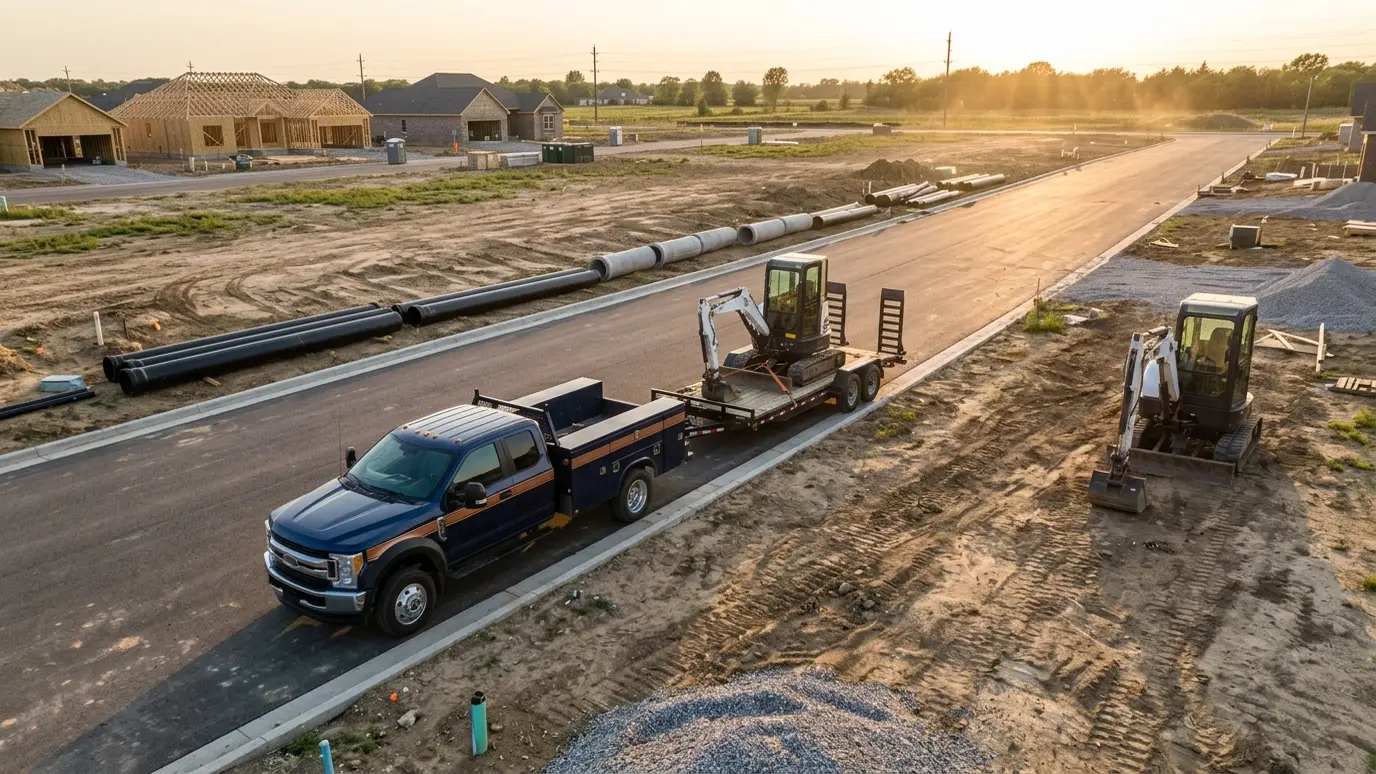 SituationDevelopers and BuildersInfrastructure for subdivisions and multi-lot projects: schedules, sequencing, inspections and clean hand-offs to the next trades.Learn more
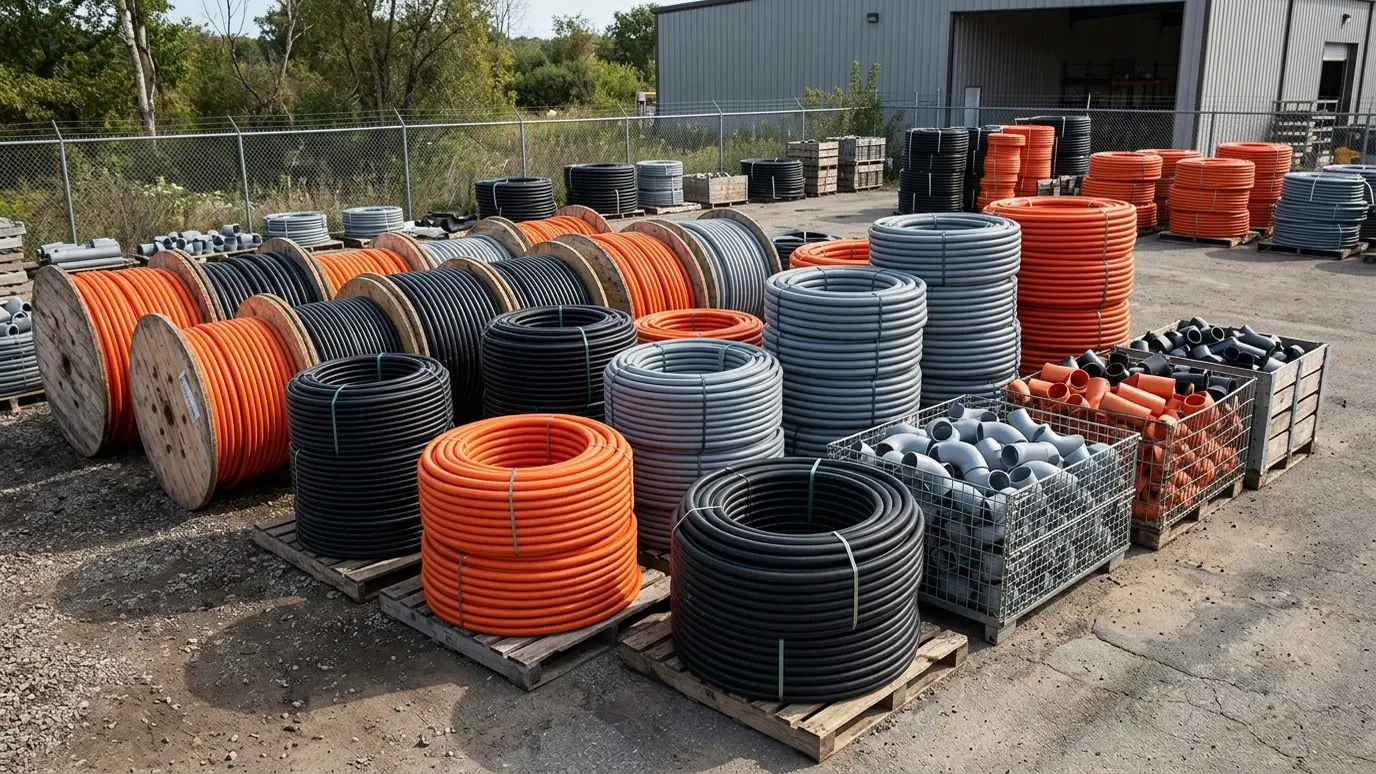 Material guideElectrical ConduitPVC, rigid steel, HDPE and flexible conduit: which kind goes where, how deep it is buried and how…Learn more
Enter trench length, width and depth and see cubic yards of soil, truckloads and bedding stone to plan for.
Tell us what you need and send photos or a site plan if you can. We plan the visit so we arrive ready.
We call 811, walk the site, confirm lines and plan the route and depth.
You get a clear written price, and we agree a day and an arrival window.
Trenching or boring to the plan, with safe walls, careful spoil handling and protection for your lawn.
Pipe or conduit laid on a good bed, joints checked, tests and inspections done before cover-up.
Compacted backfill, grading, sod or paving repair and a walk-through with you.
A group of conduits installed together, usually encased in concrete, that carry power or communication cables under a site.
It depends on the project. One or two spares are common when the trench is already open.
Concrete needs time to cure. We tell you when the bank is ready for the electrician.
Yes. We set boxes and handholes at the locations shown, level with the finished grade.
We provide a simple record of the route and install warning tape above the bank.
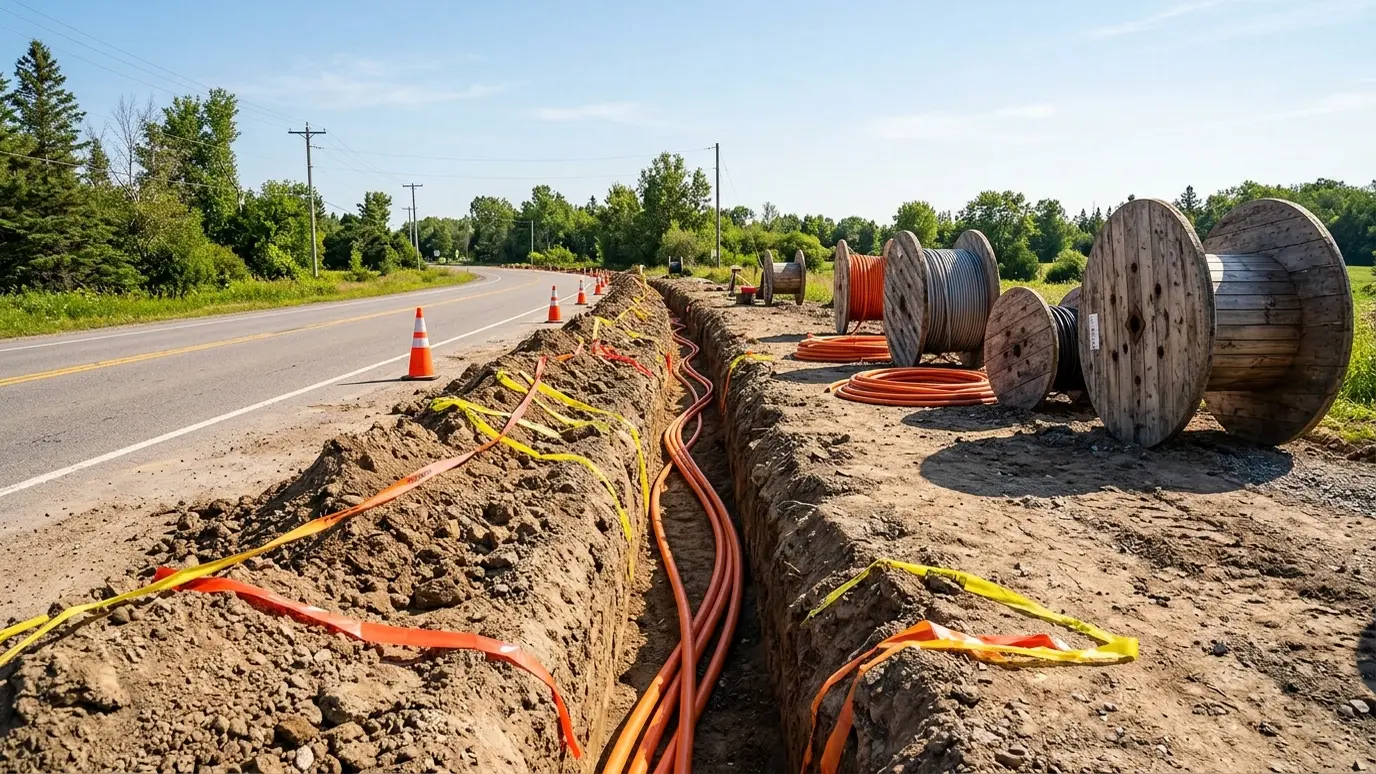 Underground Power LinesPrimary and secondary power lines placed underground in trenches and bores, built to the utility specification.Explore
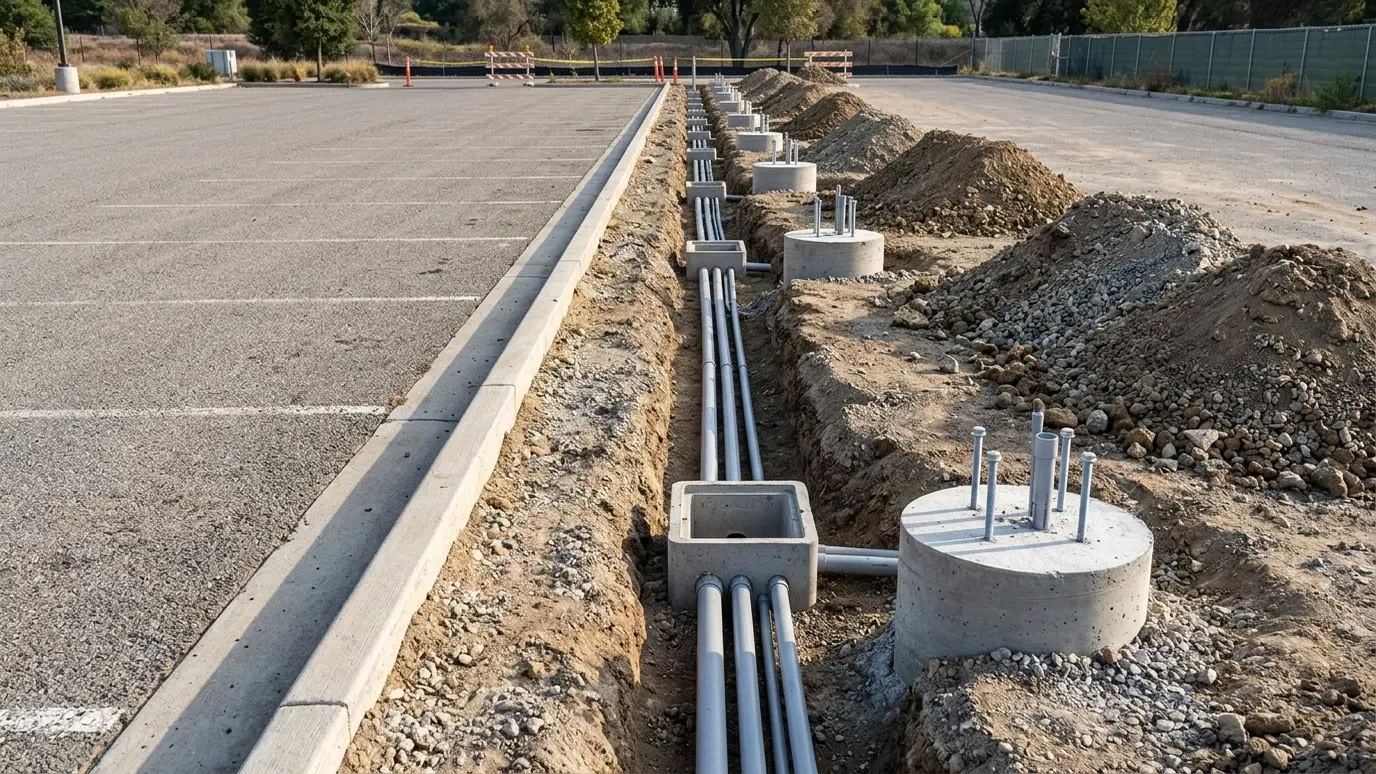 Site Lighting TrenchingTrenches, conduit, pull boxes and pole bases for parking lot, walkway and landscape lighting circuits.Explore
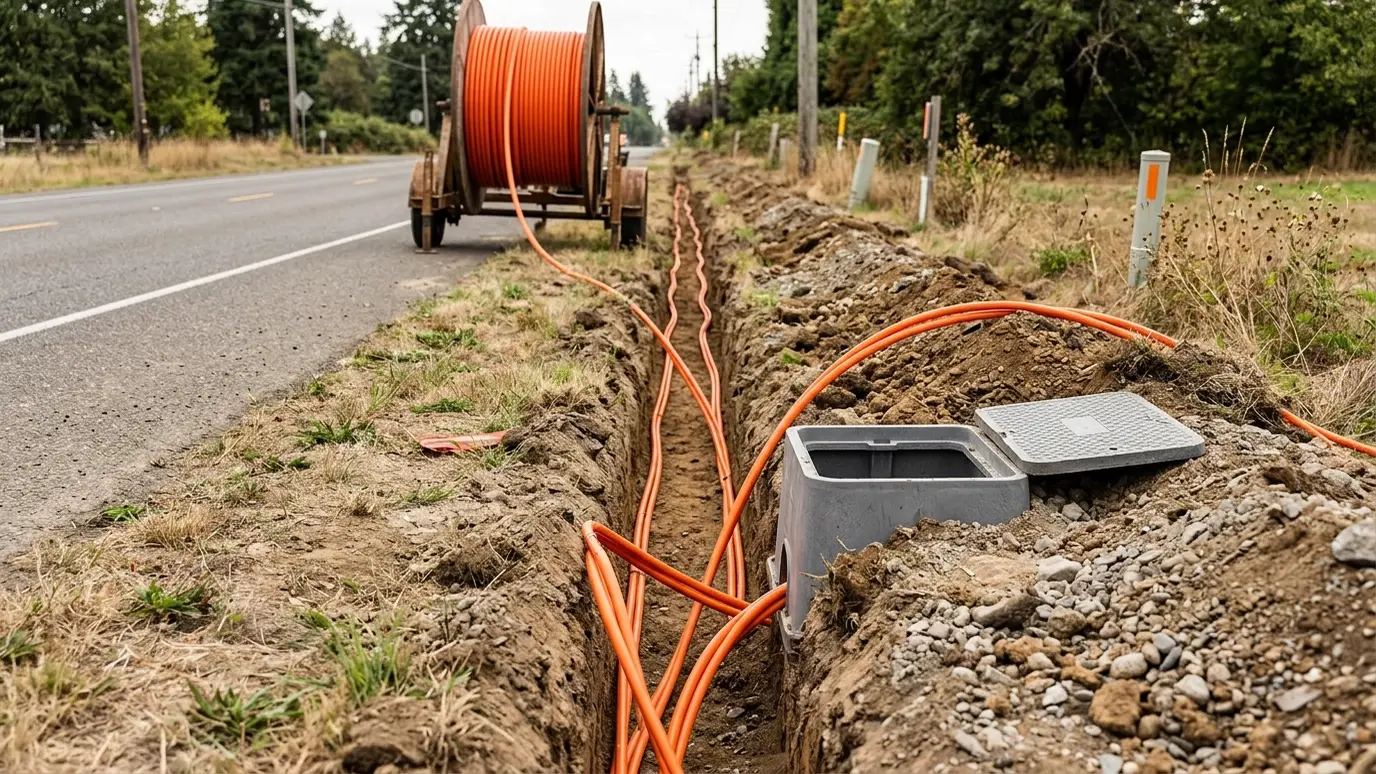 Fiber ConduitConduit, handholes and trenches or bores for fiber networks serving homes, campuses and business parks.Explore
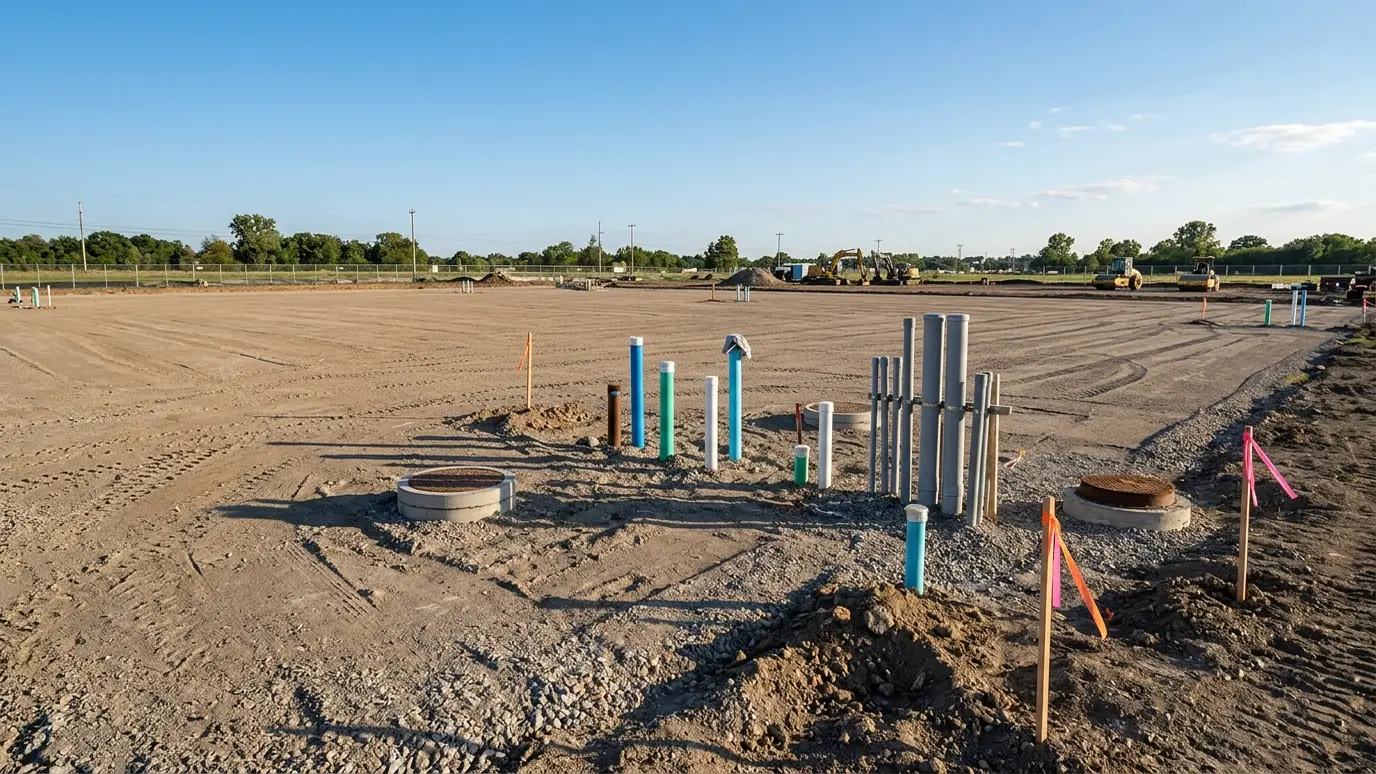 Commercial Site UtilitiesUnderground water, sewer, storm, fire and electrical systems for stores, offices, warehouses and industrial buildings.Explore
Tell us about the job and we will call you back quickly.
Or call (615) 357-7797 to talk now.