Compaction first
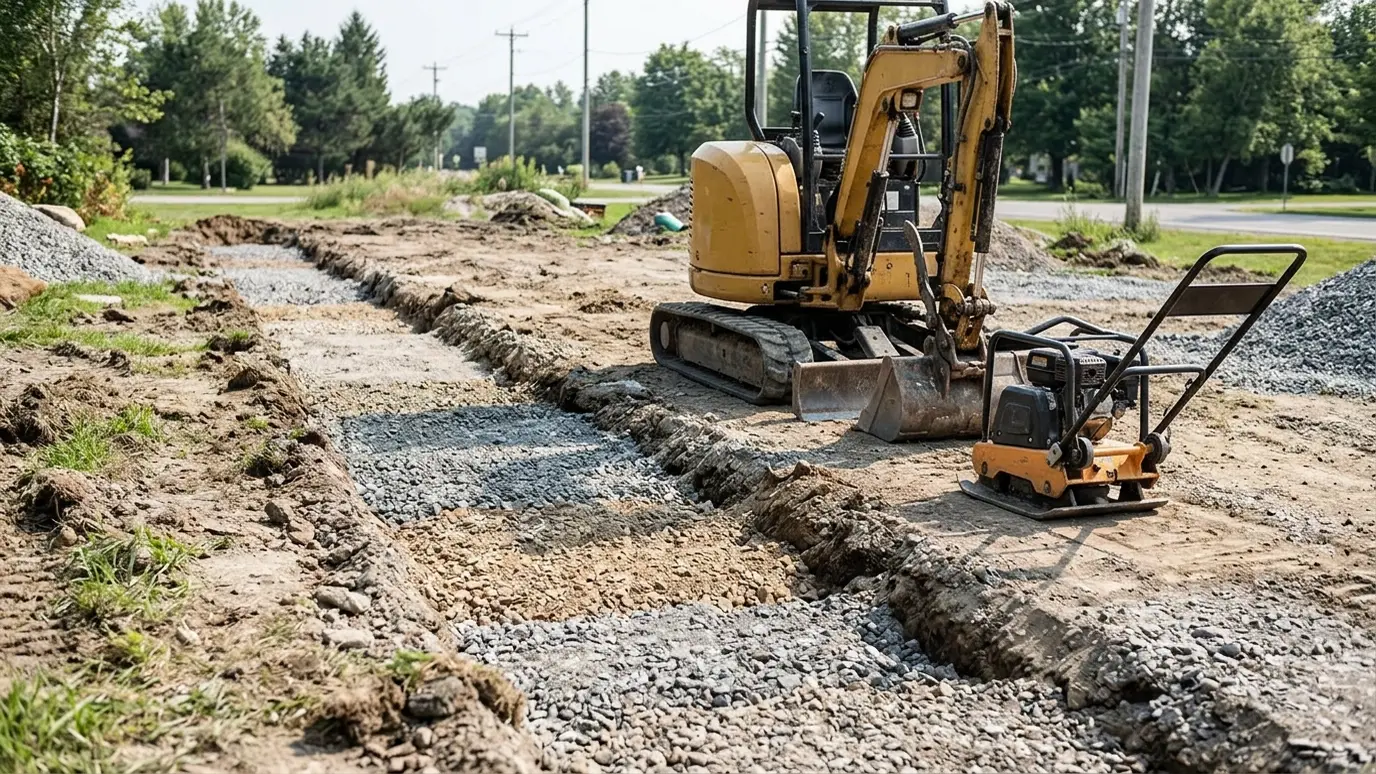
A beautiful surface over loose fill will sink. Good restoration starts with compacted backfill in layers, so the trench line holds its shape after the first rains.
Grade and drainage
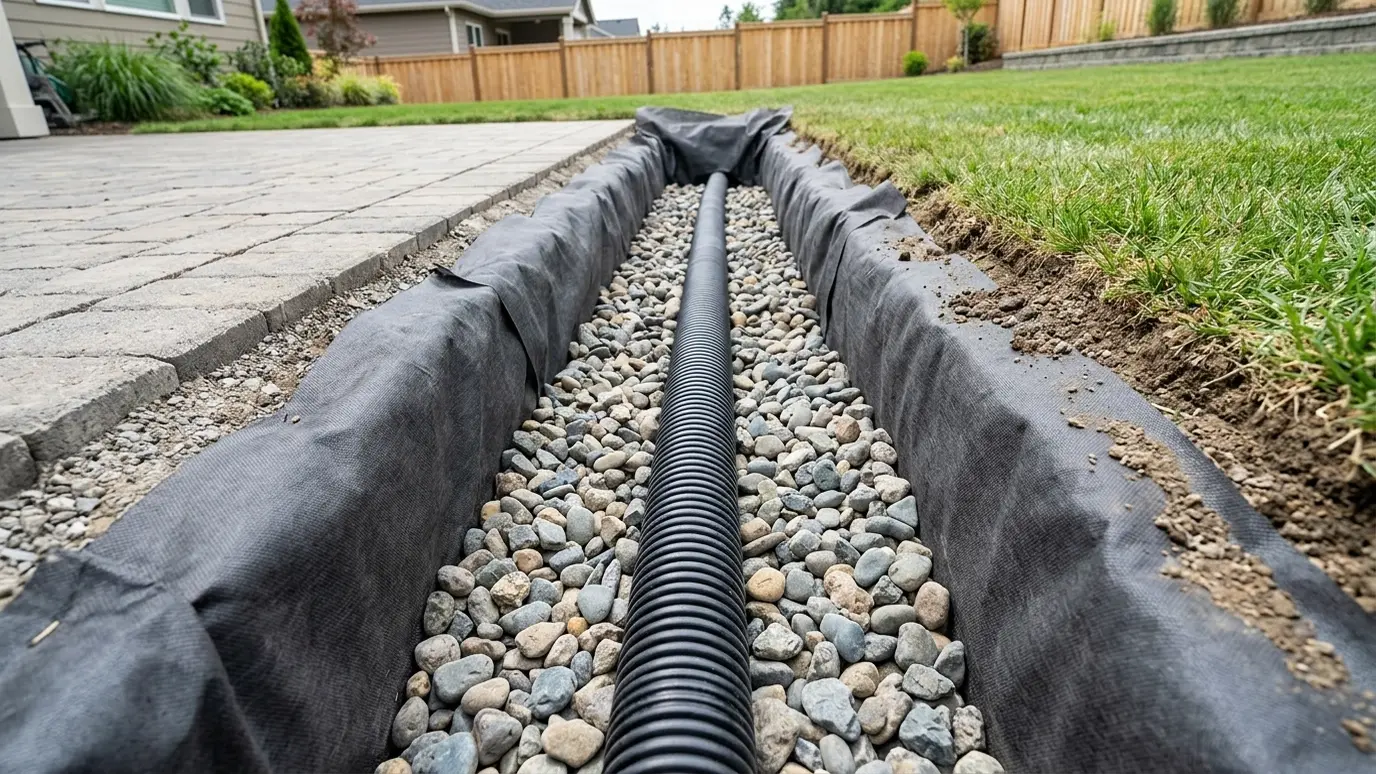
The restored line should blend into the lawn and drain like the rest. A slight crown settles to flat. A trench that is too low collects water and sinks further.
Sod or seed
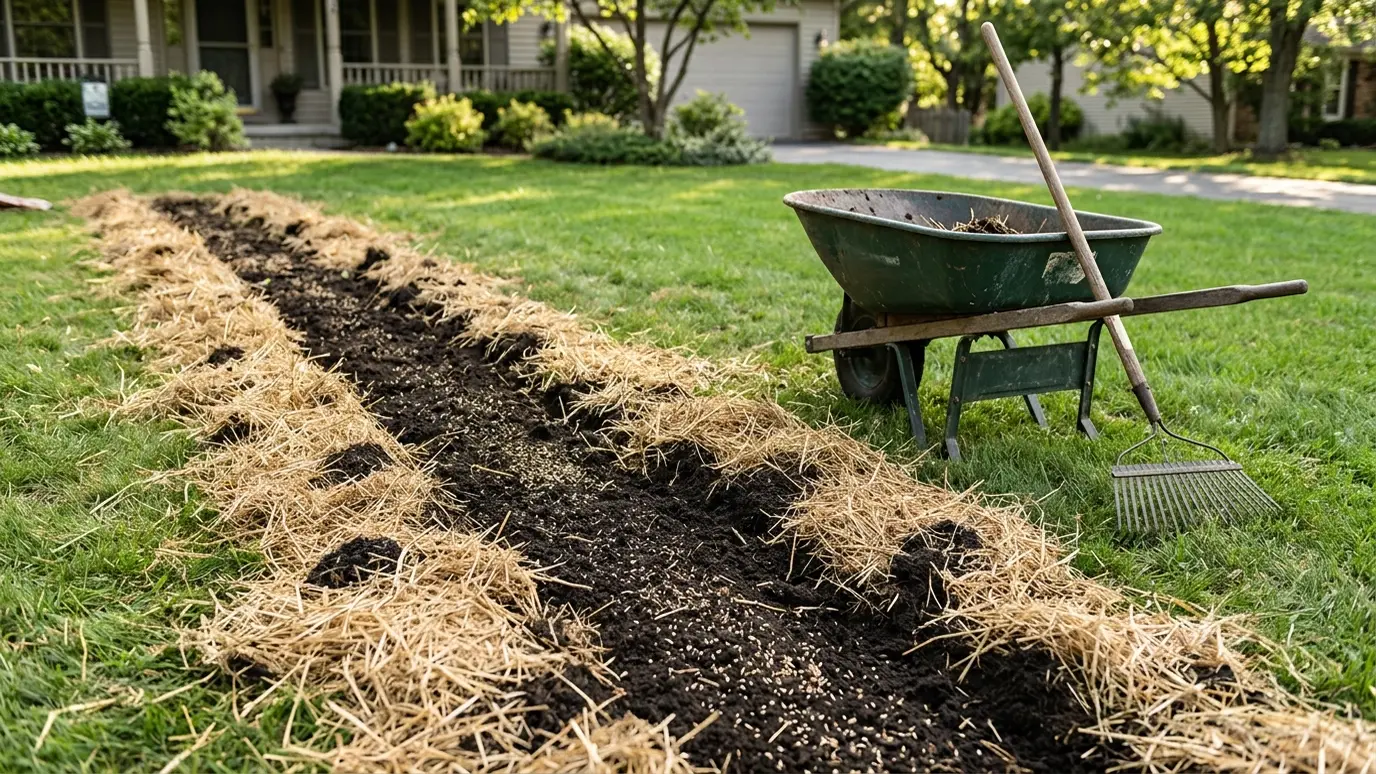
Sod gives an instant lawn but needs a prepared base and daily watering. Seed with straw is cheaper and takes longer. Both depend on topsoil, moisture and time.
Concrete and asphalt
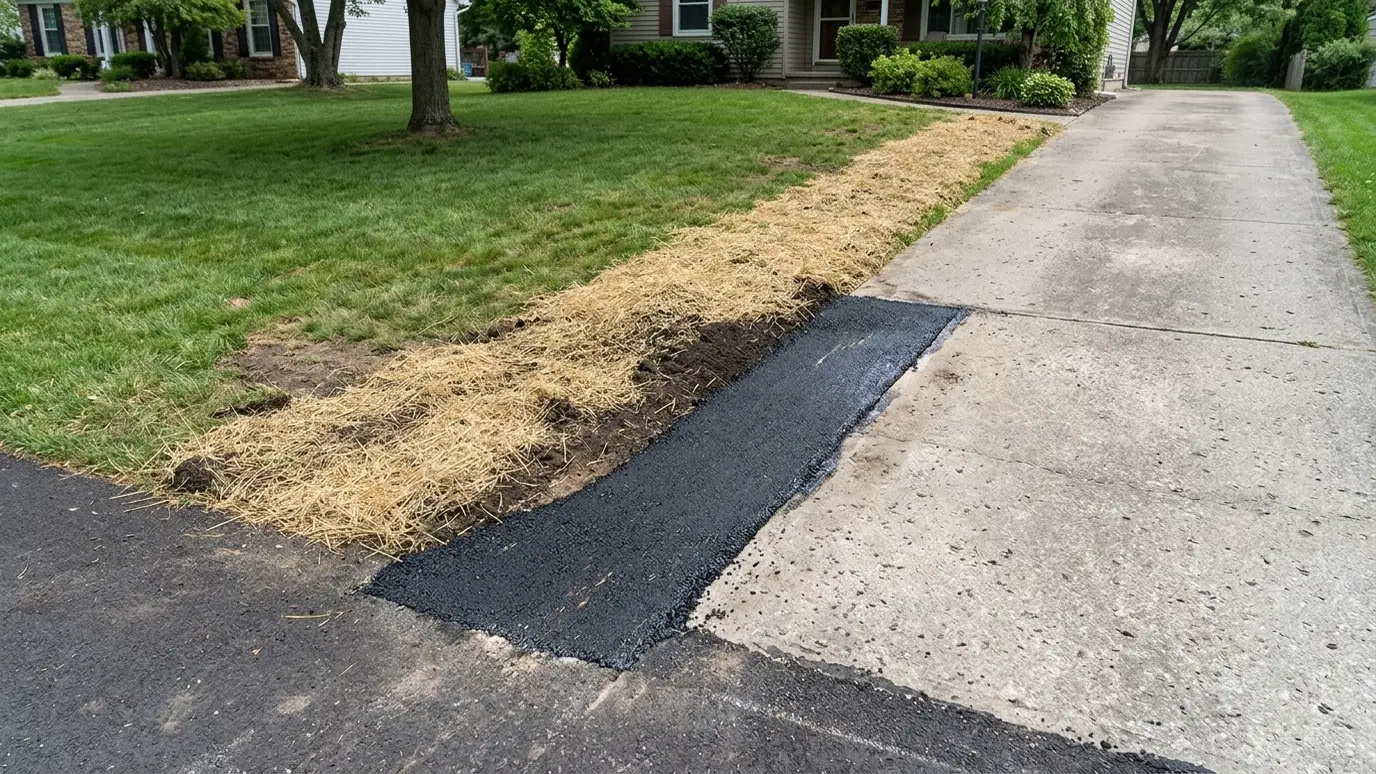
Concrete patches need straight saw cuts, a firm base and a matching finish. Asphalt patches need squared edges, compaction and sealed joints. Neat edges look better and last longer.
Aftercare
Water new grass as directed, keep traffic off new sod and delay heavy mowing. Watch for settling and ask for a follow-up if the line sinks.
Set expectations
Restoration never looks identical on day one. A good job blends in over a few weeks, and color and texture catch up with time and water.
Compact the trench, grade it to drain, water it well and give it a few weeks.