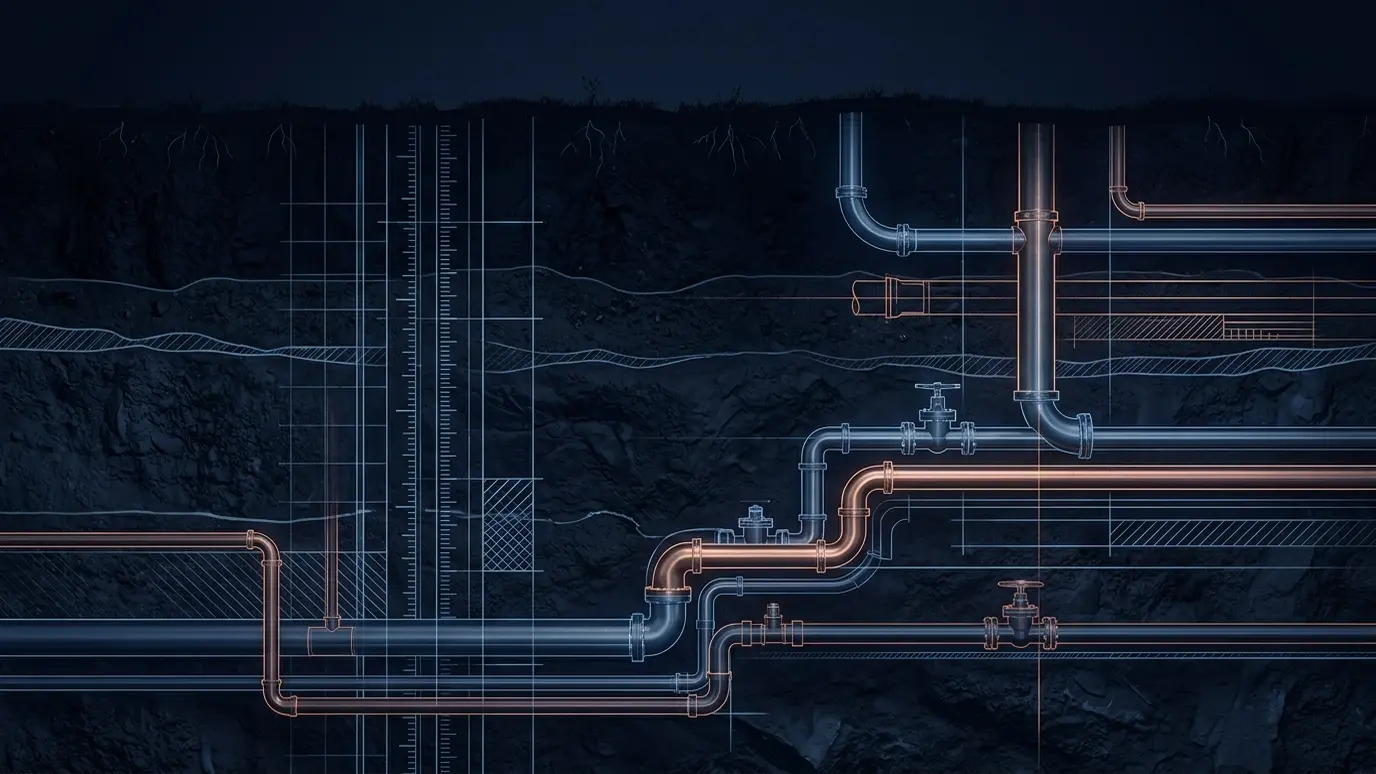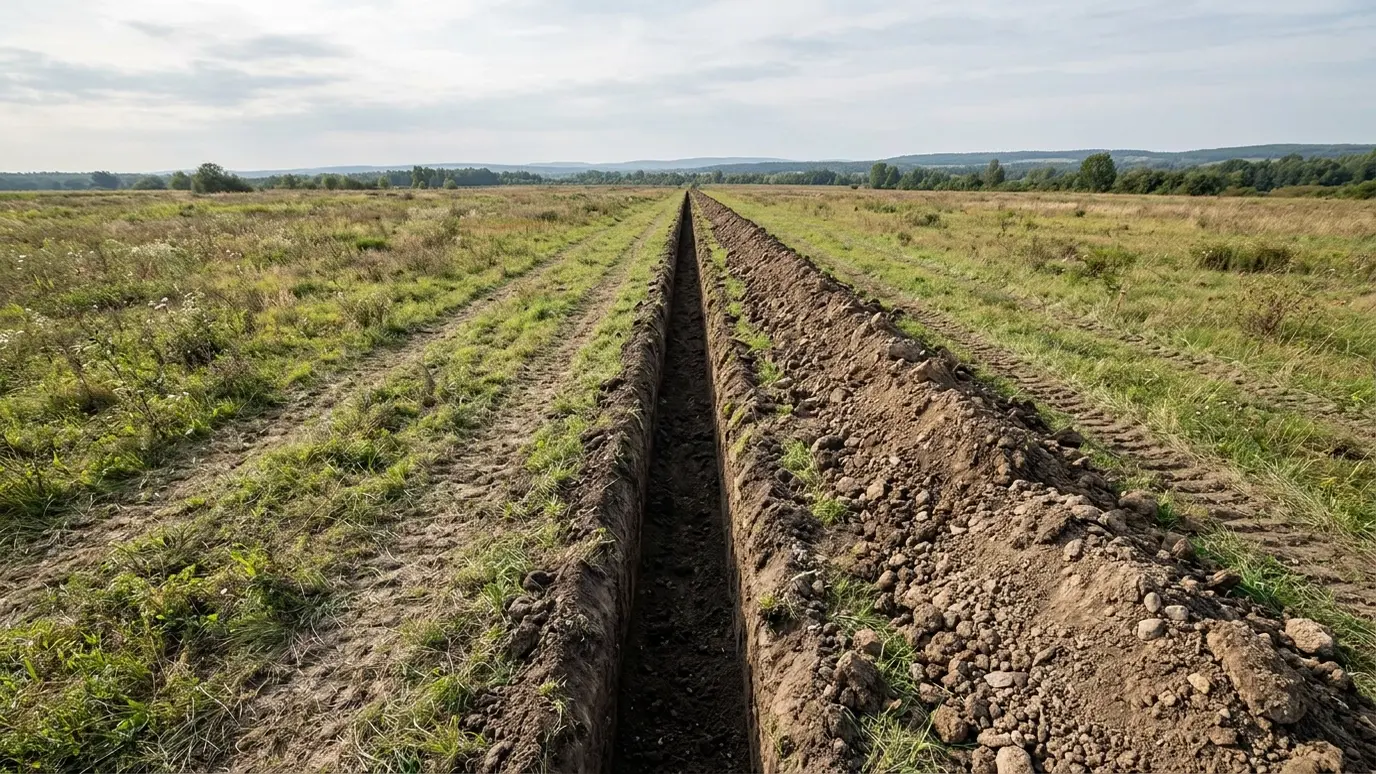
Straight, clean trenches for water, sewer, electric, gas and communication lines, cut to depth and width by machines that match the soil.
A trench is the simplest, most reliable way to put a line underground. It is also where most of the risk in underground work lives: cave-ins, buried utilities, heavy equipment near an edge. A good trench is dug straight, to the right depth and width, with the walls and the spoil handled safely.
We cut trenches with chain trenchers, mini excavators and full-size excavators, choosing the machine for the soil, depth and access. We stack the spoil away from the edge, keep the trench clear of water and shore or slope deep sections. Narrow, clean trenches mean less backfill, less lawn damage and a better finished result.
A chain trencher cuts narrow, shallow lines quickly across open ground. An excavator handles deeper, wider trenches and tight spots. We use whichever suits the line.
Trench walls collapse without warning. We slope, bench or shore trenches deeper than allowed and keep spoil and equipment back from the edge.
Line, grade and trench width matter for the pipe or conduit that goes in. We keep the bottom smooth and free of rocks, and dig only as wide as the work needs.
Rain softens trench walls and fills trenches with water. A deep trench after a storm is dangerous. We inspect every trench before work and reschedule when conditions are unsafe.
Drag the handle to compare.
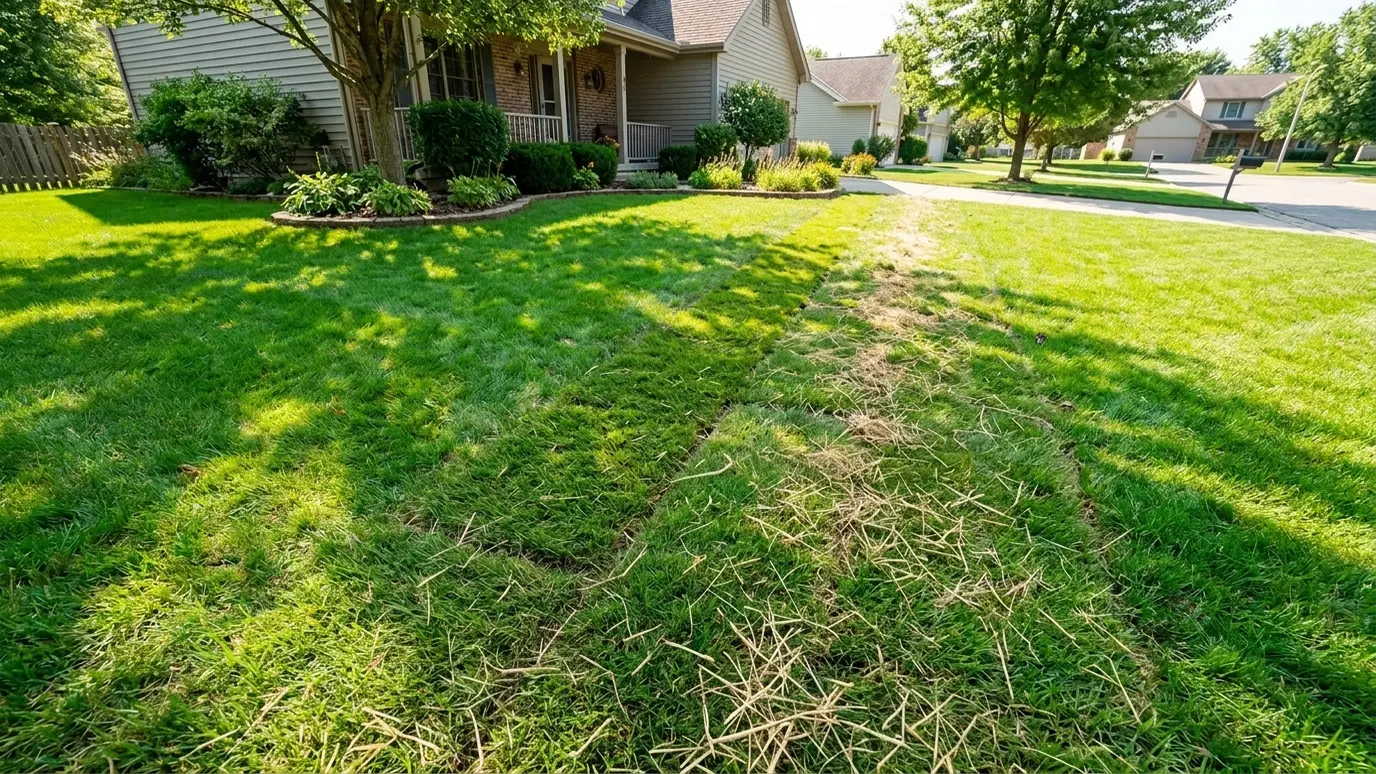
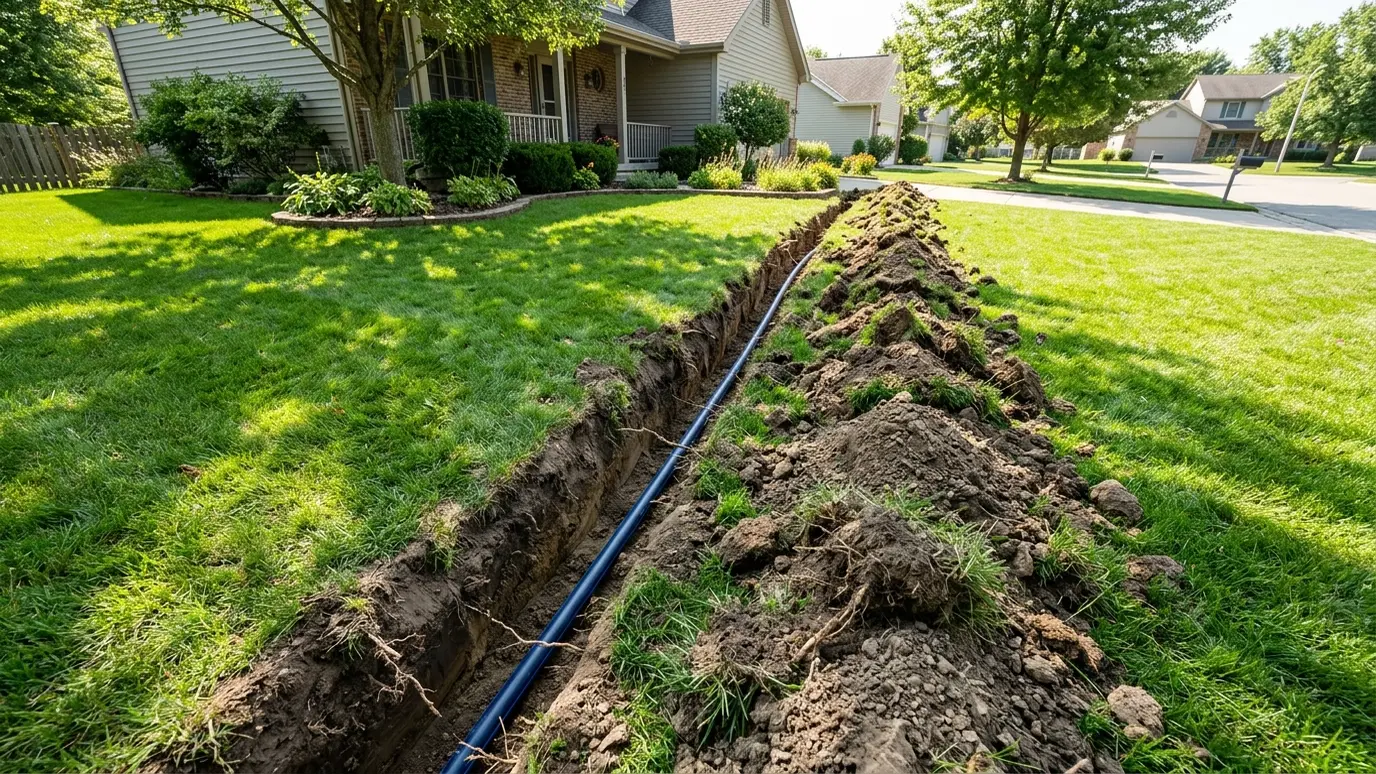 BeforeAfter
Straight, to depth and width.
Trencher or excavator by need.
Sloped or shored as required.
Smooth bottom for the line.
Stacked away from the edge.
Marked utilities avoided.
Every topic has its own page with what to expect and how we approach it.
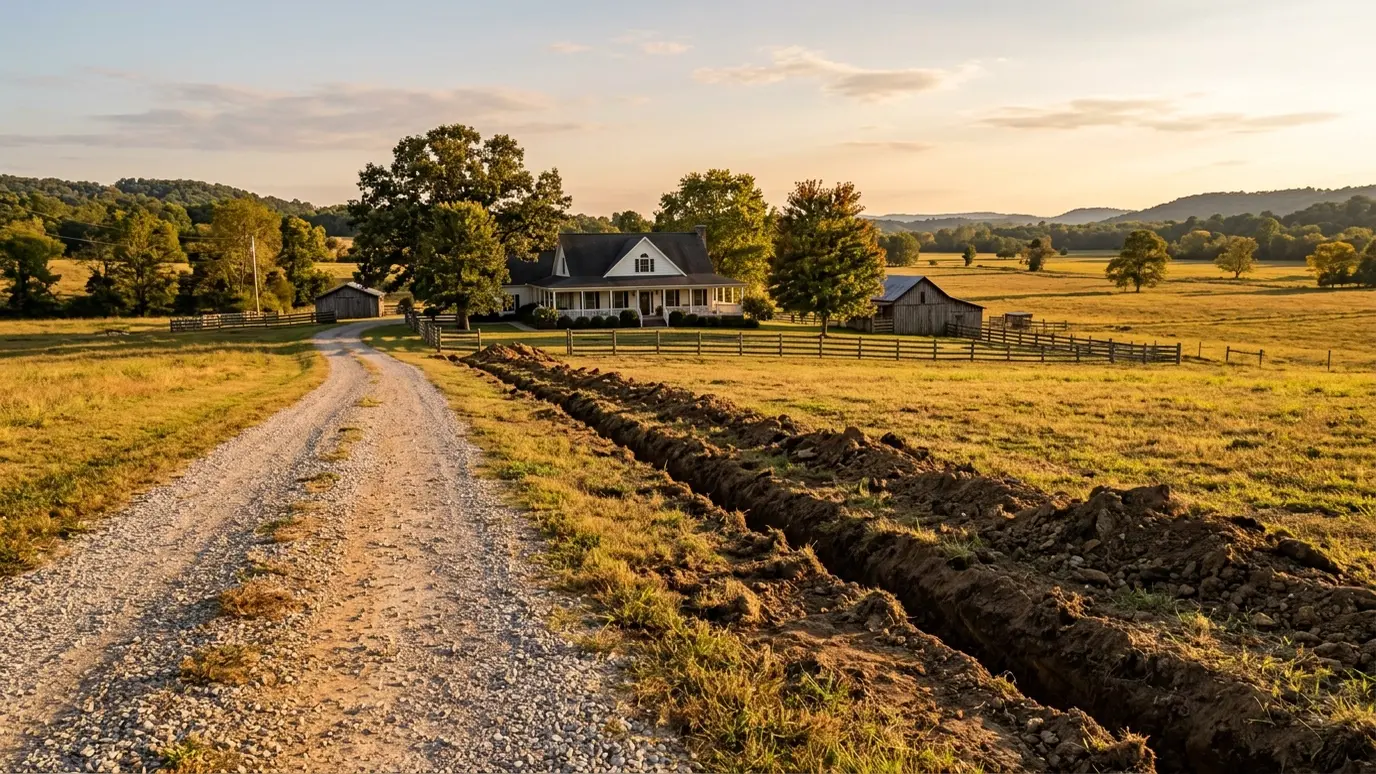 SituationRural and AcreageLong runs for water, power, propane and septic on farms and country lots, through rock, creeks and fields.Learn more
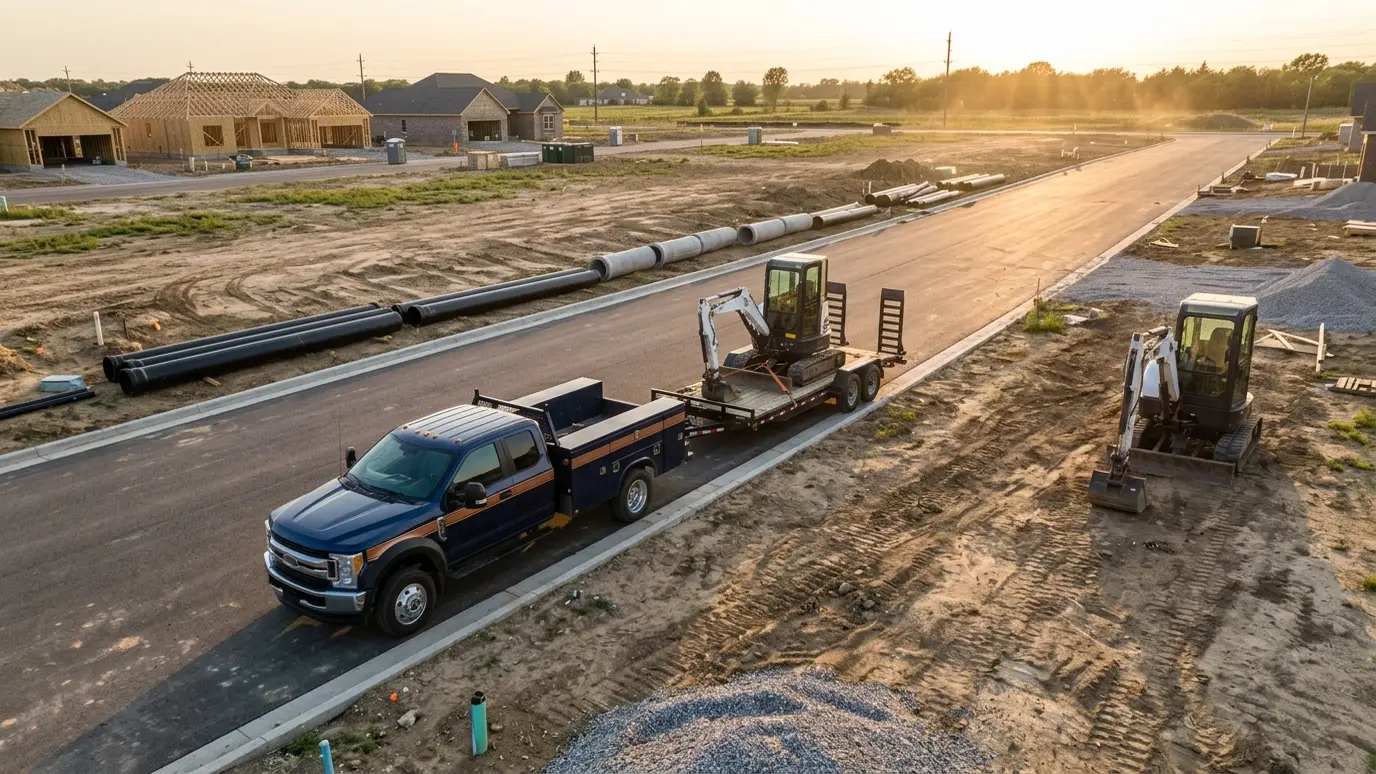 SituationDevelopers and BuildersInfrastructure for subdivisions and multi-lot projects: schedules, sequencing, inspections and clean hand-offs to the next trades.Learn more
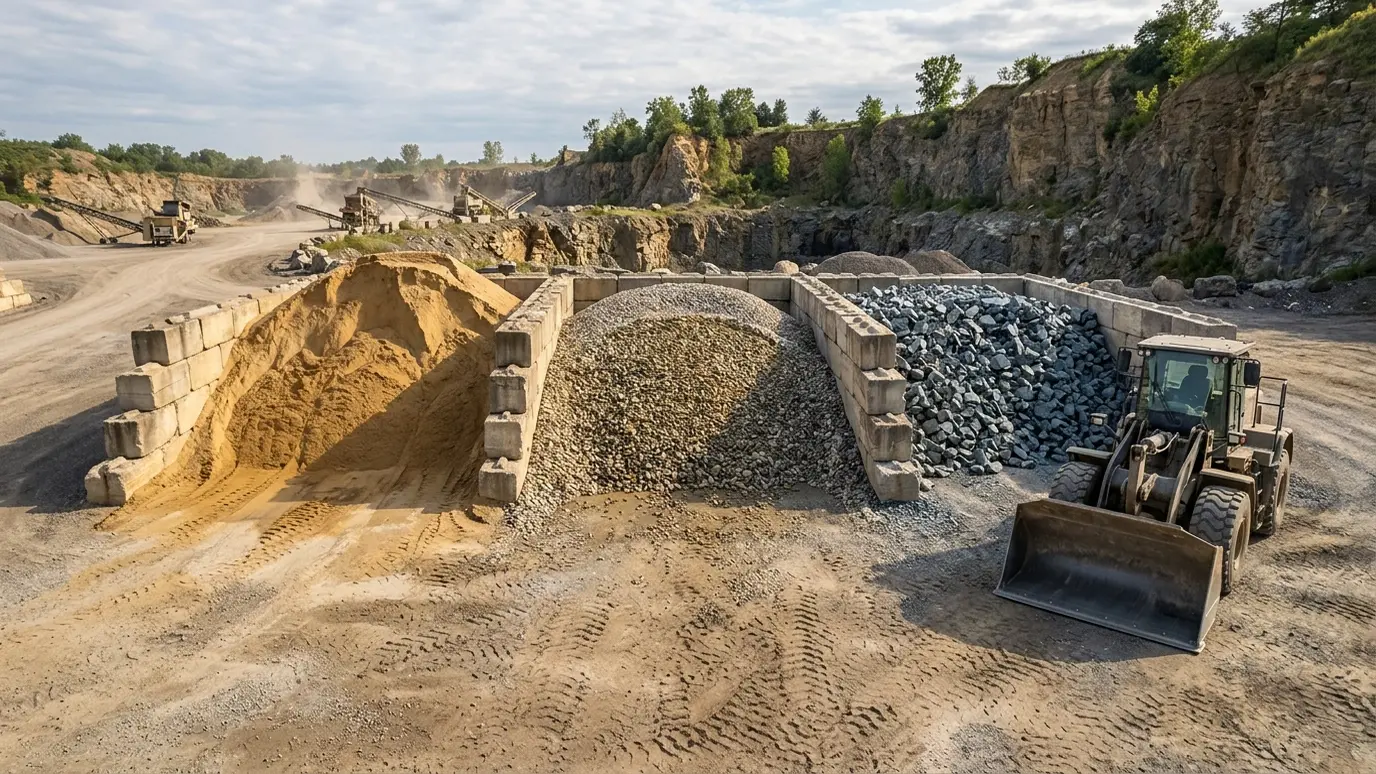 Material guideBedding and BackfillSand, washed stone and select fill: what goes around a pipe, what goes above it and why the…Learn more
Enter trench length, width and depth and see cubic yards of soil, truckloads and bedding stone to plan for.
Tell us what you need and send photos or a site plan if you can. We plan the visit so we arrive ready.
We call 811, walk the site, confirm lines and plan the route and depth.
You get a clear written price, and we agree a day and an arrival window.
Trenching or boring to the plan, with safe walls, careful spoil handling and protection for your lawn.
Pipe or conduit laid on a good bed, joints checked, tests and inspections done before cover-up.
Compacted backfill, grading, sod or paving repair and a walk-through with you.
It depends on the pipe or conduit. We dig only as wide as the work requires, which saves backfill and lawn damage.
Light rain is manageable. Heavy rain makes trenches unsafe and messy, and we may reschedule.
We slope or shore deep trenches, keep spoil back and watch for water and nearby utilities.
We protect sod where possible and restore it afterward. Narrow trenchers leave a smaller scar.
Light rain is fine. Heavy rain or saturated soil can make trenches unsafe, and we may wait.
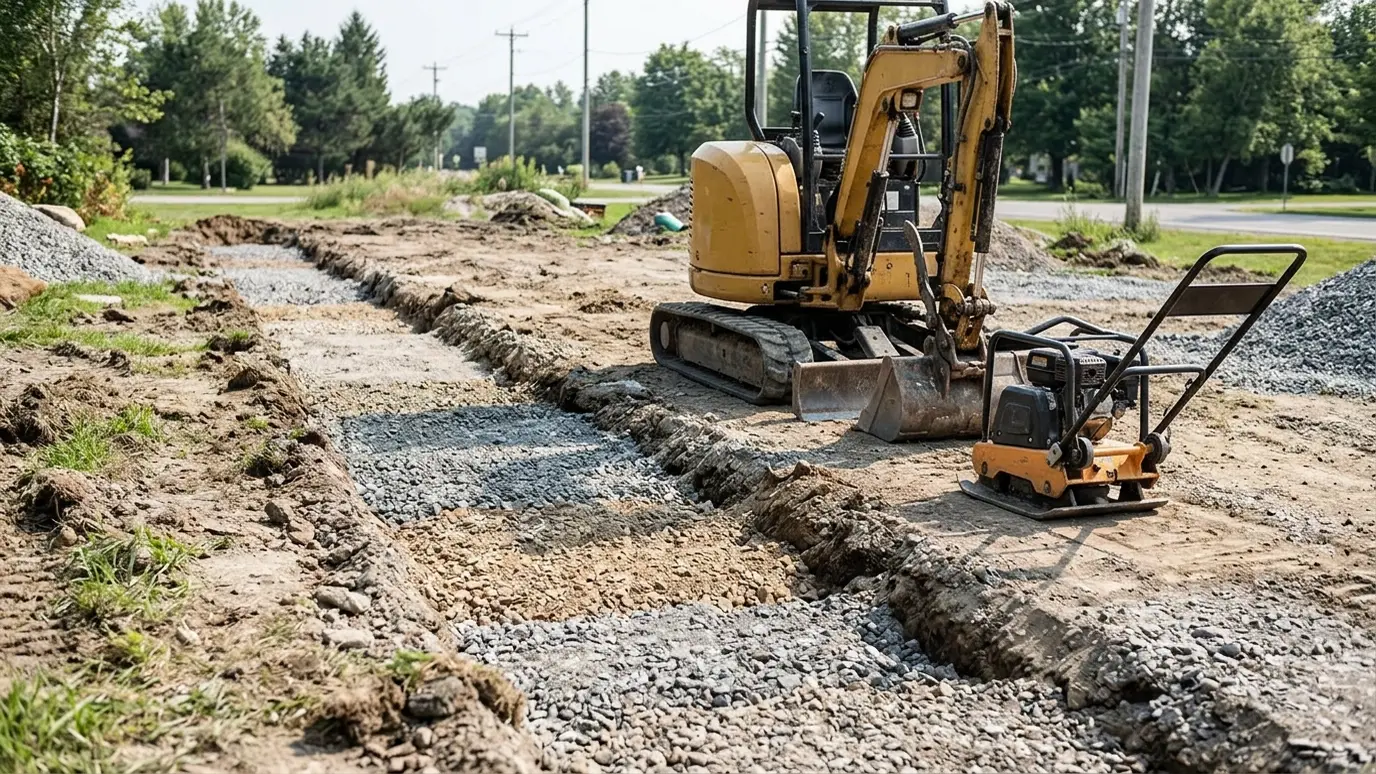 Excavation and BackfillDigging, bedding and backfilling done in layers with proper compaction, so the ground does not sink after the…Explore
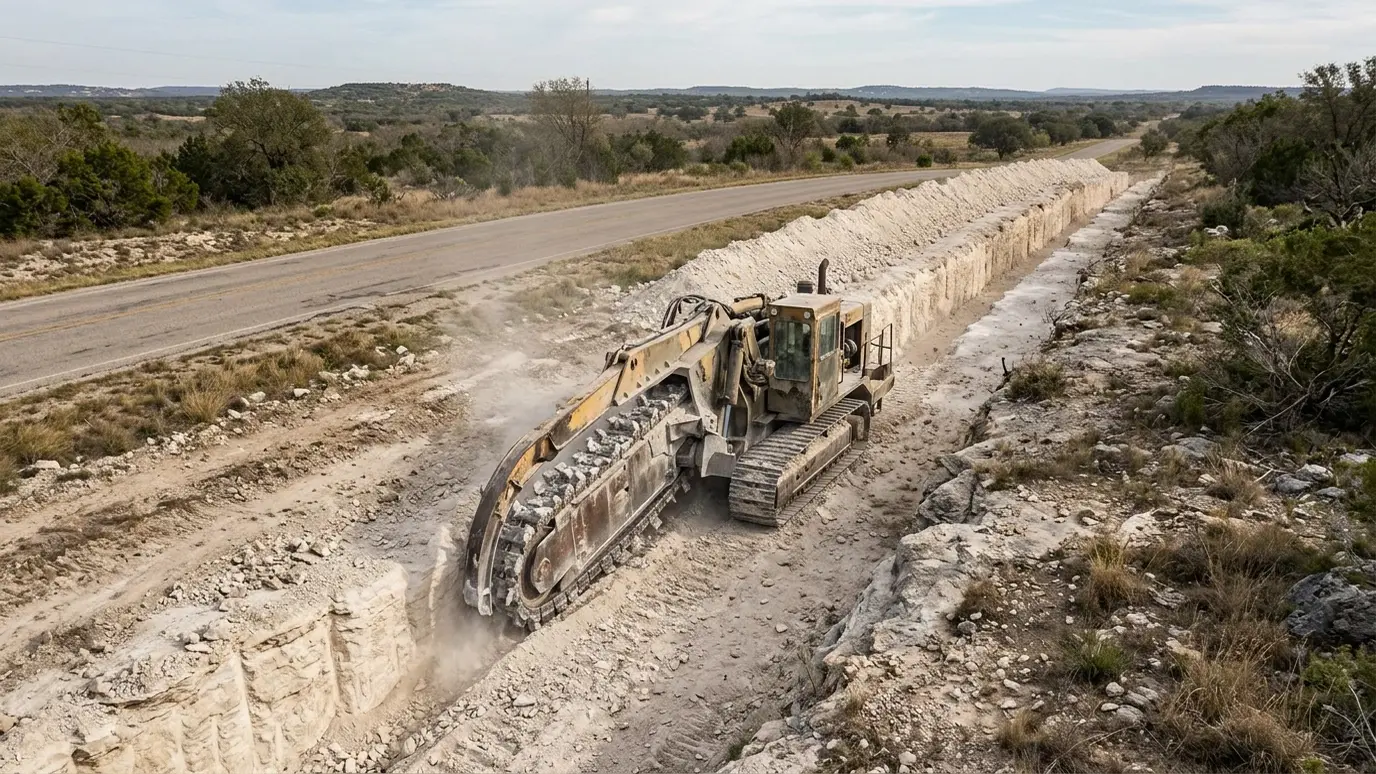 Rock TrenchingCutting trenches through limestone and hard rock where a standard excavator bucket gives up, common across Middle Tennessee.Explore
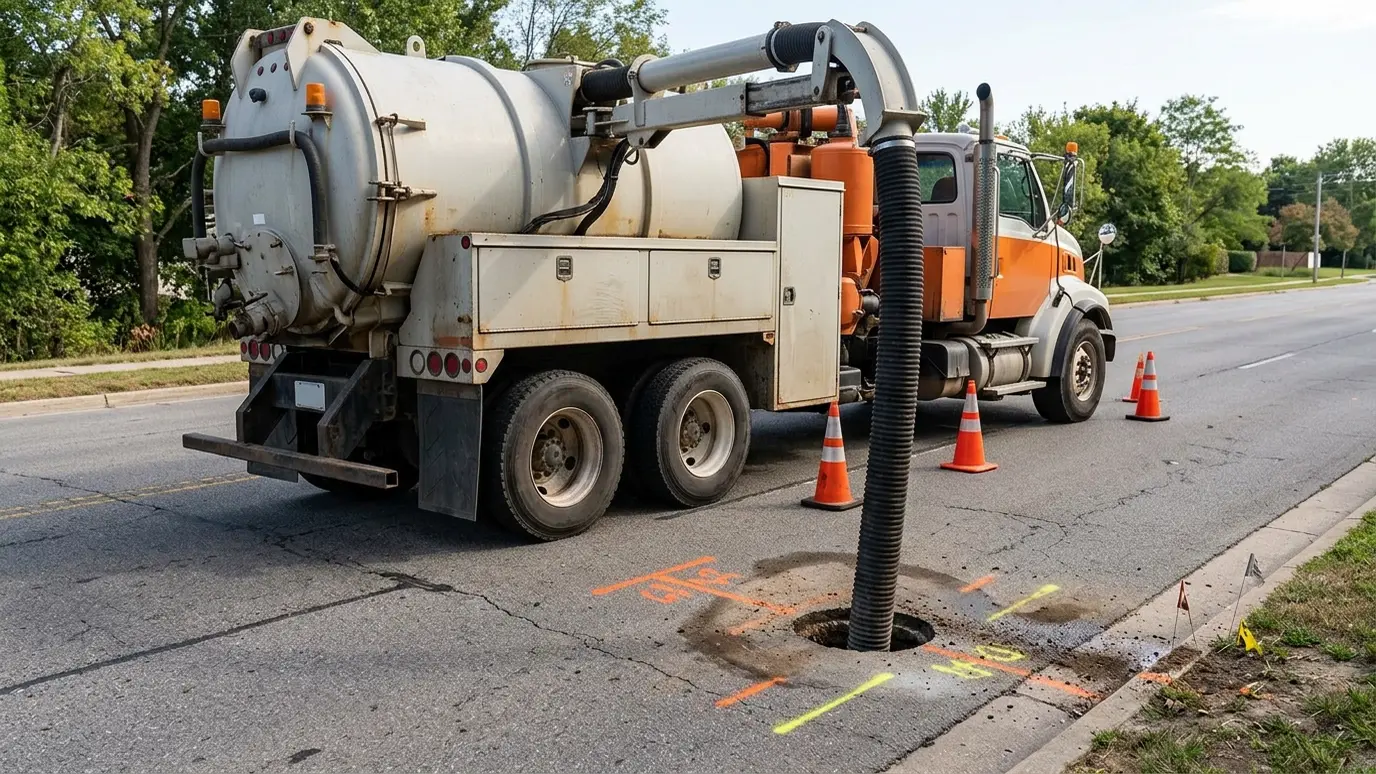 Potholing and Vacuum ExcavationSmall, careful holes dug with air and vacuum to see exactly where buried lines run before the heavy…Explore
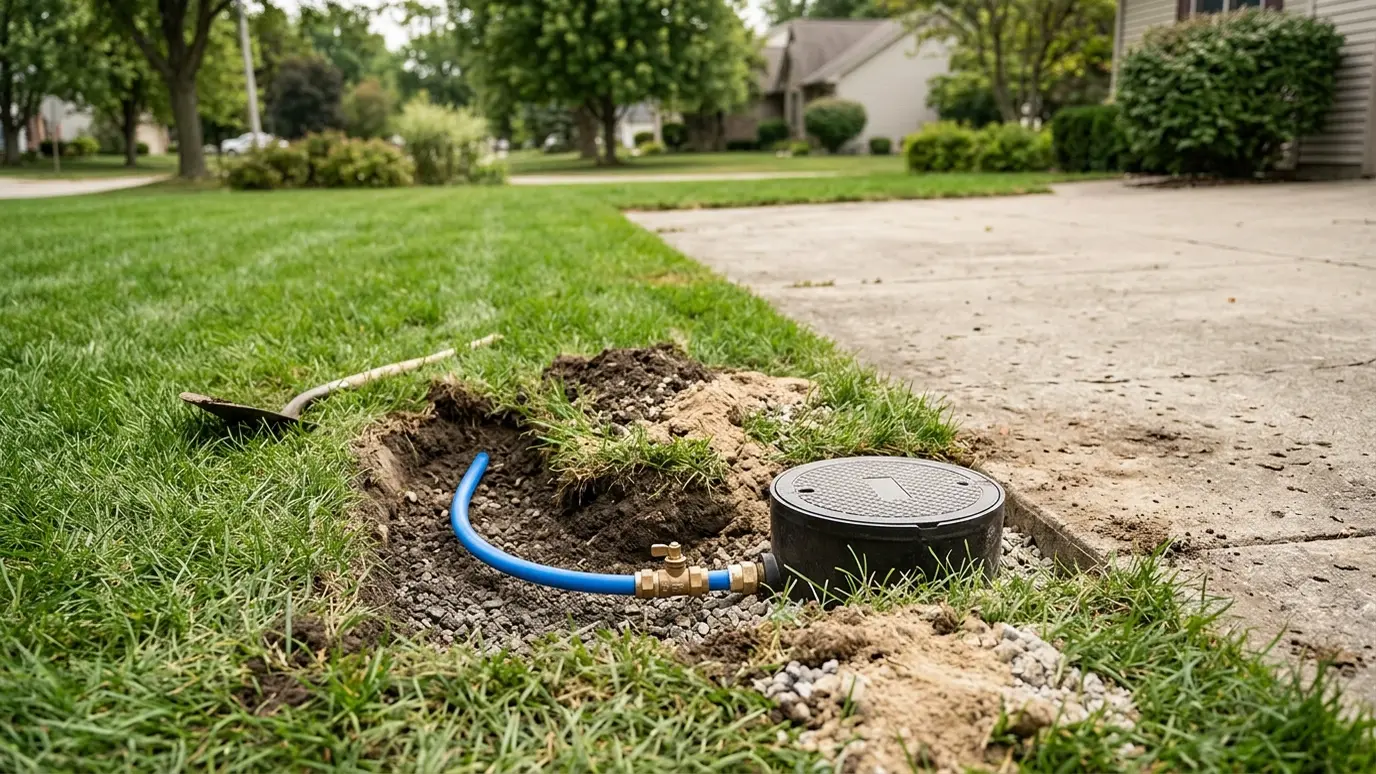 Water Service LinesThe line from the water main to your house or building, trenched, laid and connected so water arrives…Explore
Tell us about the job and we will call you back quickly.
Or call (615) 357-7797 to talk now.