Red clay
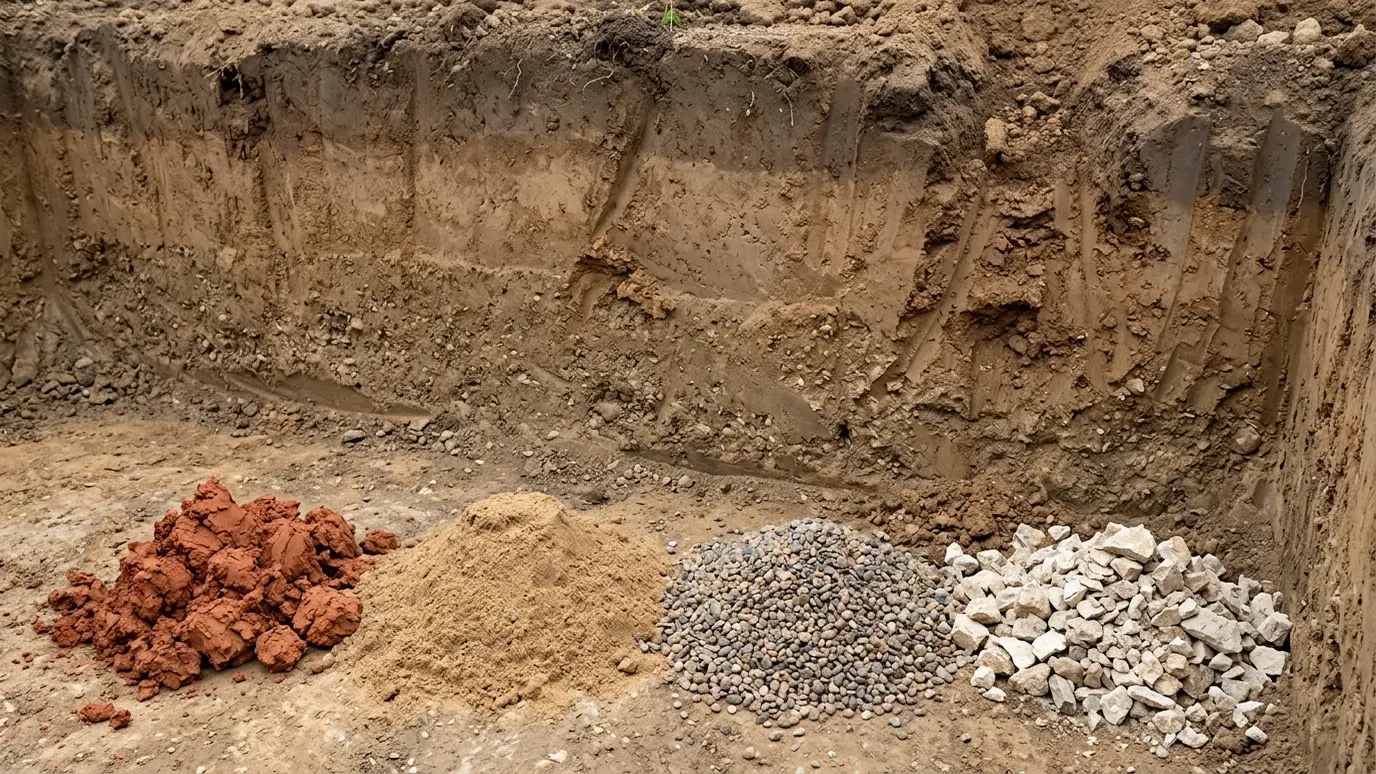
Much of the area has stiff red clay. It stands well in a trench wall when dry but turns to slick mud when wet. Clay compacts poorly when wet and shrinks and swells with moisture.
Limestone and shallow rock
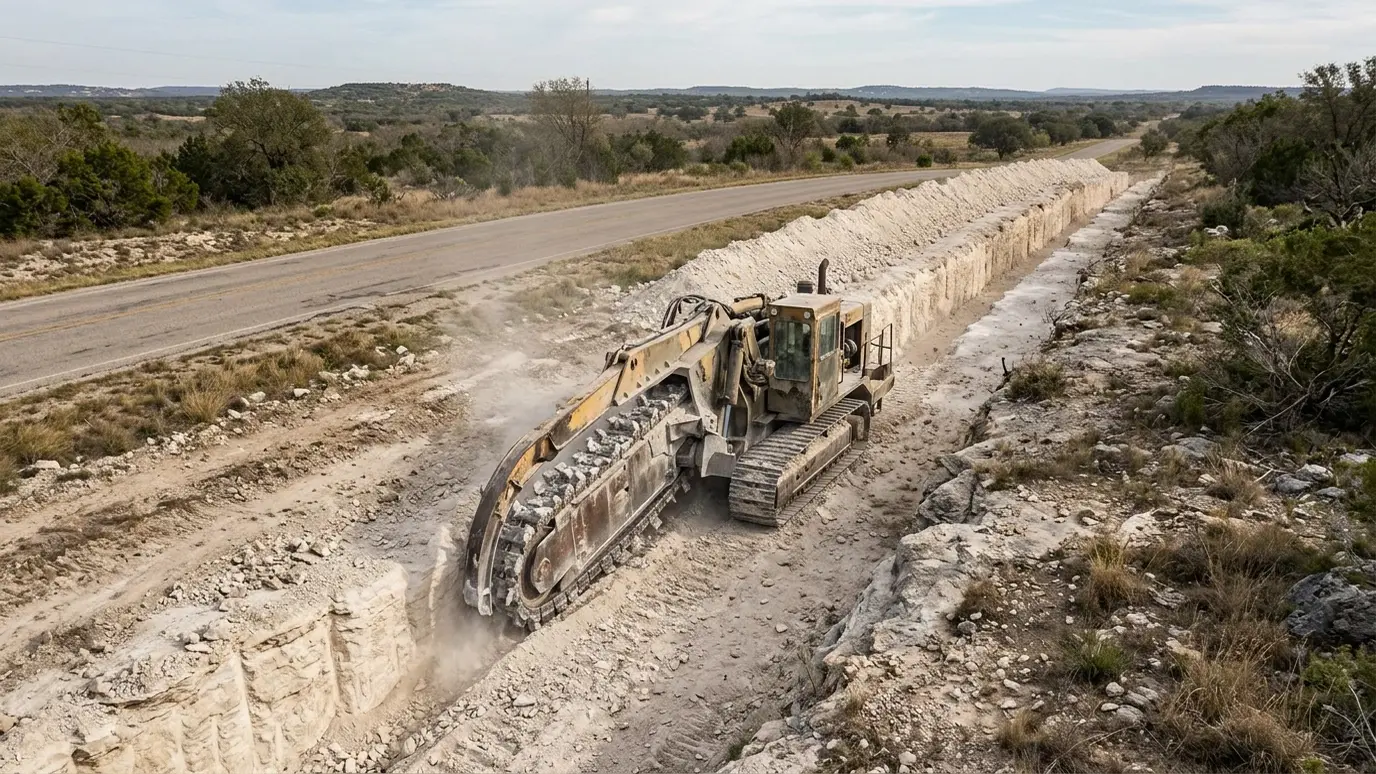
Limestone is common, sometimes only a foot or two below the surface. It slows trenching and calls for rock trenchers or hammers. It also affects septic suitability and drainage.
Cobbles and fill
Creek areas and old fill contain rocks, debris and uneven material. These make boring harder and call for careful bedding so pipe is not point-loaded.
Groundwater
Low areas and spring seeps can fill trenches with water. Pumps, stone and careful sequencing keep the work moving and the bedding clean.
Backfill and compaction
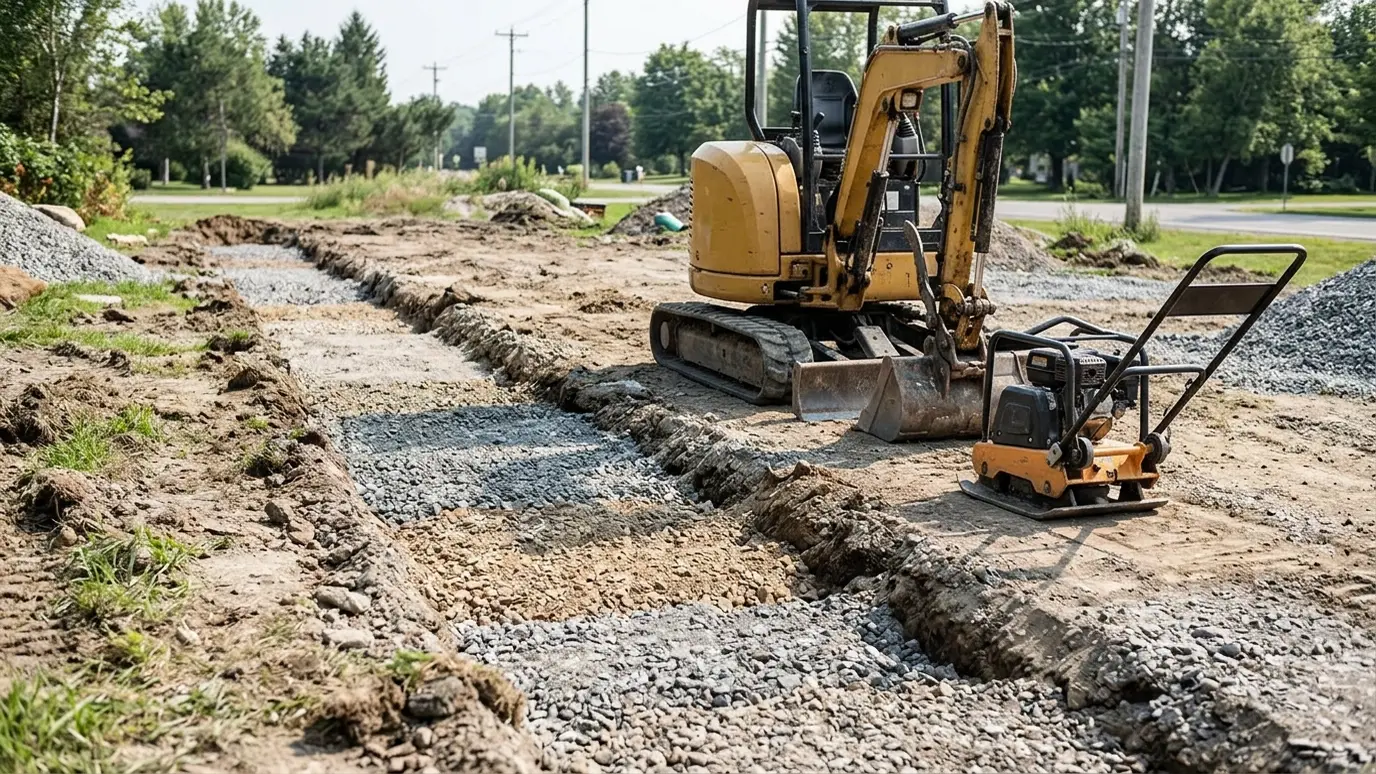
Not all trench soil makes good backfill. Wet clay and rocky spoil are replaced or dried. Compaction in layers is the cure for sinking trench lines.
Test holes and honesty
A test hole or a look at nearby cuts tells you a lot. We tell you what we expect and how rock or water would change the plan.
Look at the ground before you set a schedule, and plan for rock and wet clay.