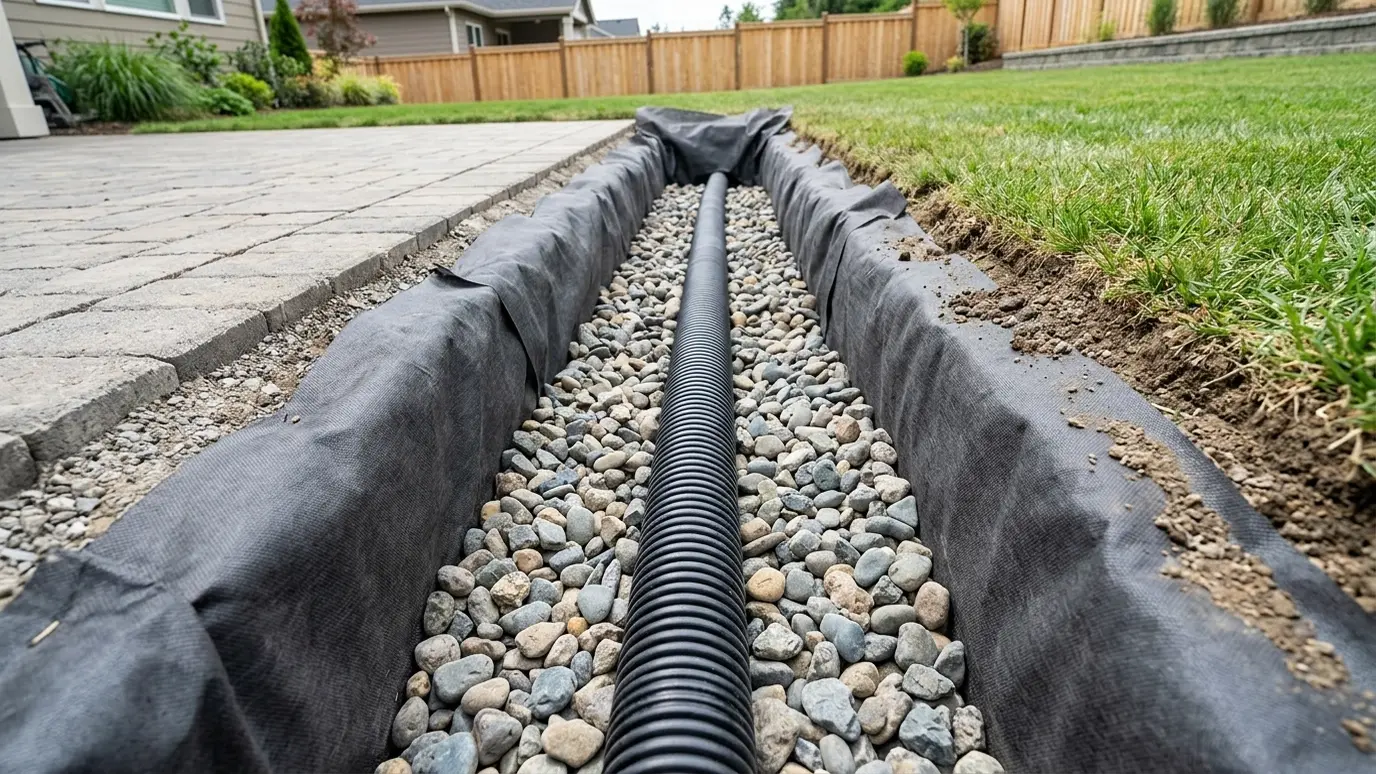
French drains, swales and downspout lines that move water away from foundations, patios and soggy lawns.
A yard that stays wet is a yard that is telling you something. Water may be coming from a roof, a slope, a neighbor or a high water table, and each source needs a different answer. A French drain is a trench with perforated pipe and clean stone that collects water below the surface and carries it away.
We install French drains, curtain drains, swales and buried downspout lines. The trench is cut to a steady slope, lined with filter fabric, filled with washed stone around a perforated pipe and closed so that sod can go back on top. The outlet is planned first, because a drain that has nowhere to discharge is only a buried pond.
We watch where water collects and where it comes from. The drain goes where it intercepts the water, not just where the yard looks wet.
Filter fabric keeps soil out of the stone, washed stone provides the void space and perforated pipe carries the water. Skipping the fabric is the most common reason French drains clog.
Water must leave the property in a way that does not harm anyone. We daylight lines on a slope, tie them to a storm system where allowed or use a dry well where the soil drains.
Roof water is often the biggest source of yard flooding. Directing downspouts well away from the foundation, in solid pipe, can cure many wet-yard problems before any drain is dug.
Drag the handle to compare.
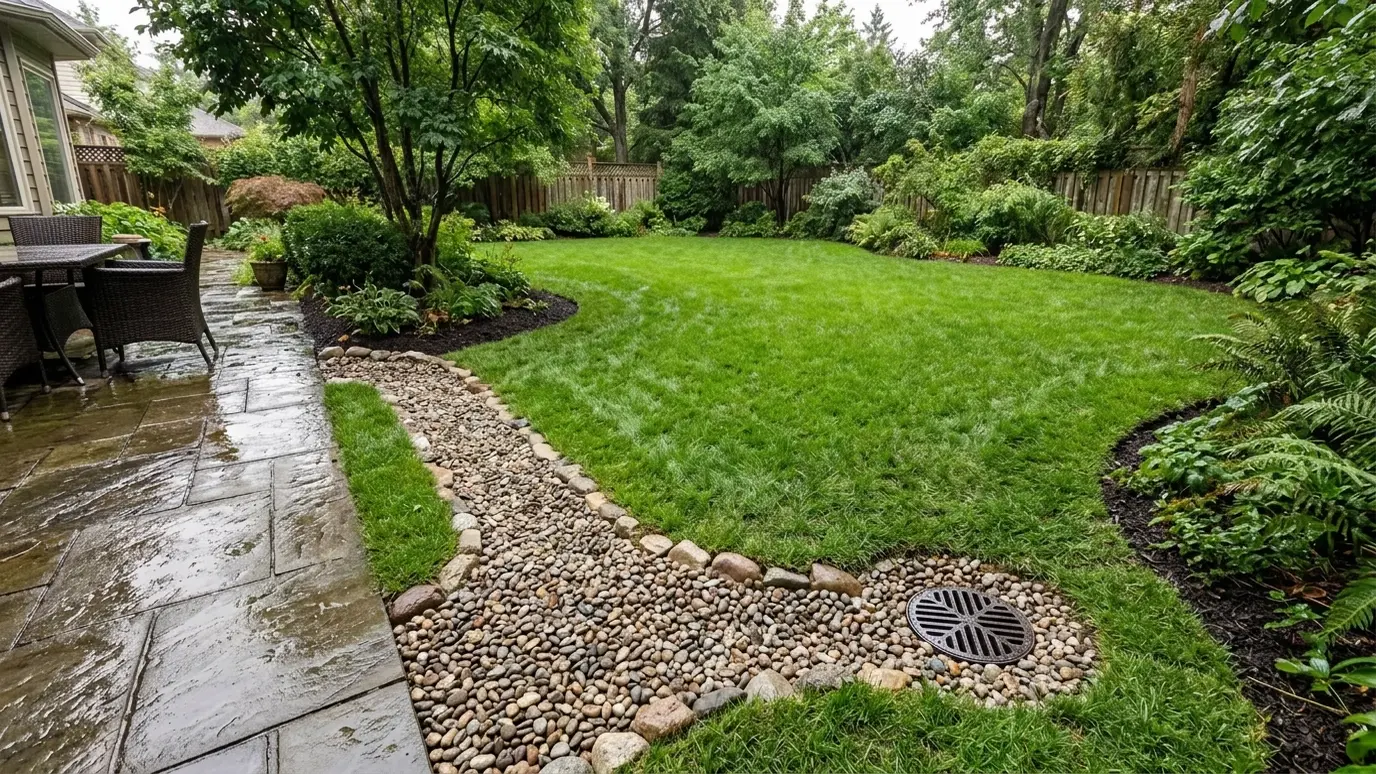
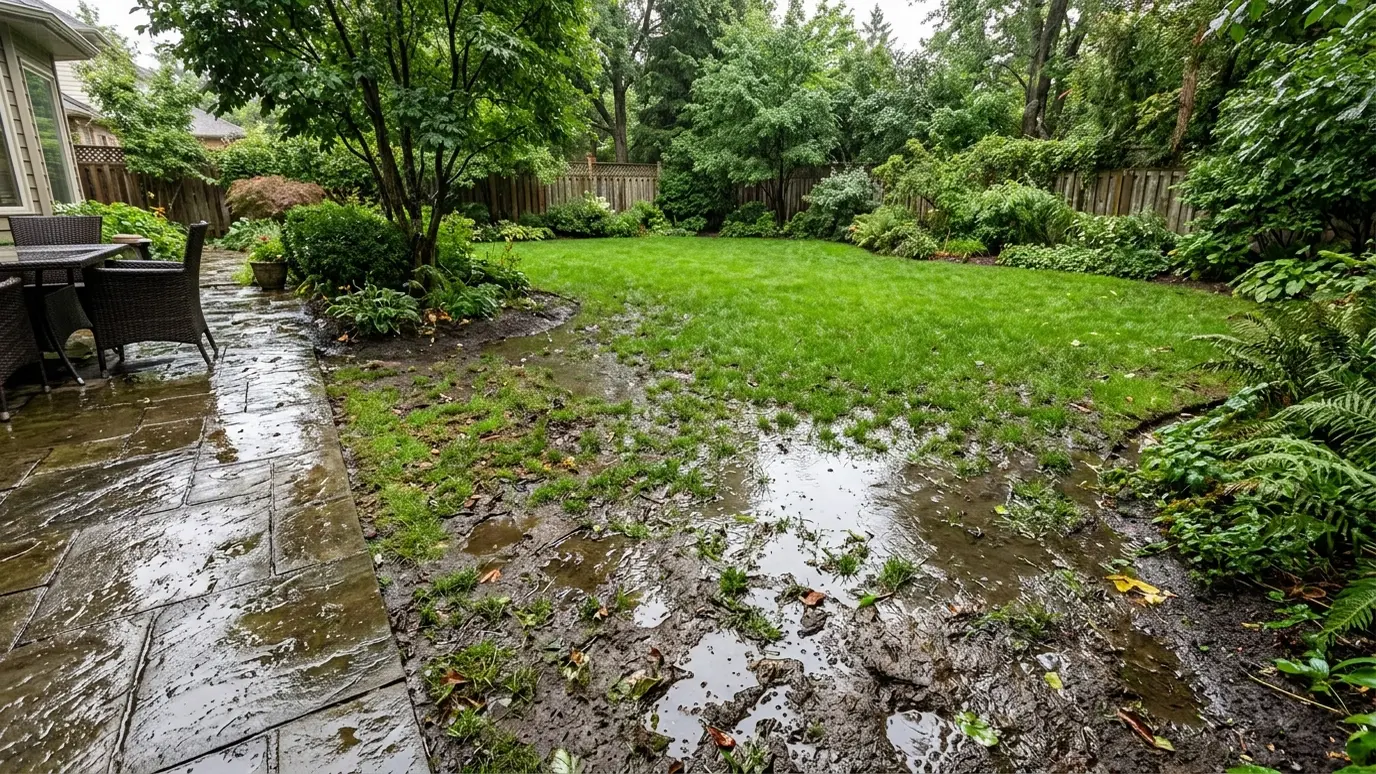 BeforeAfter
Standing water moved away.
The full, correct build.
Water kept from walls and slabs.
Water goes somewhere safe.
Lawn put back over the trench.
Drain, swale or regrade, with reasons.
Every topic has its own page with what to expect and how we approach it.
 SituationHomeowner Line RepairsSlow drains, wet spots, low pressure and sunken lawns: how to tell what is wrong underground and what…Learn more
 SituationRural and AcreageLong runs for water, power, propane and septic on farms and country lots, through rock, creeks and fields.Learn more
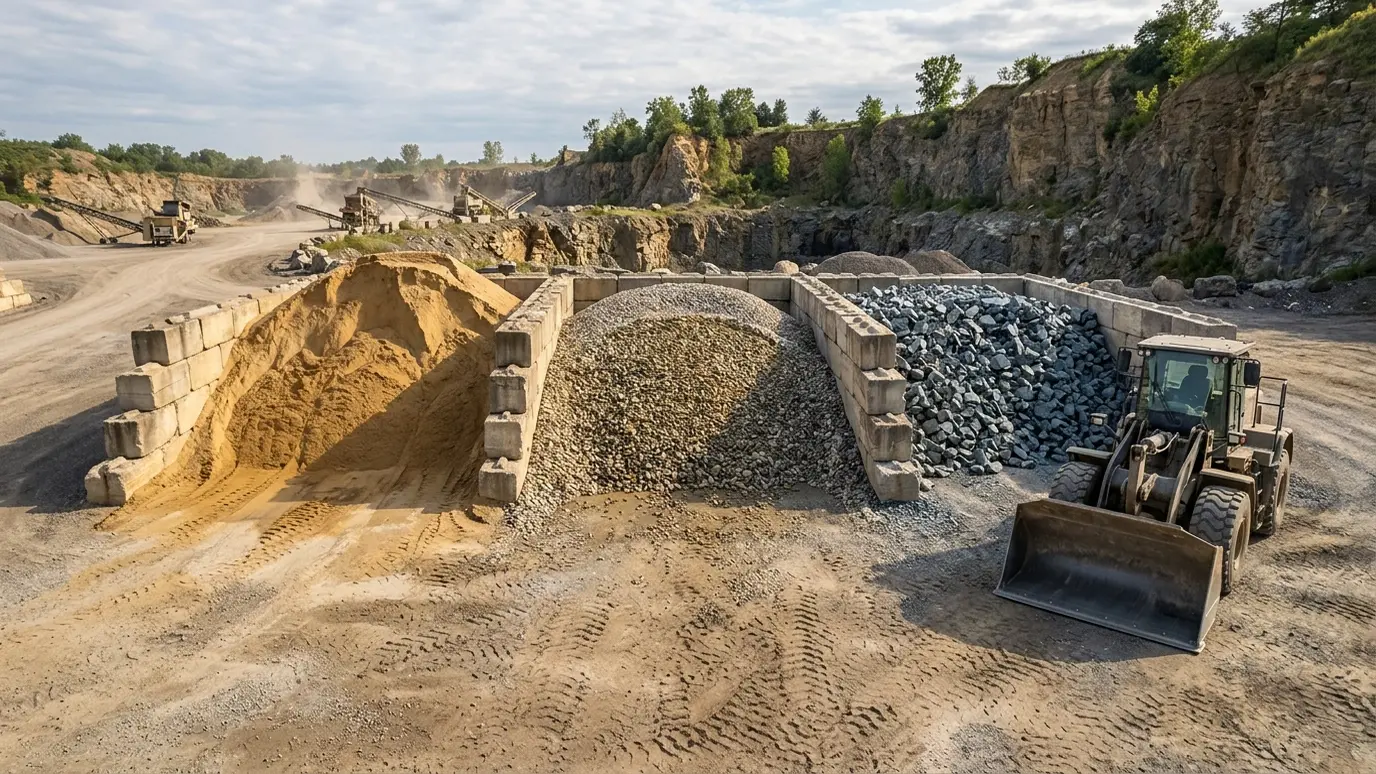 Material guideBedding and BackfillSand, washed stone and select fill: what goes around a pipe, what goes above it and why the…Learn more
Enter run length and slope and see the total fall and the invert elevation at the far end.
Tell us what you need and send photos or a site plan if you can. We plan the visit so we arrive ready.
We call 811, walk the site, confirm lines and plan the route and depth.
You get a clear written price, and we agree a day and an arrival window.
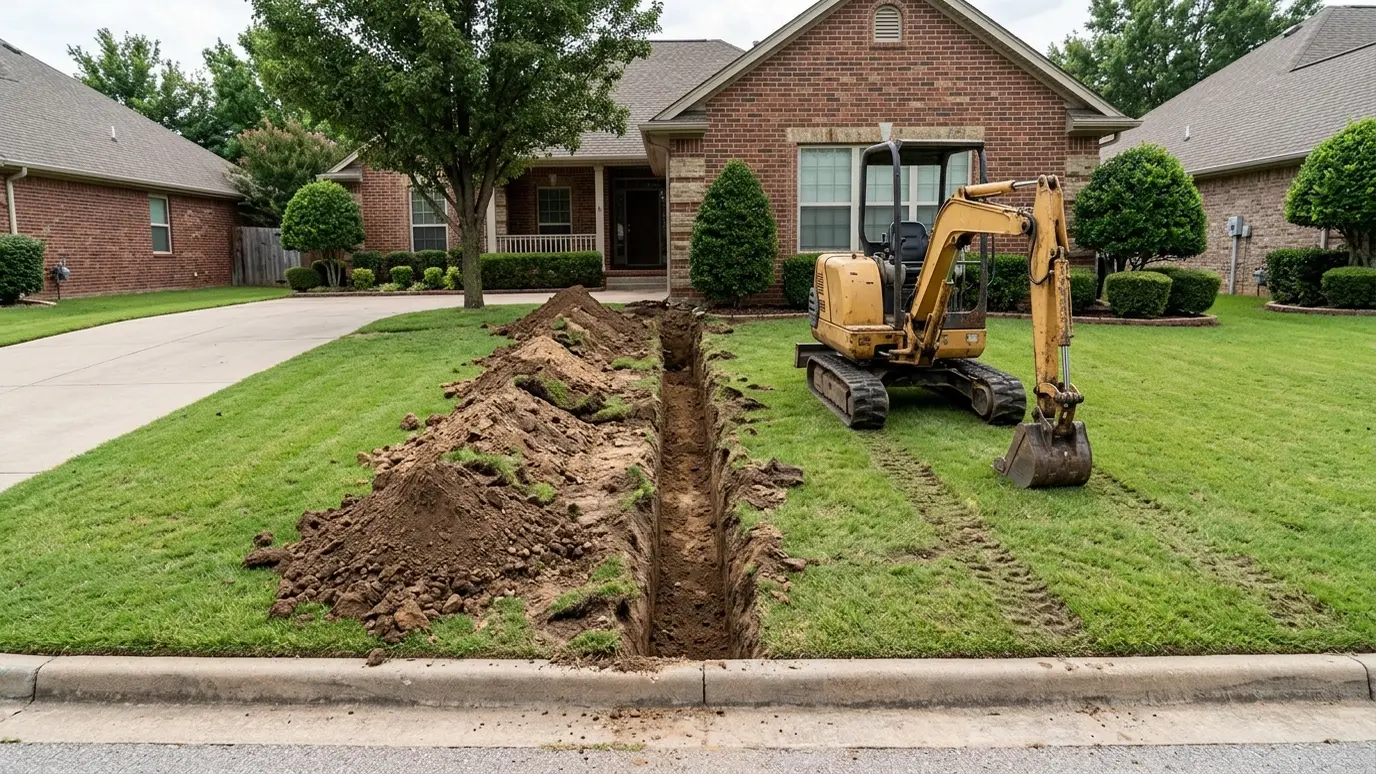
Trenching or boring to the plan, with safe walls, careful spoil handling and protection for your lawn.
Pipe or conduit laid on a good bed, joints checked, tests and inspections done before cover-up.
Compacted backfill, grading, sod or paving repair and a walk-through with you.
It can help when water comes from the soil around the foundation. Leaks from cracks or plumbing need different repairs.
Depth depends on the water source and the outlet. We design the slope and depth for your yard.
Properly built drains with fabric and clean stone last a long time. Debris and roots are the main threats.
Yes, as a separate solid pipe is best. We route downspouts to a safe outlet rather than into a perforated line.
Yes. Extending downspouts to a safe outlet is often the least expensive and most effective step.
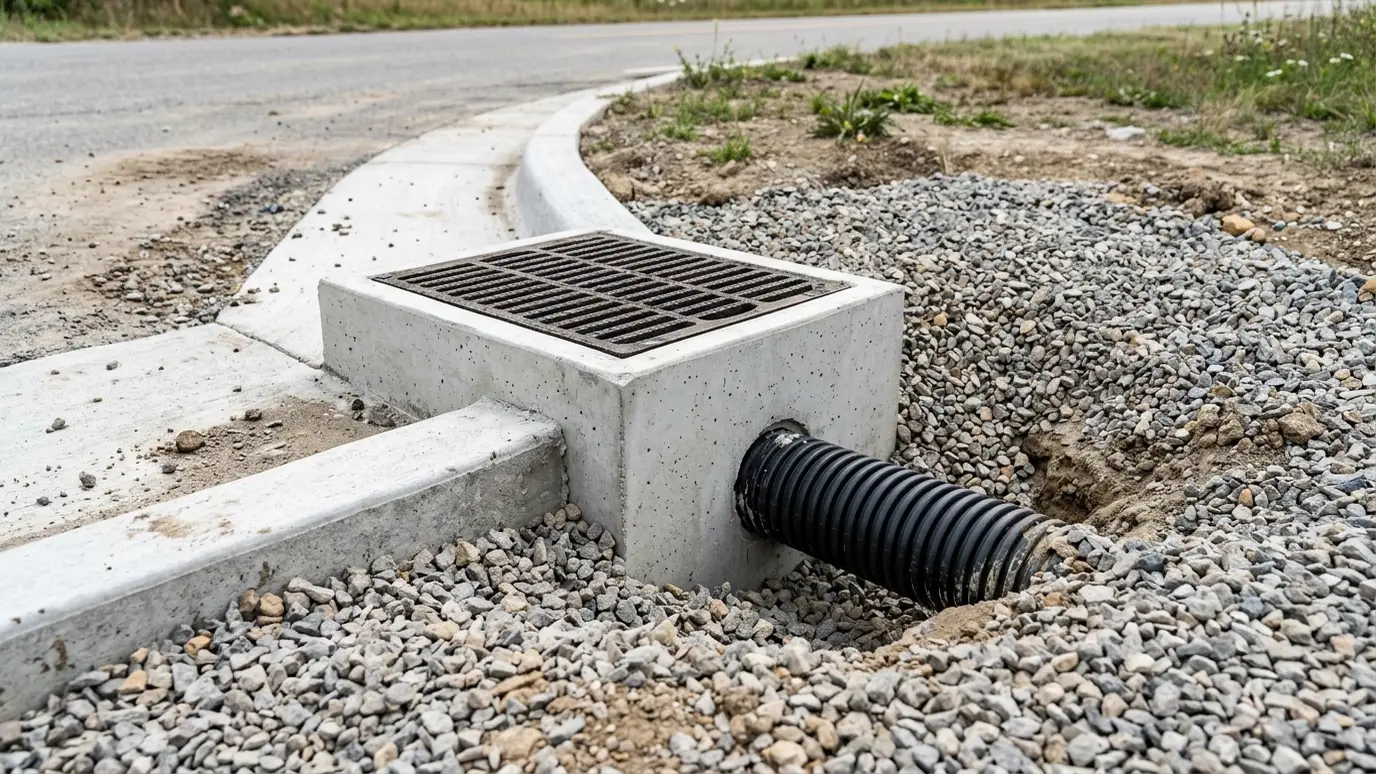 Storm Drains and Catch BasinsInlets, catch basins and storm pipe that carry runoff away from buildings, driveways and streets before it causes…Explore
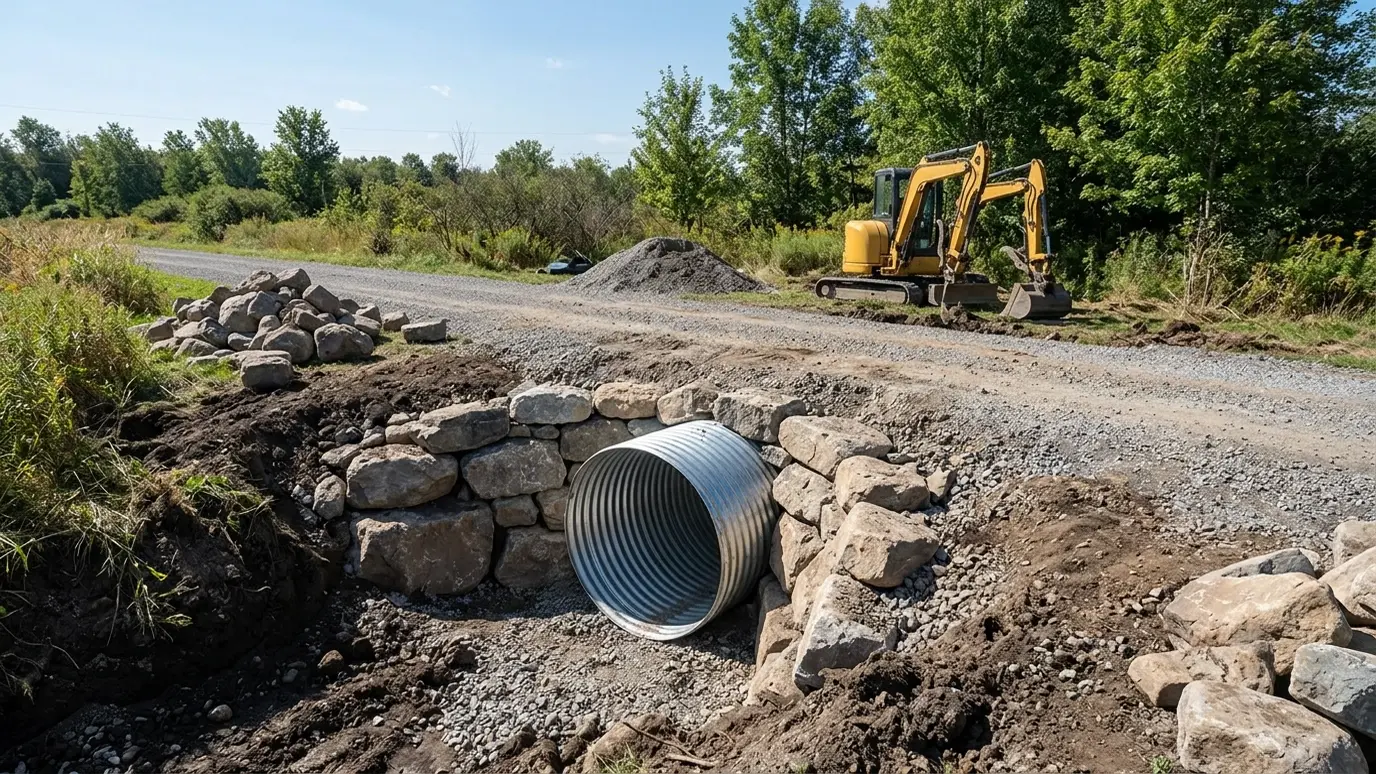 Culvert InstallationCulverts under driveways and roads that pass water safely, sized and set with headwalls and stone so crossings…Explore
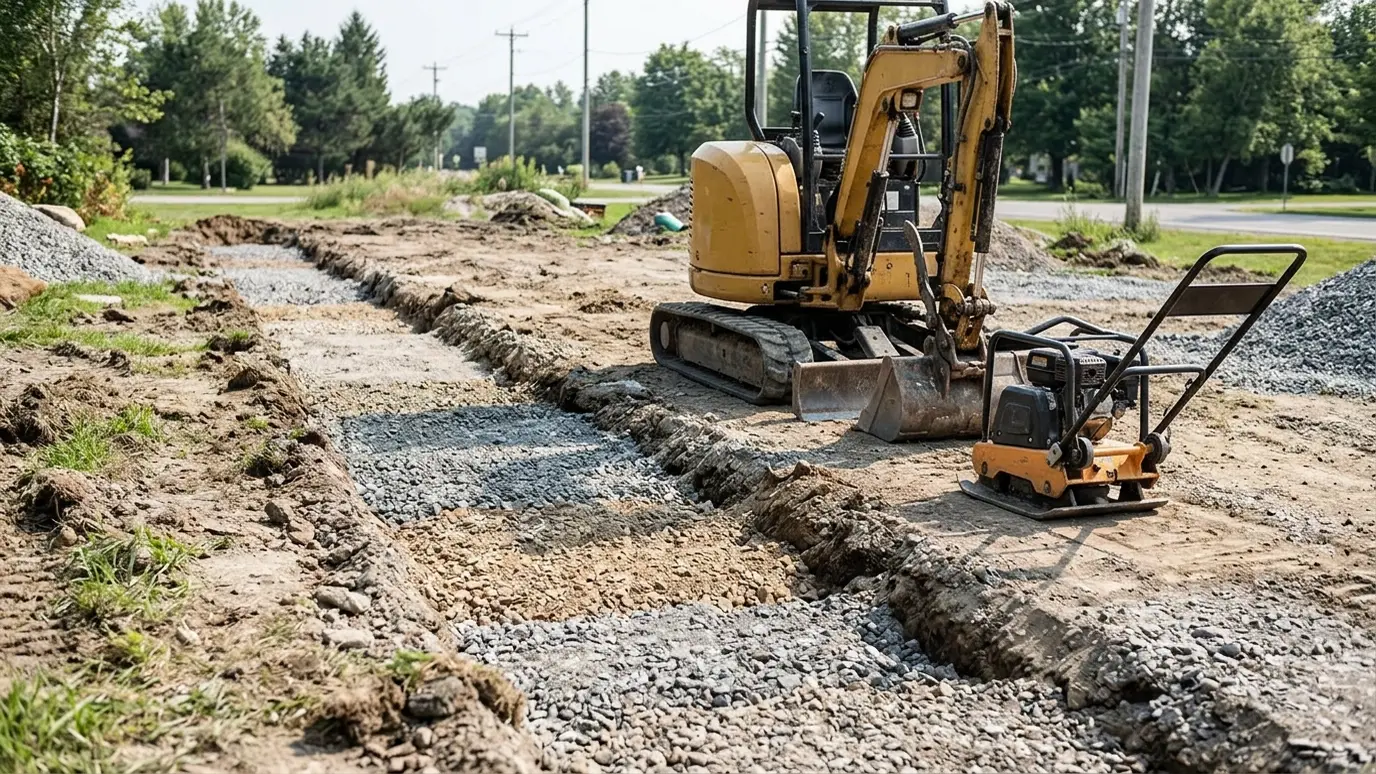 Excavation and BackfillDigging, bedding and backfilling done in layers with proper compaction, so the ground does not sink after the…Explore
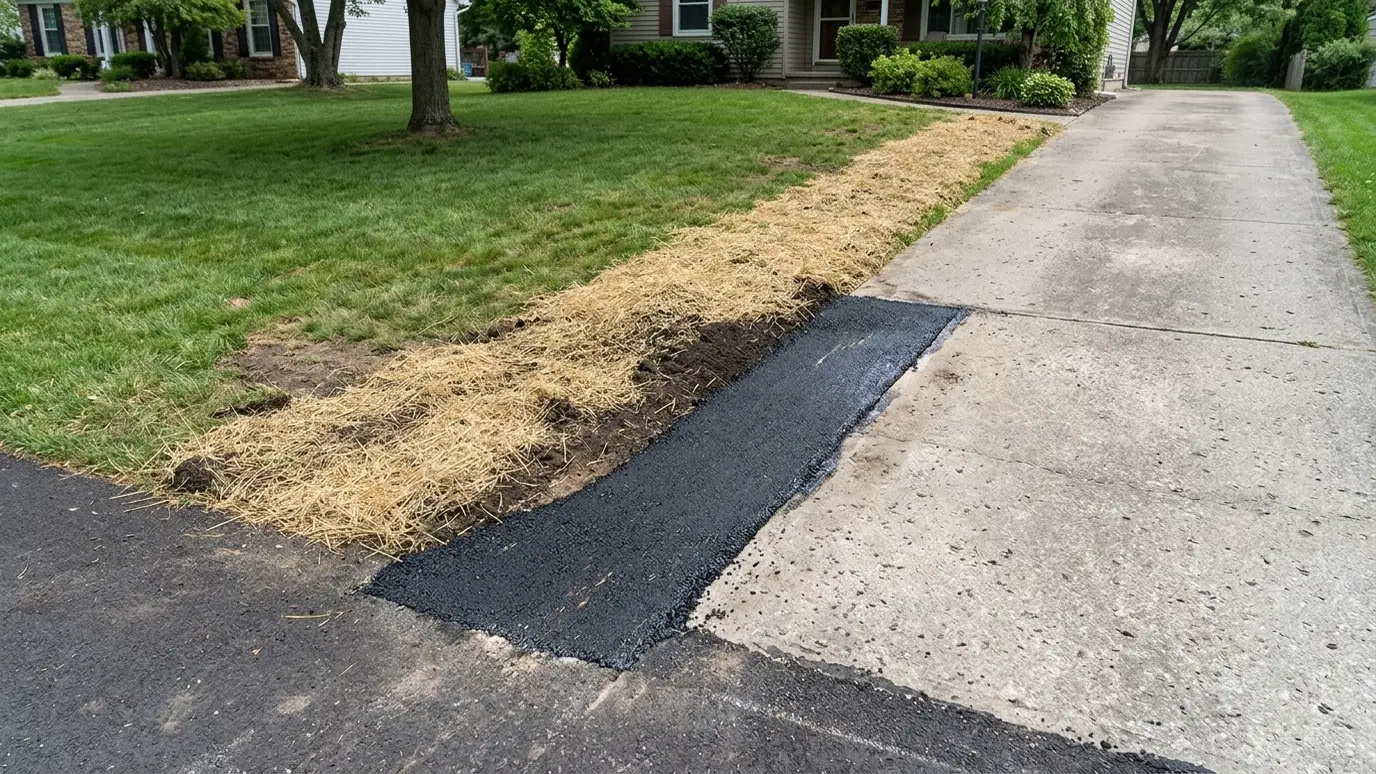 Surface RestorationSod, seed, topsoil, concrete and asphalt patching so your yard and driveway look good again after the trench…Explore
Tell us about the job and we will call you back quickly.
Or call (615) 357-7797 to talk now.