Open trenching
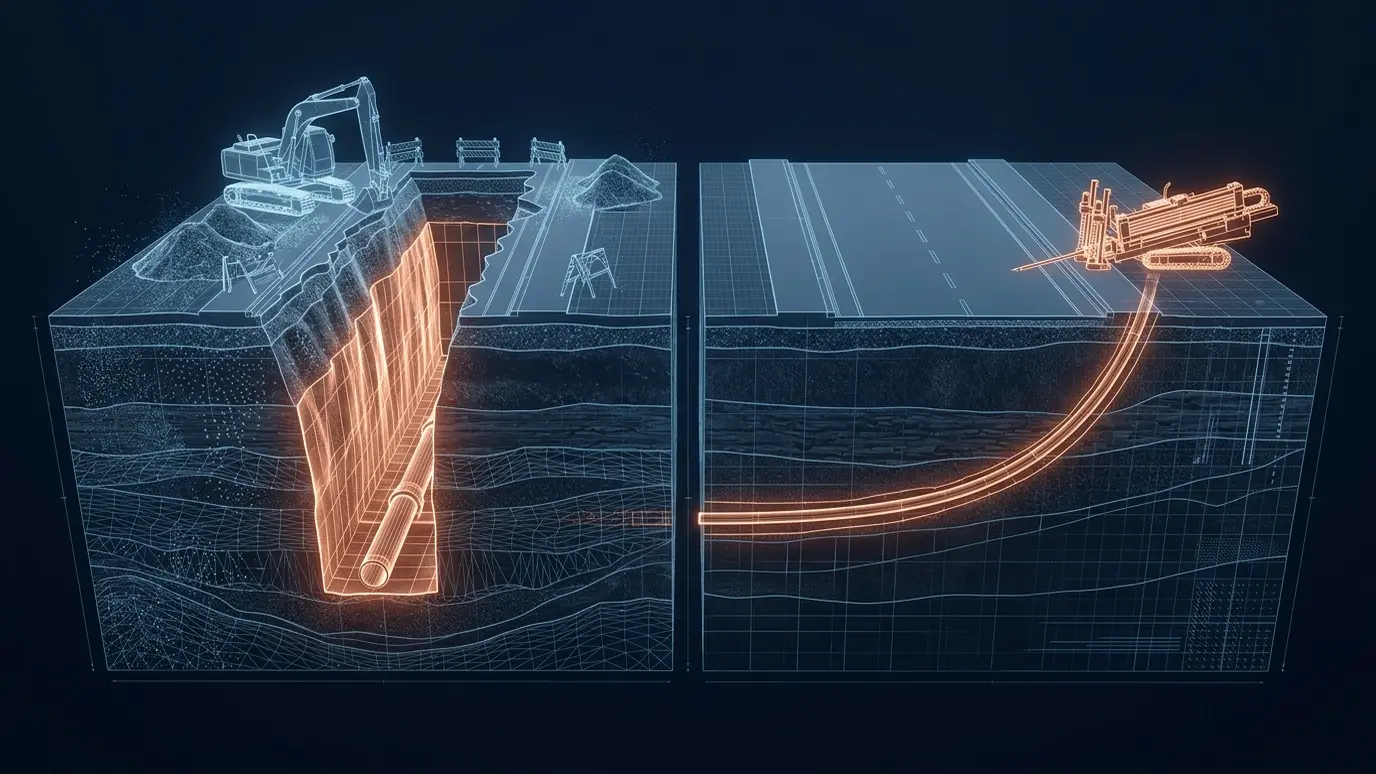
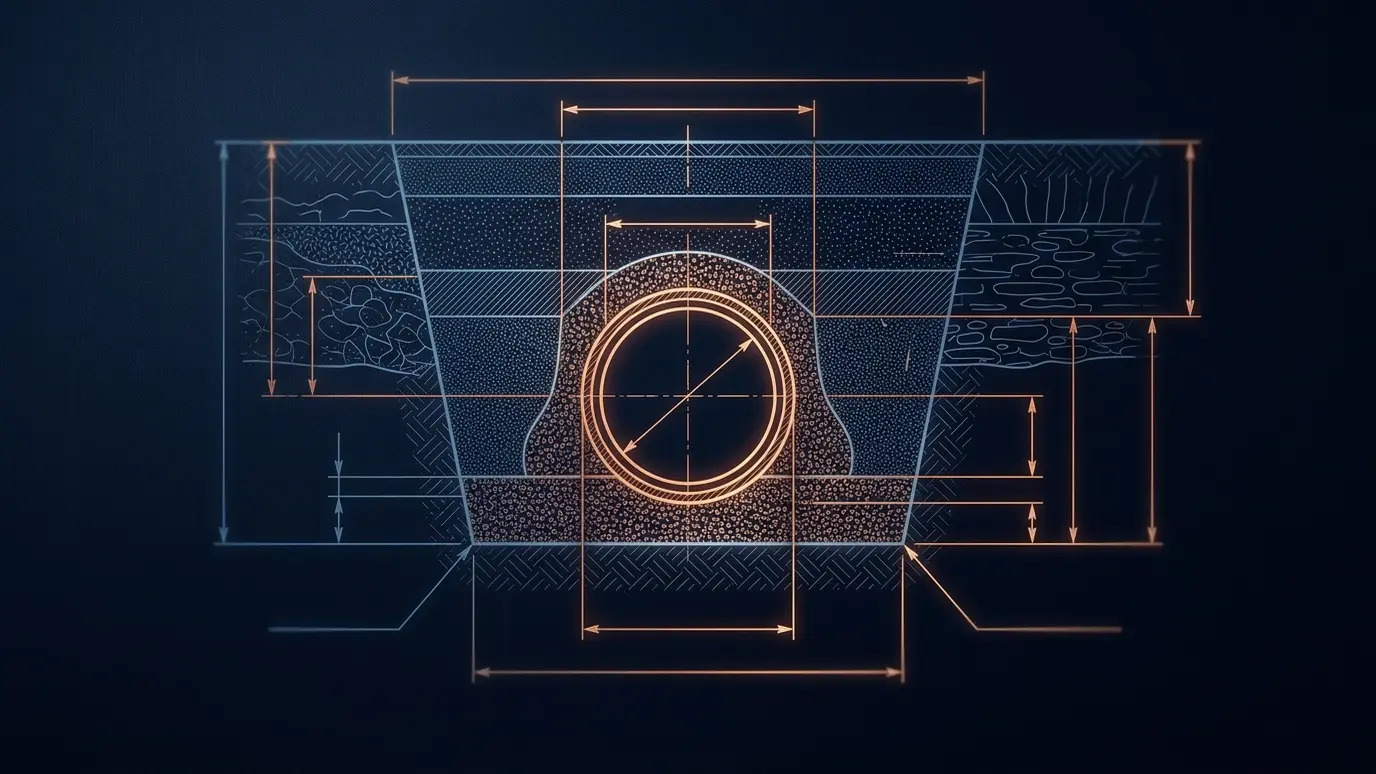
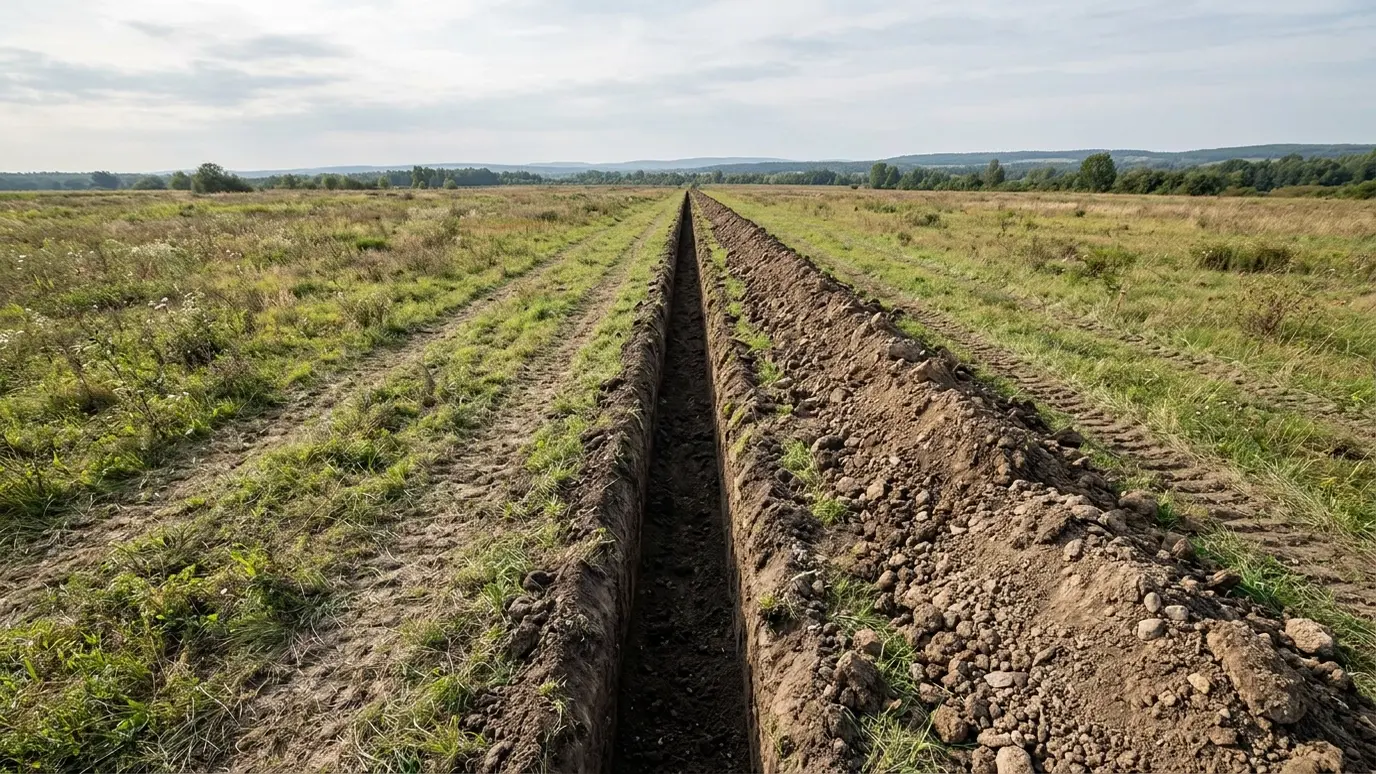
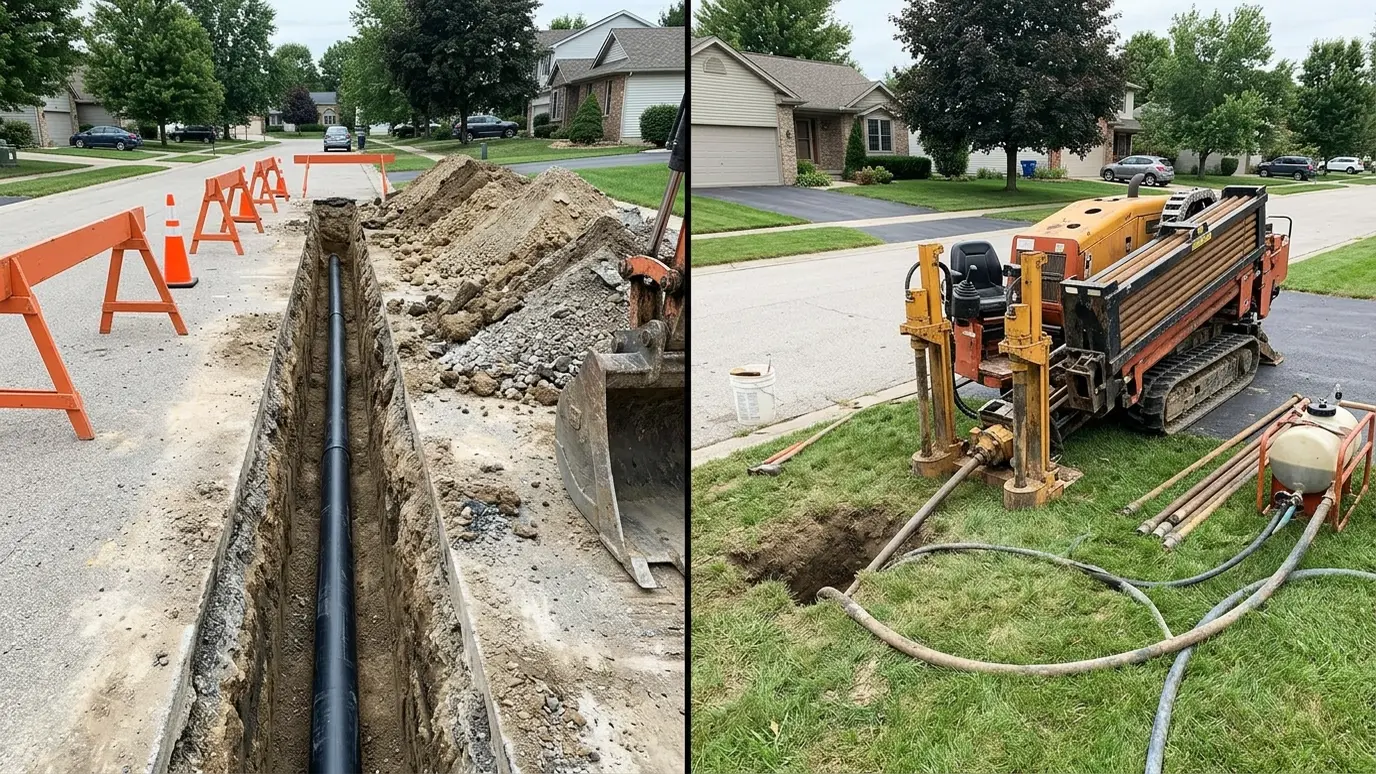
A trench is the simplest method. It is fast over open ground, easy to inspect and allows precise bedding. It is also the most disruptive: lawns, driveways, landscaping and roads must be cut and restored.
Directional boring
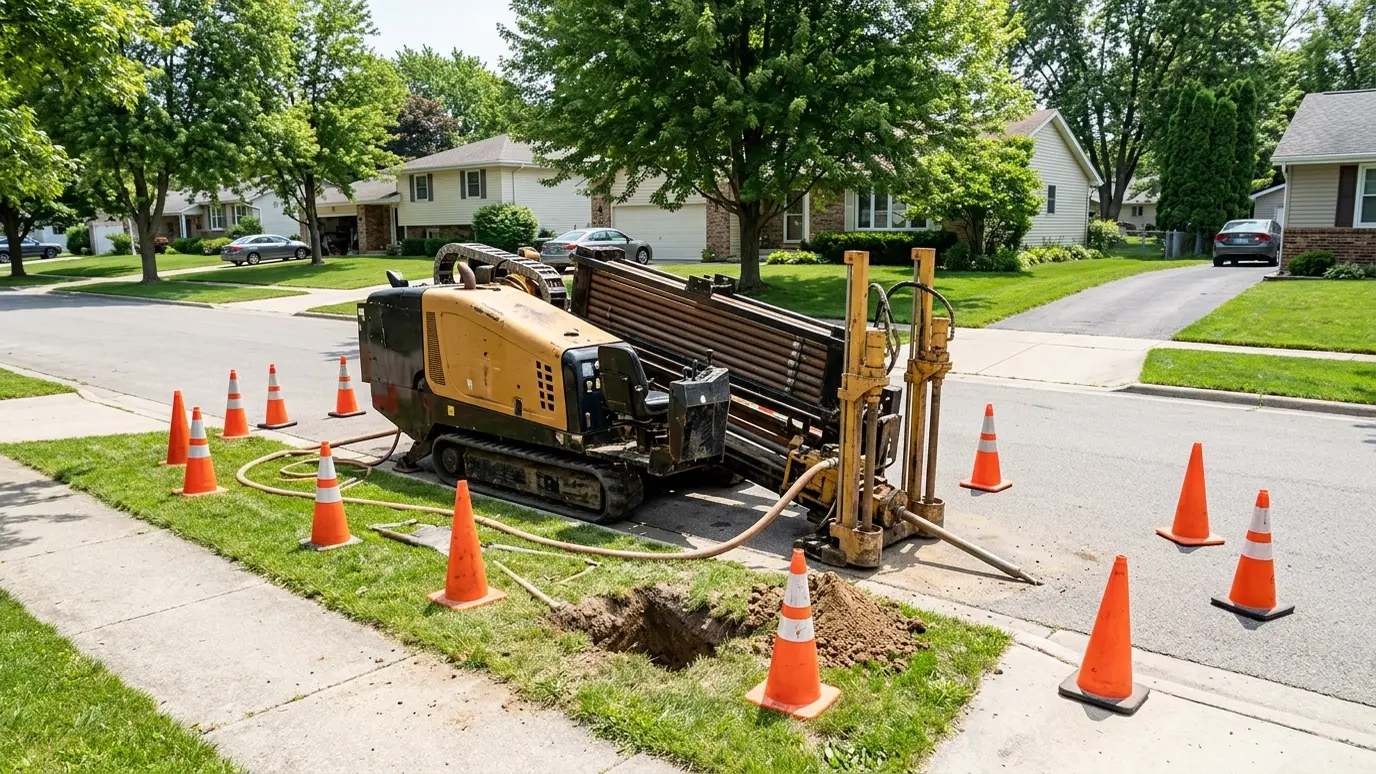
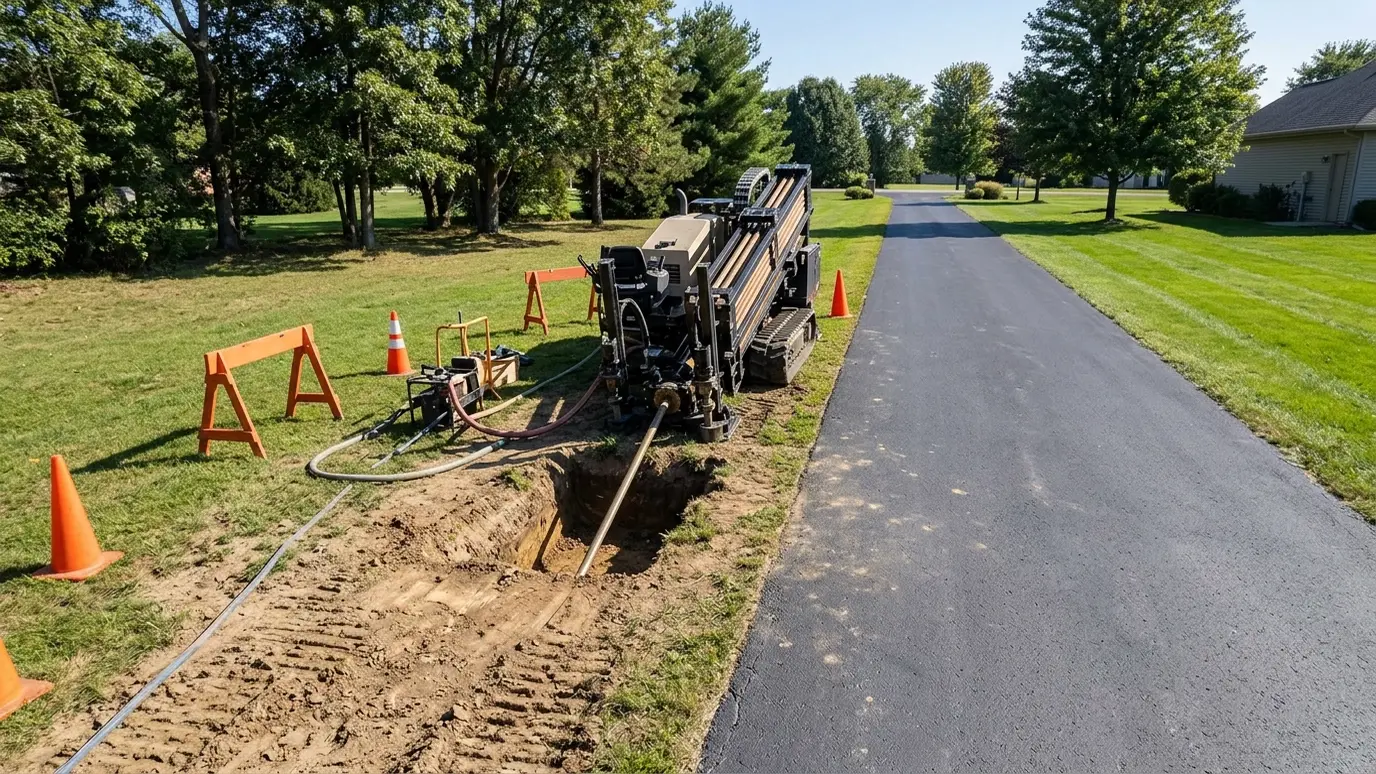
A bore passes under surfaces without opening them. Entry and exit pits are small, and the surface stays intact. Bores cost more to set up, need space for the equipment and depend on the soil.
When trenching wins
Short runs in open ground, shallow lines, projects with many connections and places where precise grade is needed, such as gravity sewer, favor trenching.
When boring wins
Crossings under roads, driveways and walks, runs under trees and landscaping, long straight runs and creek crossings favor boring.
Rock and soil
Rock can slow both methods. A rock trencher can cut it, and some bores can pass through soft rock. Hard cobbles and mixed soils make boring harder. A site look and a test hole are worth the time.
The hybrid answer
Many jobs use both: trench across the open lawn, then bore under the driveway and the road. Choosing method by section gives the best overall result.
Trench the open ground, bore the surfaces you do not want to repair, and let a site look decide the rest.