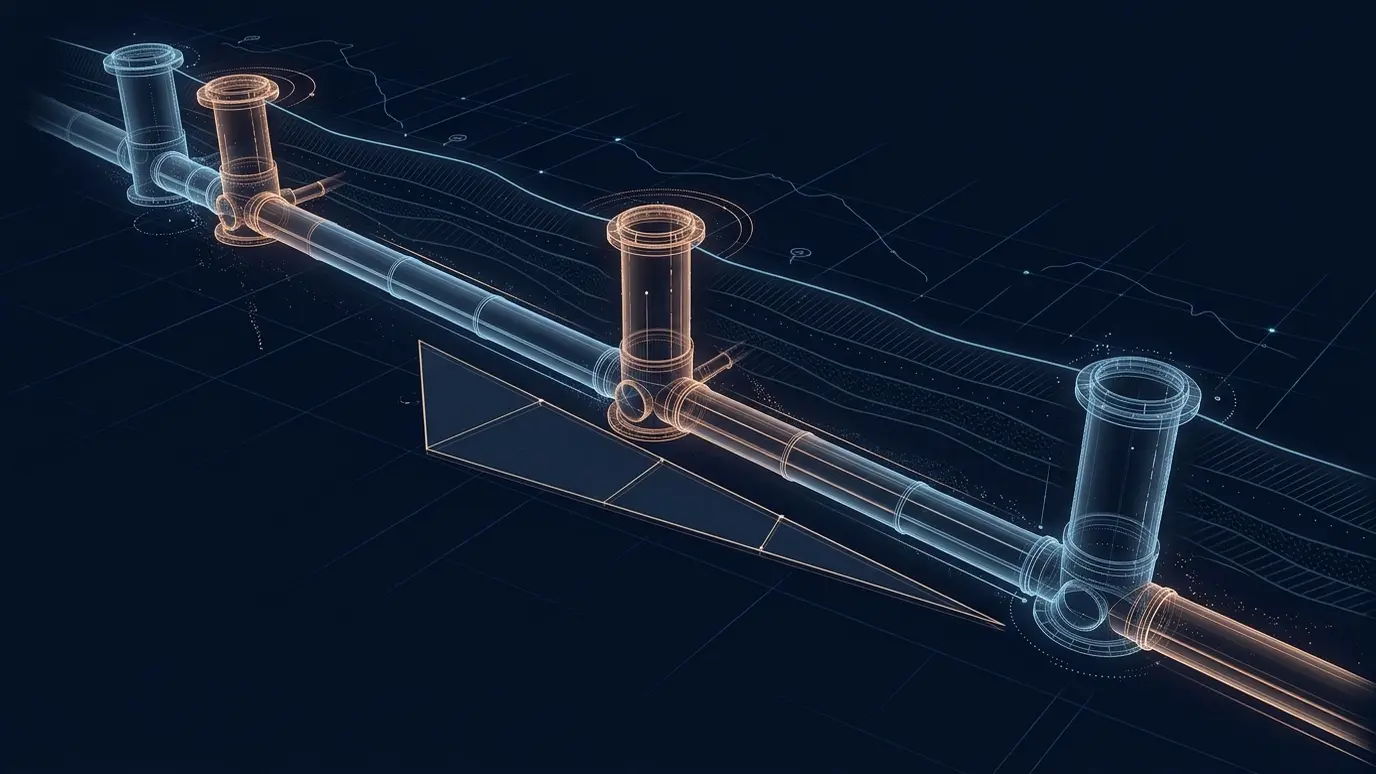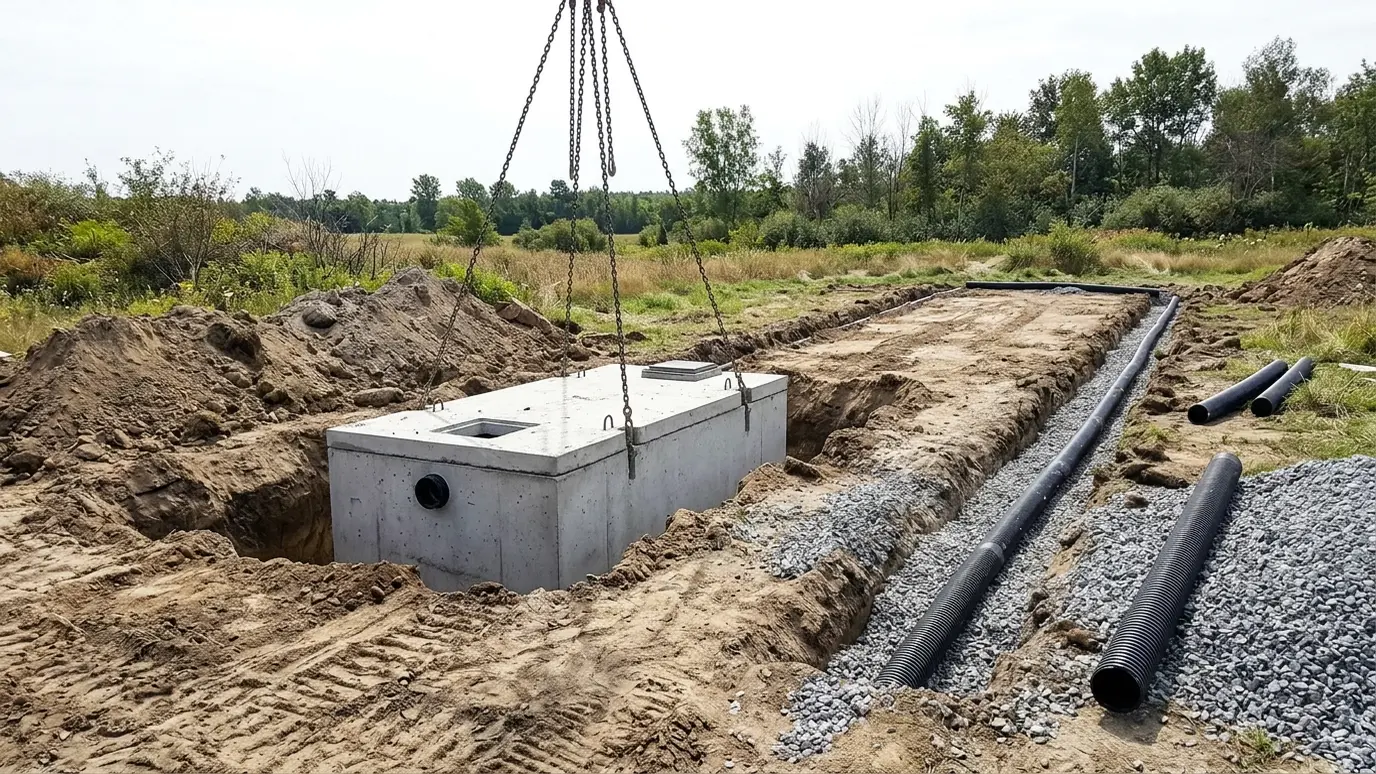
Septic tanks, distribution boxes and drain fields installed to the approved design, with the digging, stone and pipe done properly.
A septic system has no second chances. The tank, the lines and the drain field are buried, and when they fail the repair is large and disruptive. The system has to be designed for the soil and the home, approved by the health authority and built exactly as drawn.
We install septic tanks, pump chambers, distribution boxes and drain field lines to the approved design. Our work is excavation, tank setting, pipe, stone and backfill, done carefully so the field is not compacted and the lines are level. Design, soil evaluation and permitting belong to the qualified professionals and agencies who handle them.
The soil in the field area must stay loose and uncompacted. We keep heavy equipment off it, excavate with care and place stone and pipe the way the design requires.
Distribution and field lines need the right slope and spacing. Small errors in elevation can overload part of the field while the rest sits idle.
A tank must sit on a firm, level base and be sealed at the pipes. We set it at the right depth, connect inlet and outlet and leave risers at grade for pumping.
A septic system lasts longer with regular pumping, careful use of water and no heavy loads on the field. We give you the basic care routine when we finish the installation.
Drag the handle to compare.
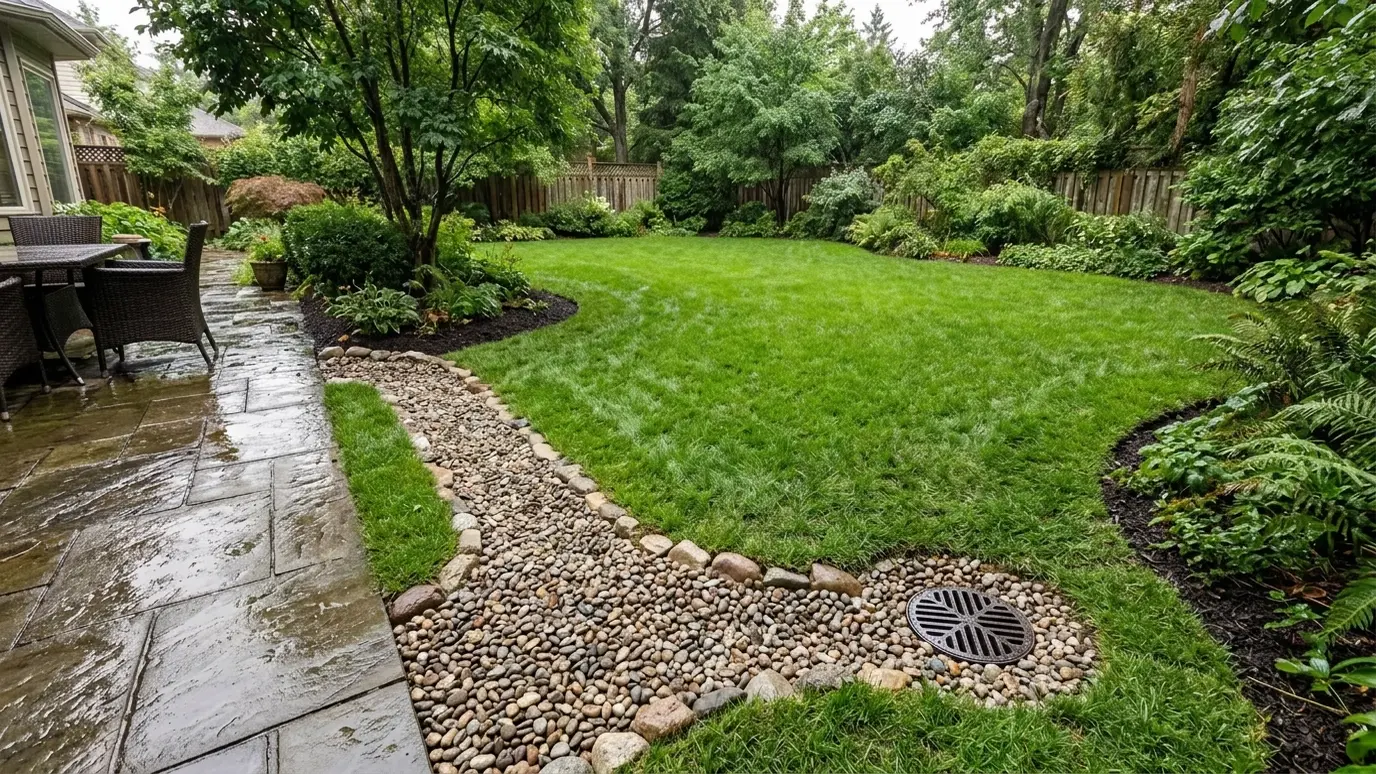
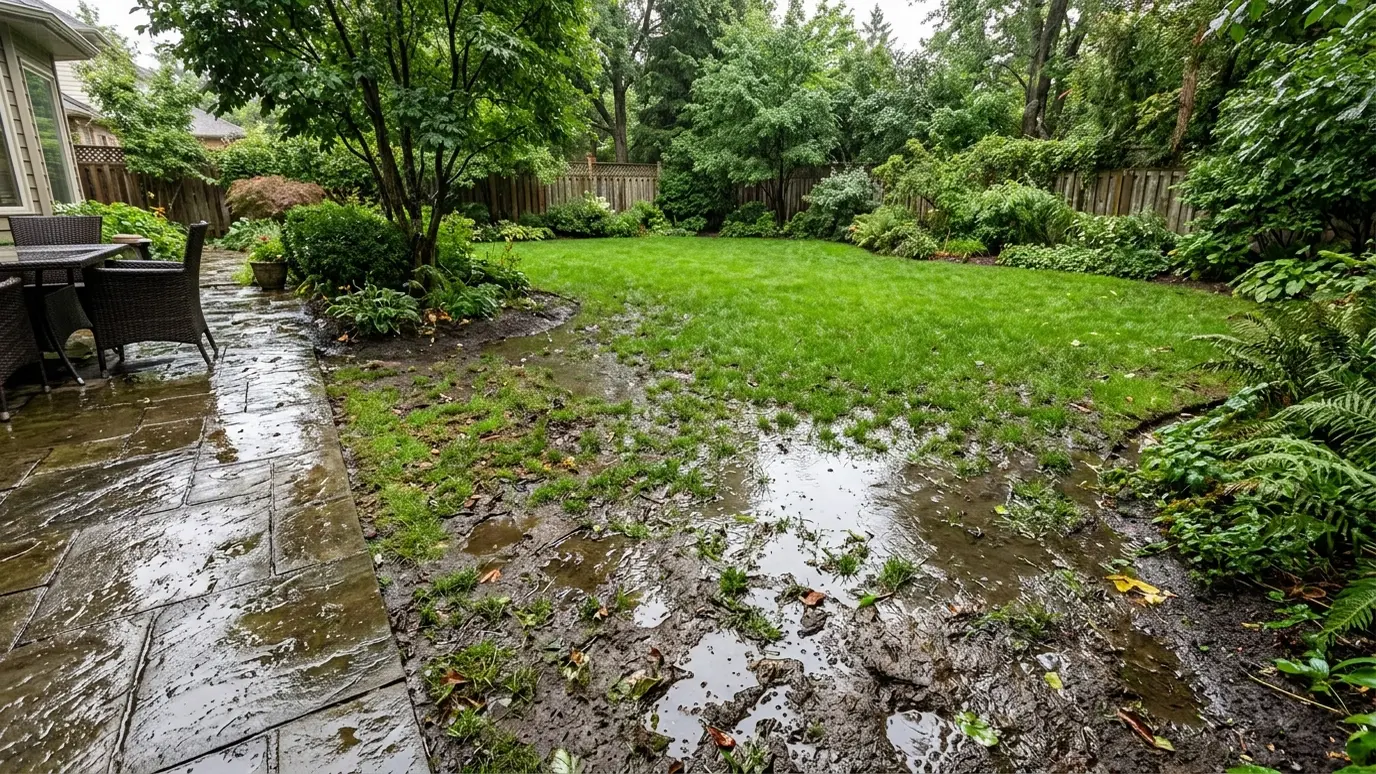 BeforeAfter
Set level on a firm base.
Field lines placed to the design.
Uncompacted soil where it matters.
Easy pumping and inspection.
No guessing in the field.
Grade and seed after inspection.
Every topic has its own page with what to expect and how we approach it.
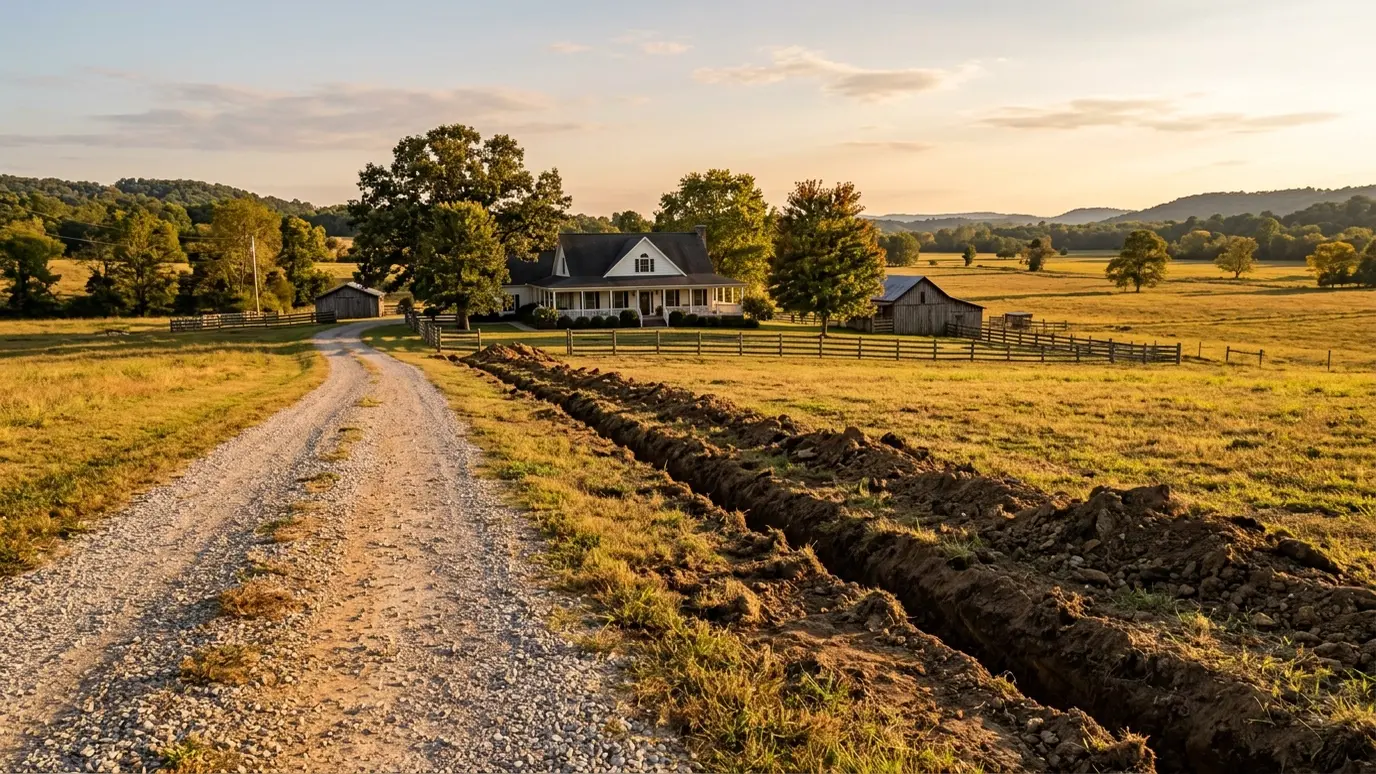 SituationRural and AcreageLong runs for water, power, propane and septic on farms and country lots, through rock, creeks and fields.Learn more
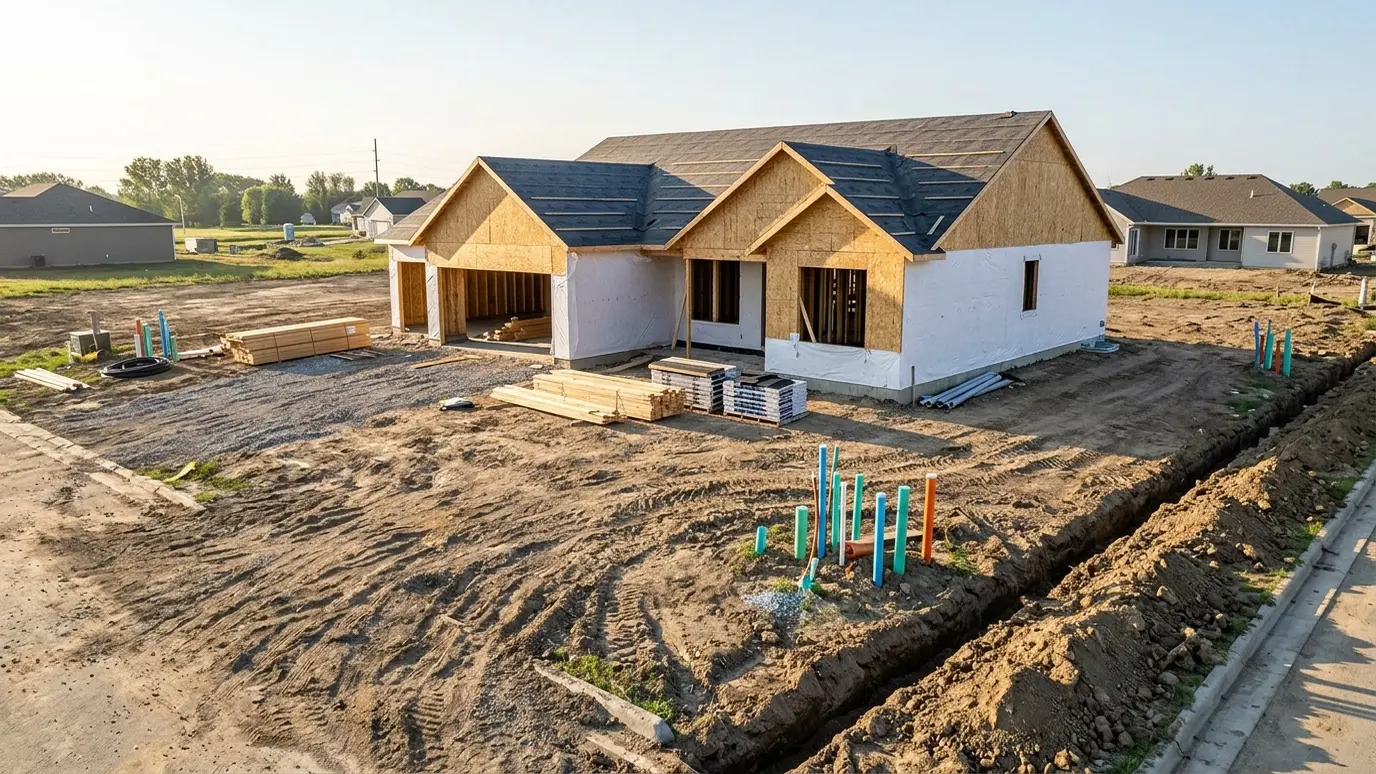 SituationNew Home BuildsWater, sewer, electric, gas and data for a new house: what has to be in the ground, in…Learn more
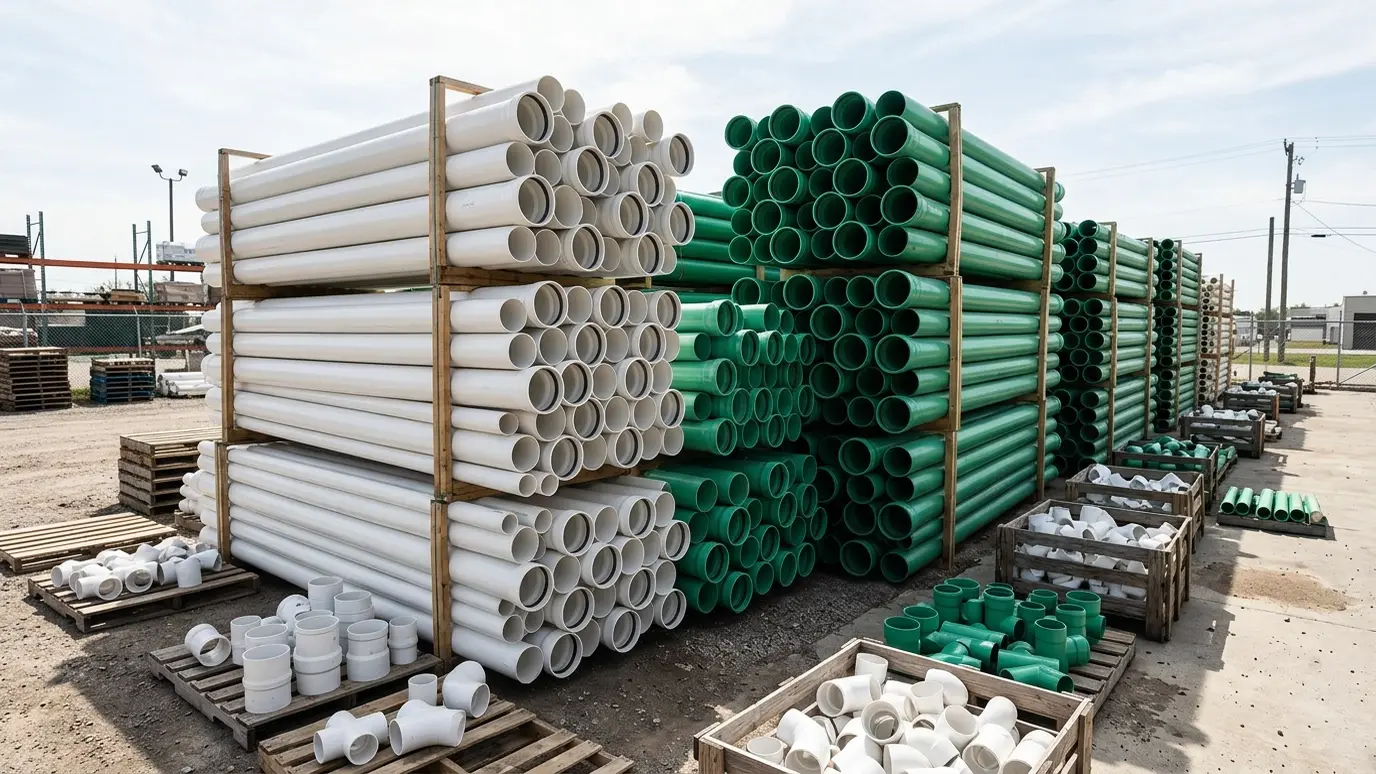 Material guidePVC PipeThe most common modern underground pipe: where PVC is the right choice, how it is joined and what…Learn more
Enter trench length, width and depth and see cubic yards of soil, truckloads and bedding stone to plan for.
Tell us what you need and send photos or a site plan if you can. We plan the visit so we arrive ready.
We call 811, walk the site, confirm lines and plan the route and depth.
You get a clear written price, and we agree a day and an arrival window.
Trenching or boring to the plan, with safe walls, careful spoil handling and protection for your lawn.
Pipe or conduit laid on a good bed, joints checked, tests and inspections done before cover-up.
Compacted backfill, grading, sod or paving repair and a walk-through with you.
No. Design and permitting come from a qualified designer and the local health authority. We build from the approved plan.
Yes, where the new design is approved. It starts with an evaluation of why the old field failed.
Often a few days once the permit is in hand, depending on soil, size and weather.
Avoid it. Vehicles compact the soil and can crush lines. Keep traffic and structures off the field.
Often every few years, depending on household size and tank size. Your designer or service provider can advise.
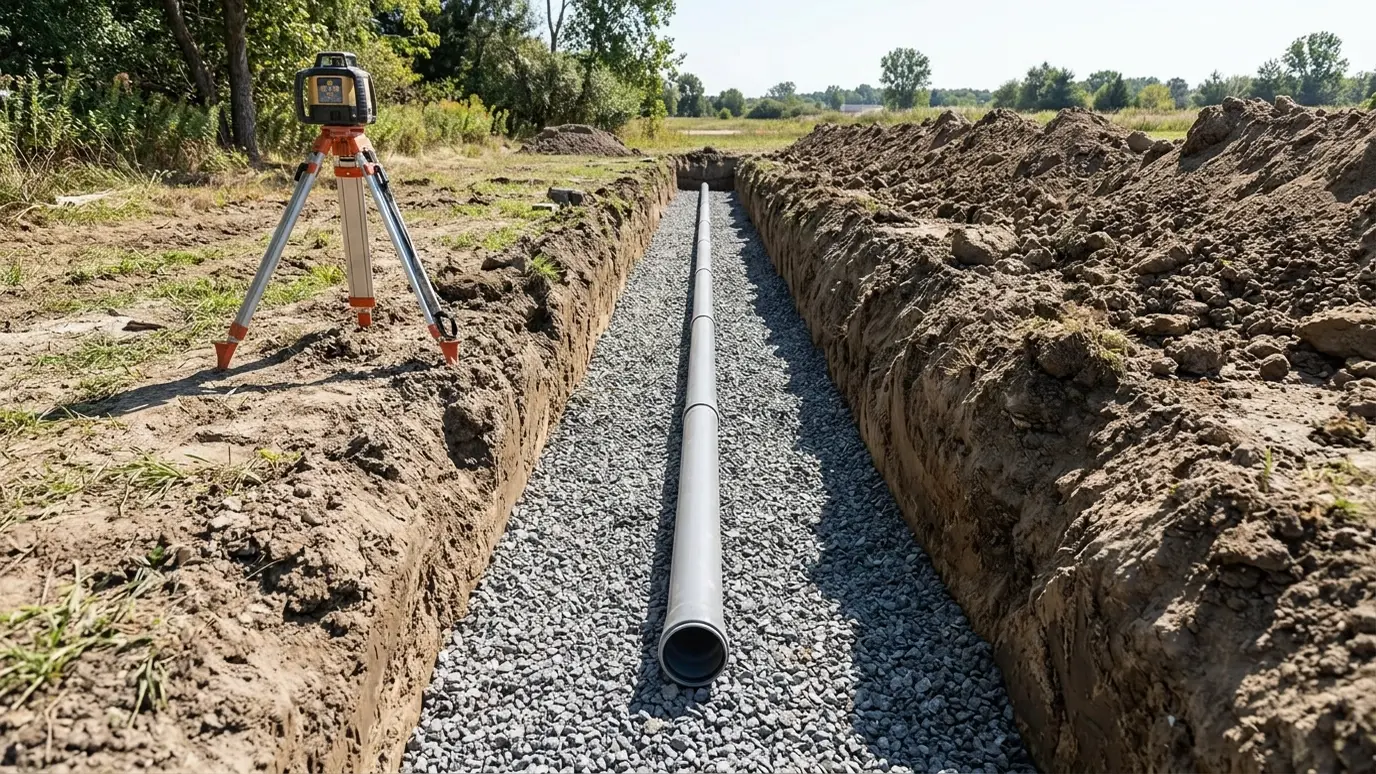 Sewer Line InstallationGravity sewer lines laid to a steady, correct slope with clean joints, cleanouts and structures built to last…Explore
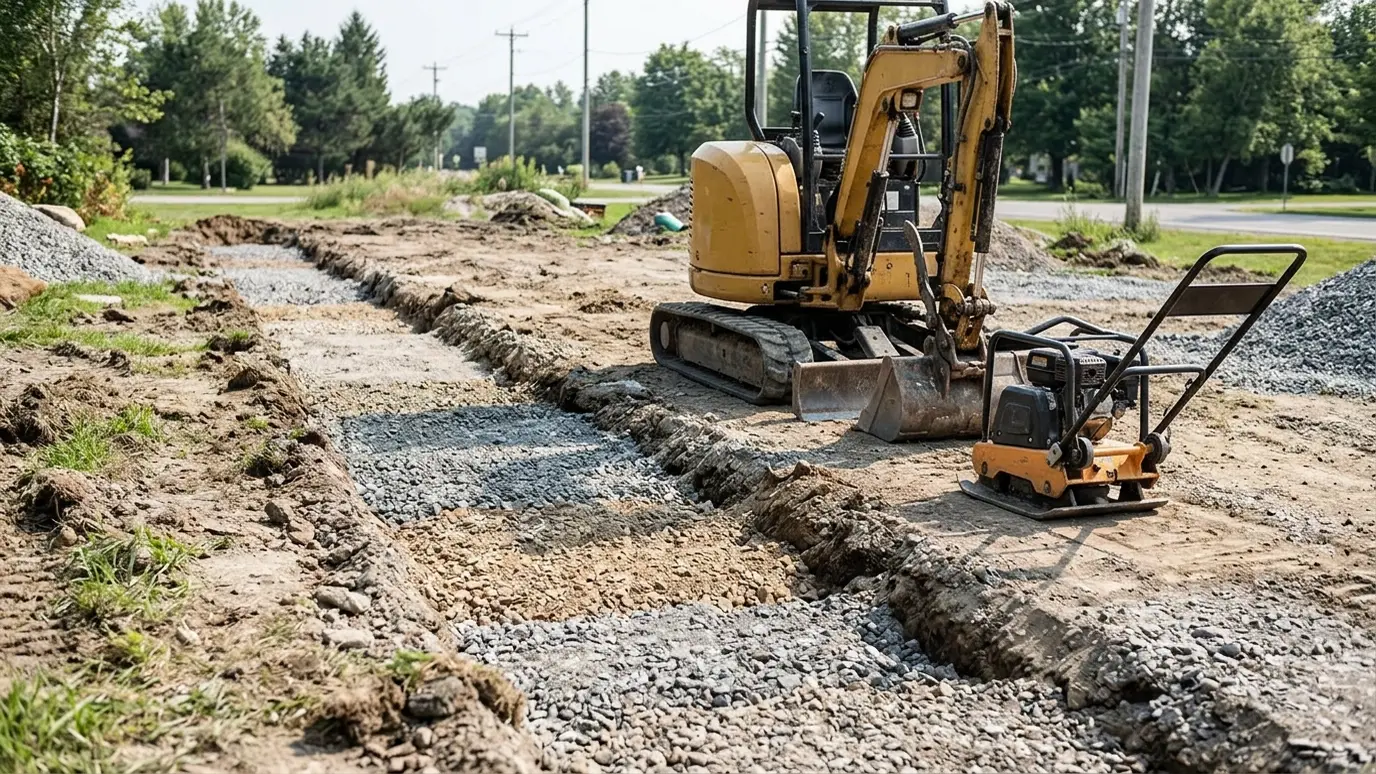 Excavation and BackfillDigging, bedding and backfilling done in layers with proper compaction, so the ground does not sink after the…Explore
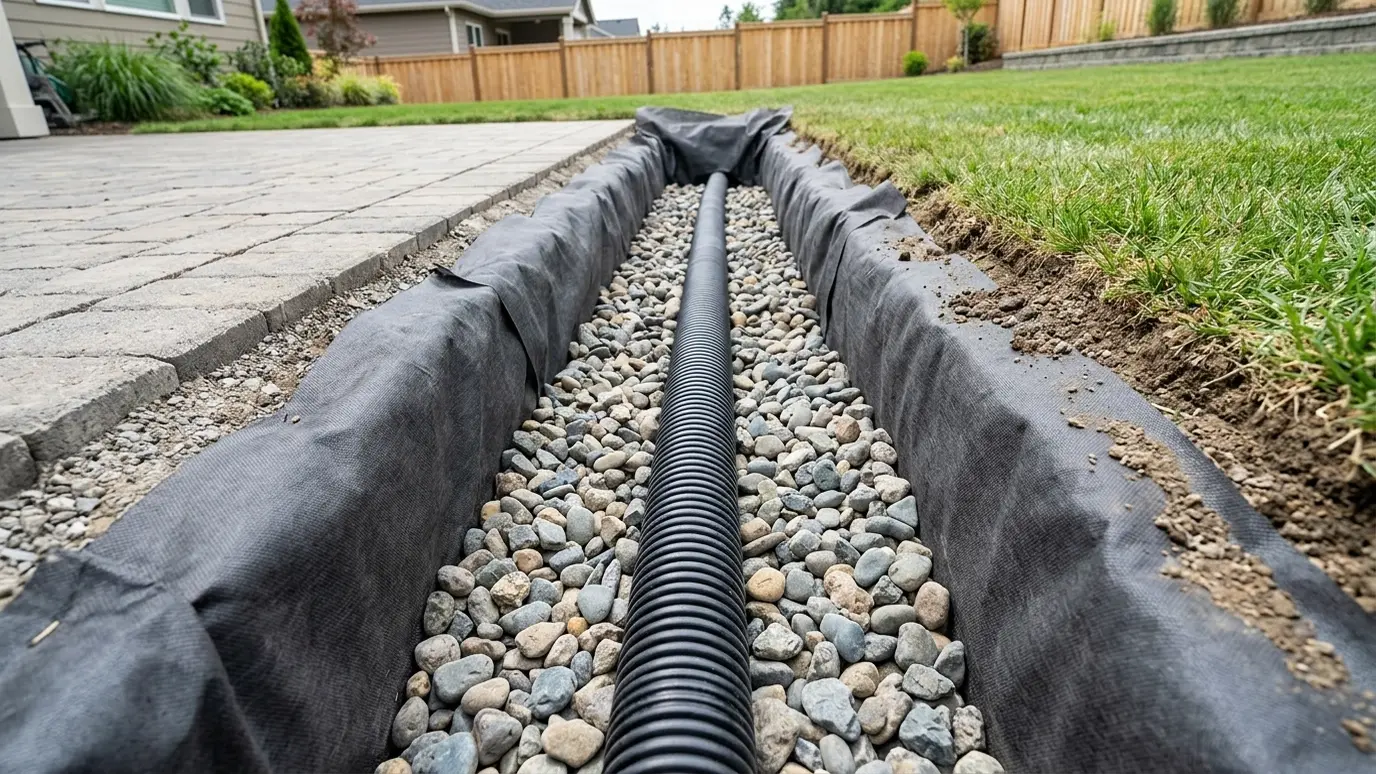 French DrainsFrench drains, swales and downspout lines that move water away from foundations, patios and soggy lawns.Explore
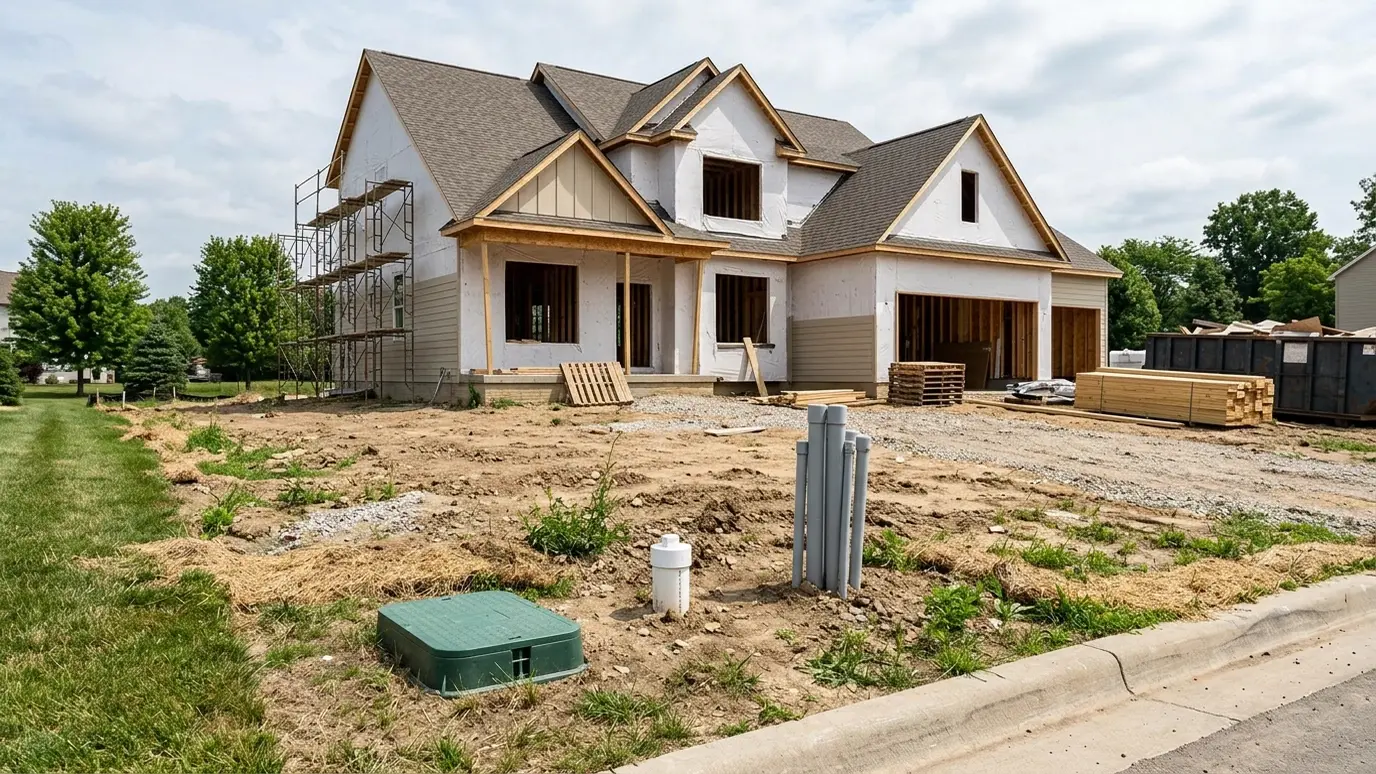 New Home HookupsWater, sewer, electric, gas and communication connections for a new house, trenched and stubbed to the foundation on…Explore
Tell us about the job and we will call you back quickly.
Or call (615) 357-7797 to talk now.