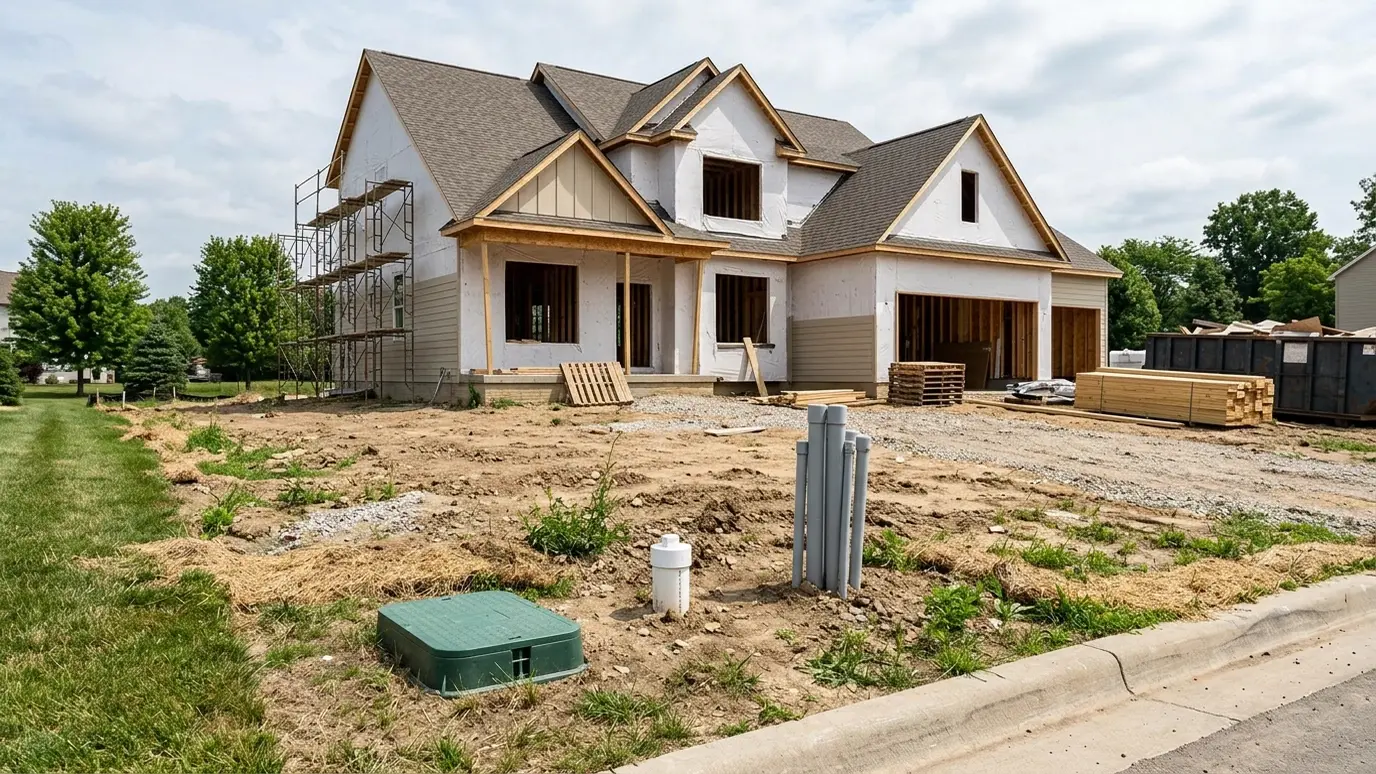
Planning and permits
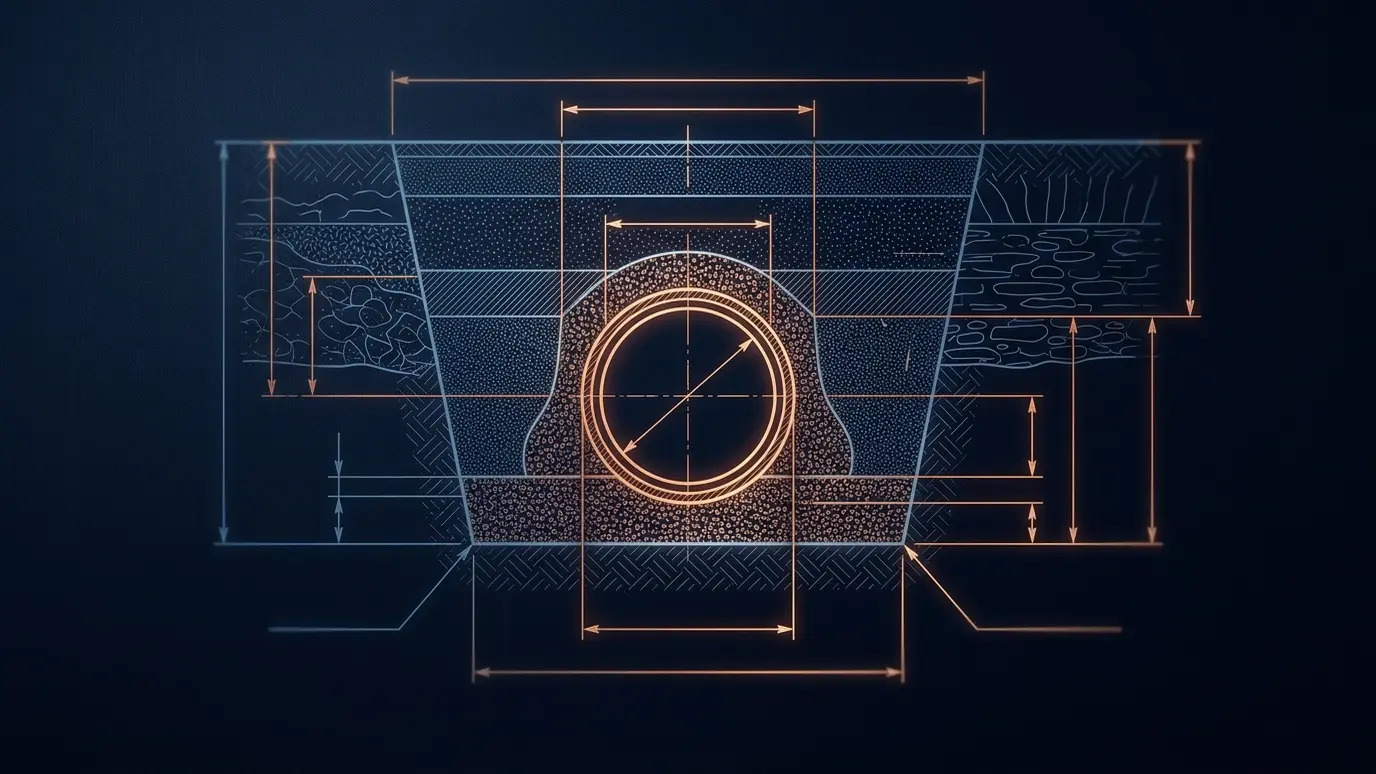
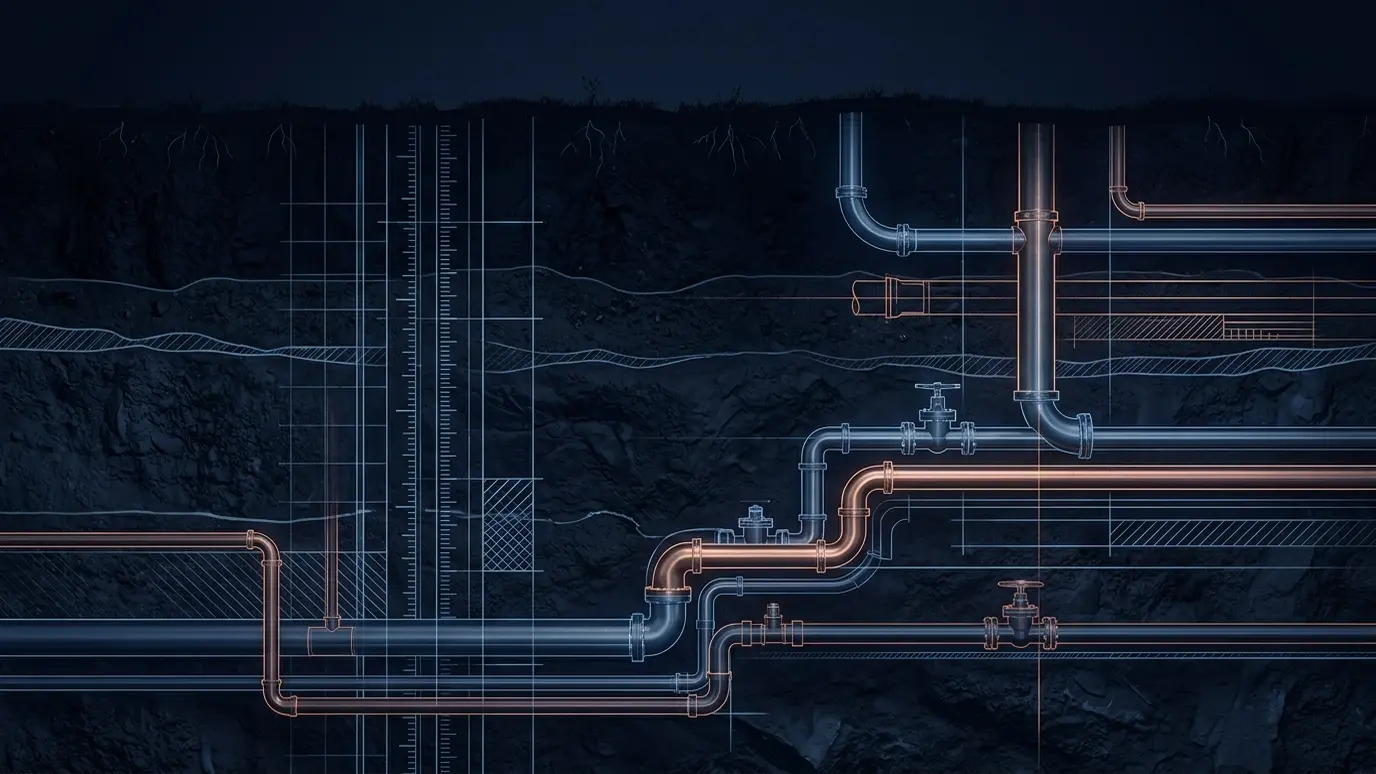
Every job starts with a plan: where the line connects, where it will run, how deep and what pipe. Permits and utility approvals come next. This is the stage where most problems are least costly to fix.
Locating and 811
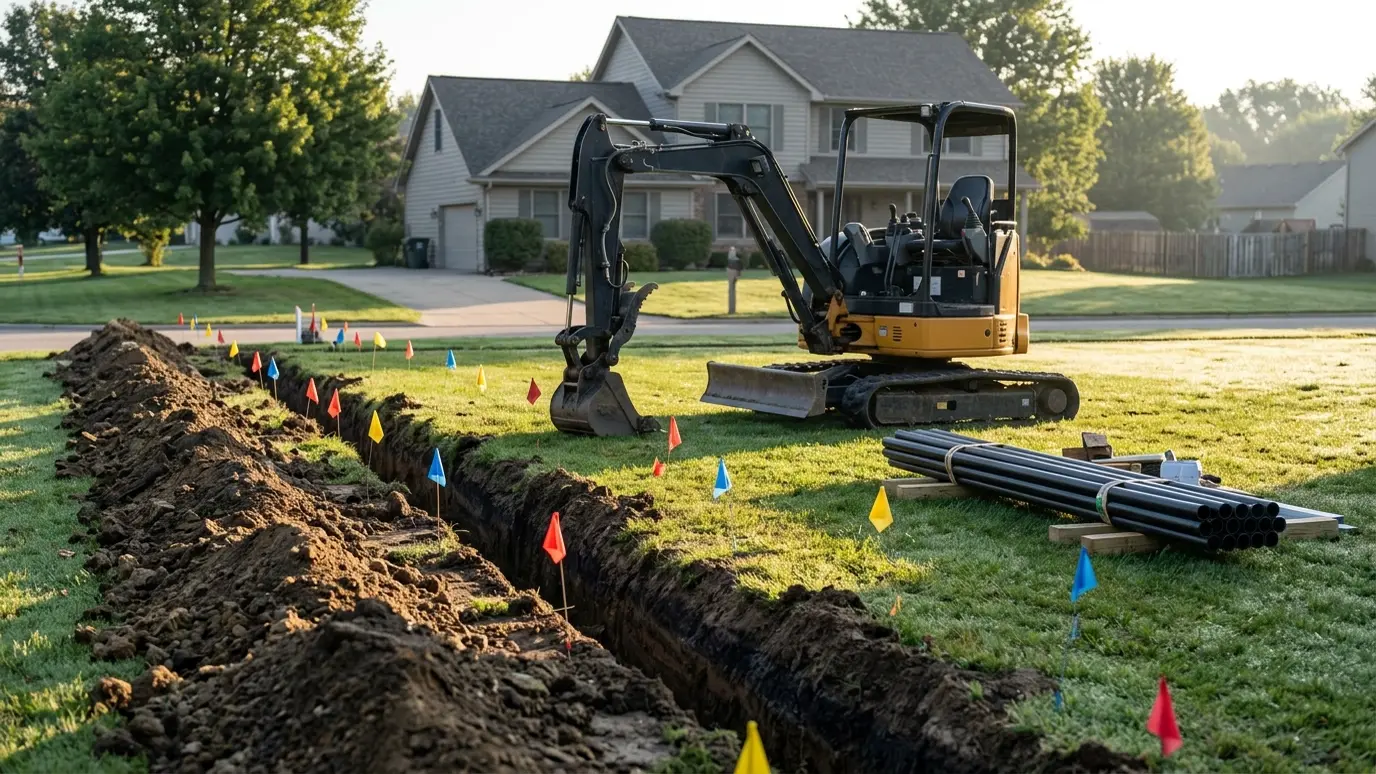
Before any digging, 811 is called and every utility marks its lines. We walk the site, compare the marks to the plan and pothole at crossings so we know exactly what is underground.
Digging
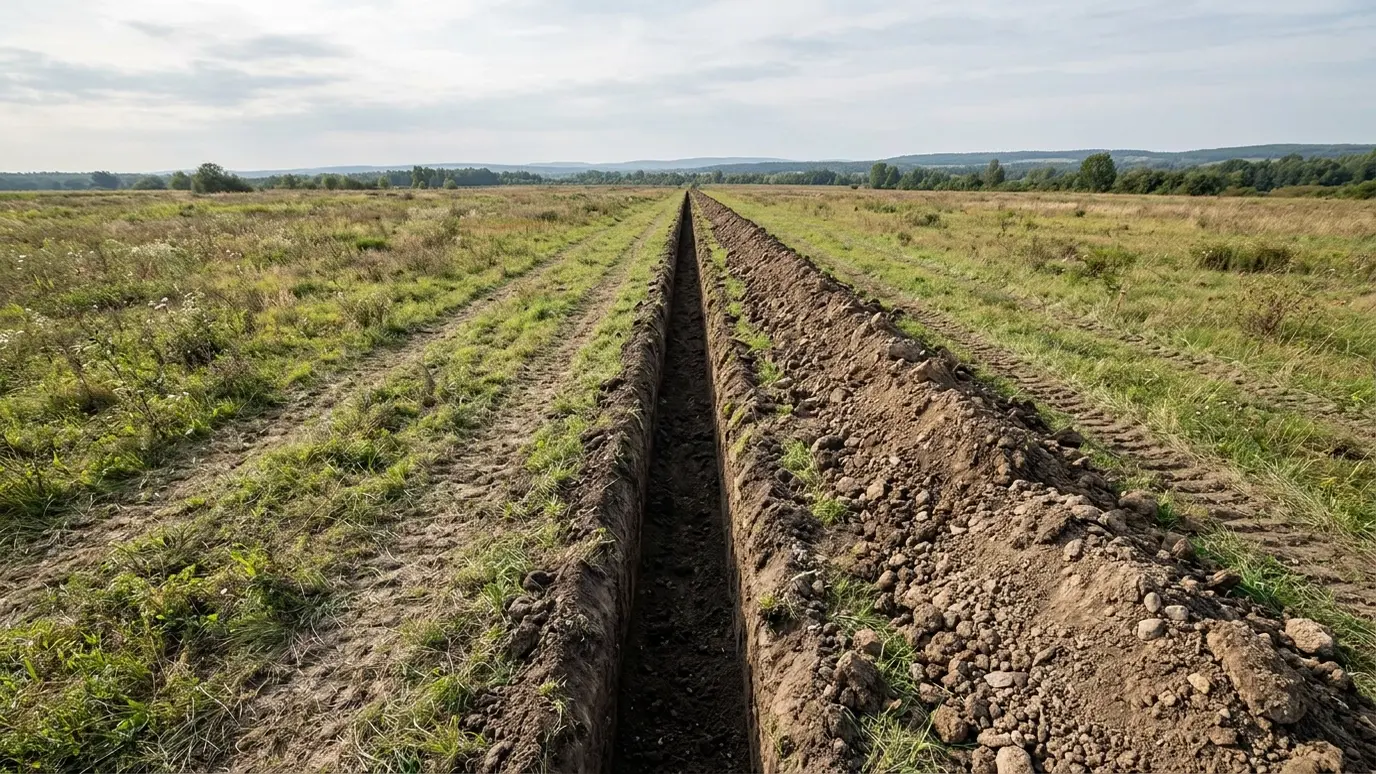
Trenches or bores are cut to the planned route and depth. Walls are sloped or shored, spoil is stacked away from the edge, and the bottom is trimmed to grade.
Laying and connecting
Bedding goes down, pipe or conduit is laid to line and grade and joints are made. Cleanouts, valves and structures are set. Tracer wire and warning tape go in above the line.
Testing and inspection
Water lines are pressure tested, sewer lines are checked with air or water tests and a camera, and the inspector looks at the open trench. Nothing is covered until the line passes.
Backfill and restoration
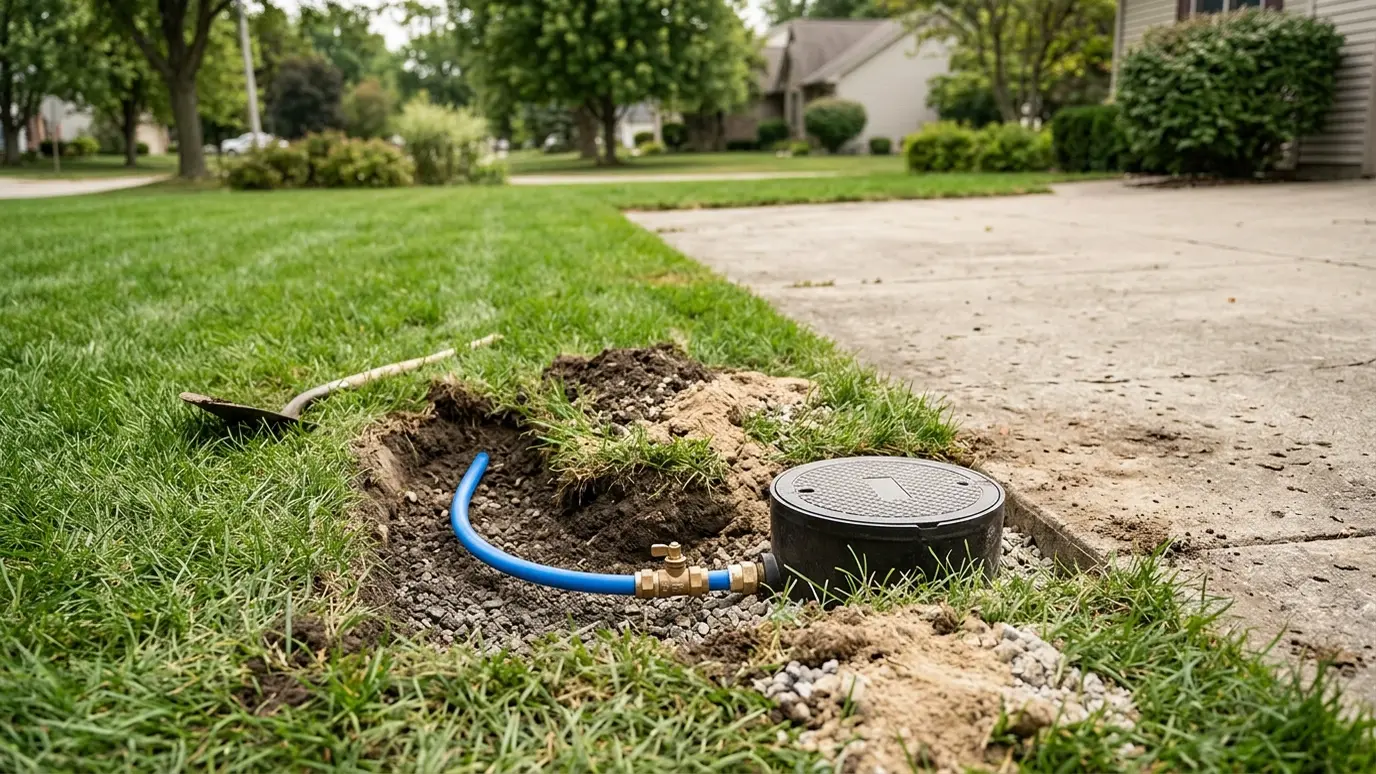
The trench is backfilled in compacted layers and the surface is restored with sod, seed, concrete or asphalt. We leave the site clean and give you a record of where the lines run.
Good planning, good locating and good compaction matter more than anything that happens in the middle.