Why trenches collapse
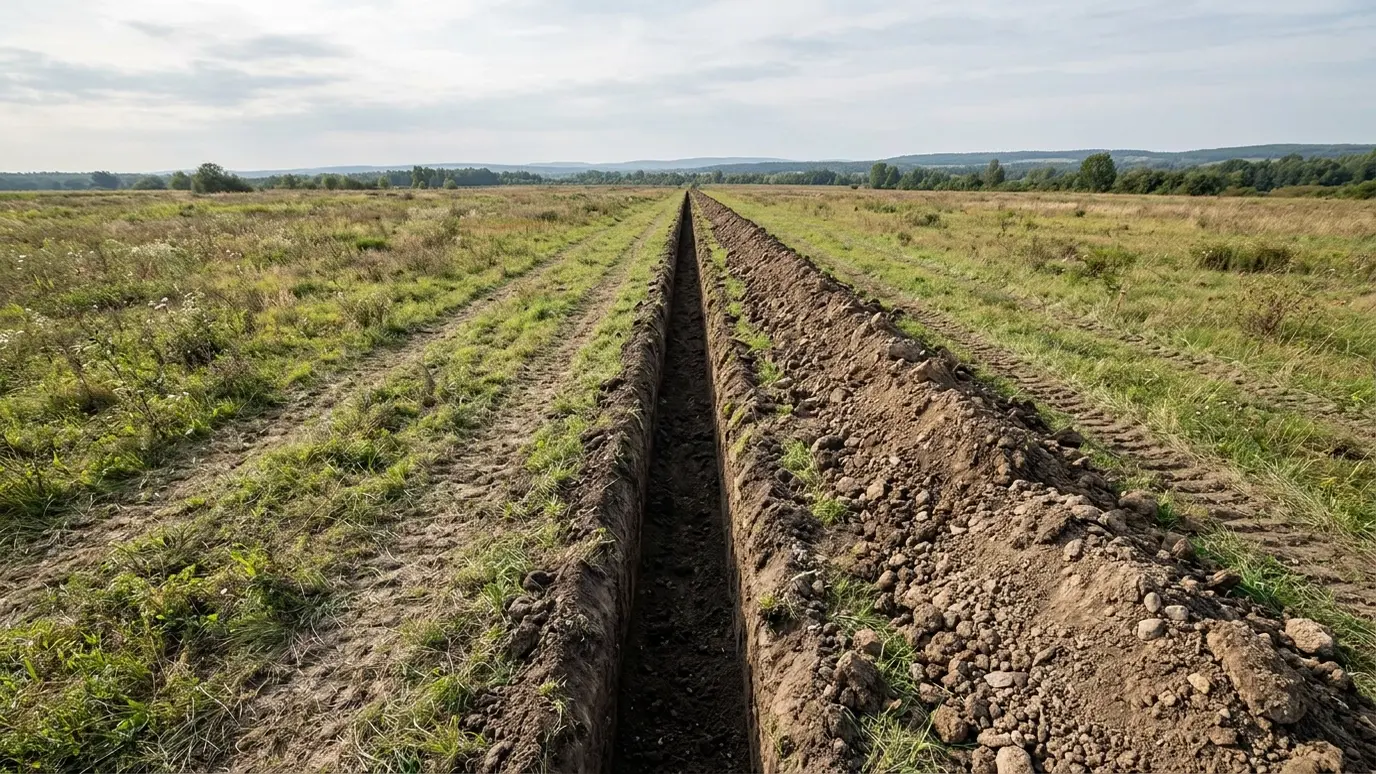
Soil is heavy, and a vertical trench wall can fail without warning. A cubic yard of soil weighs well over a ton. Vibration, rain and nearby spoil increase the risk.
How professionals protect crews
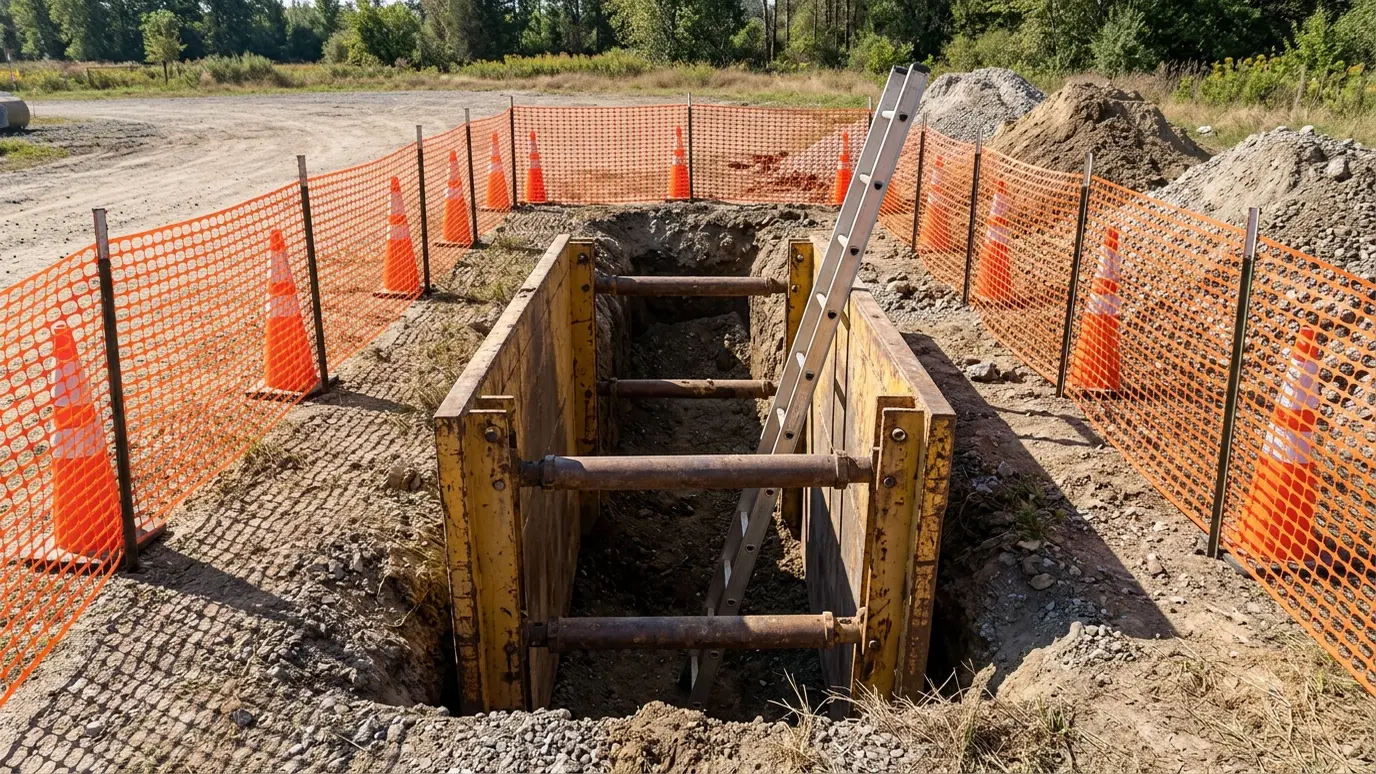
Deeper trenches are sloped back, benched or protected by trench boxes and shoring. Ladders give a way out and spoil is kept back from the edge. Competent crews inspect trenches daily and after rain.
Around the trench
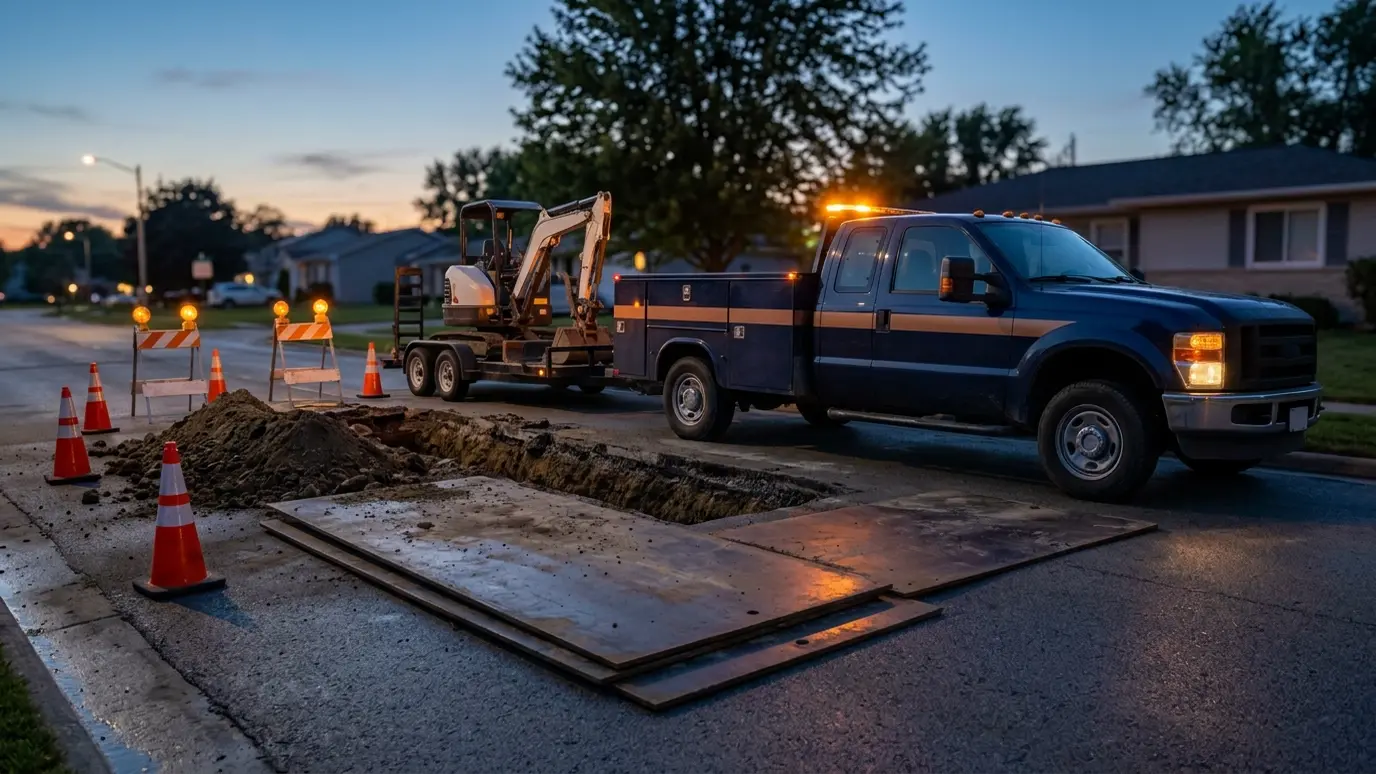
Keep children, pets and visitors away. Never stand at the edge of a deep trench or in it. Barriers and cones mark the area.
Water and gas
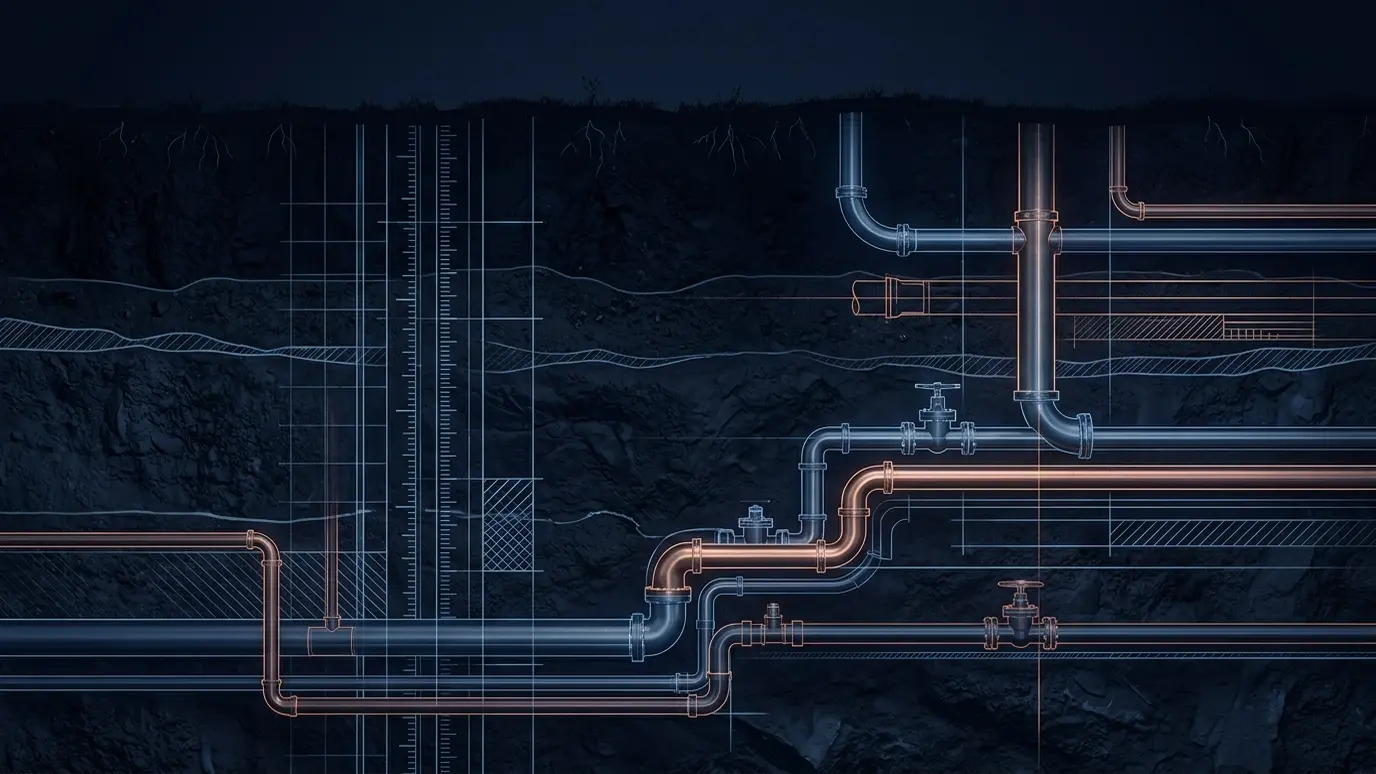
Water in a trench makes walls unstable and covers hazards. If you smell gas or see a damaged line, leave and call for help.
Equipment hazards
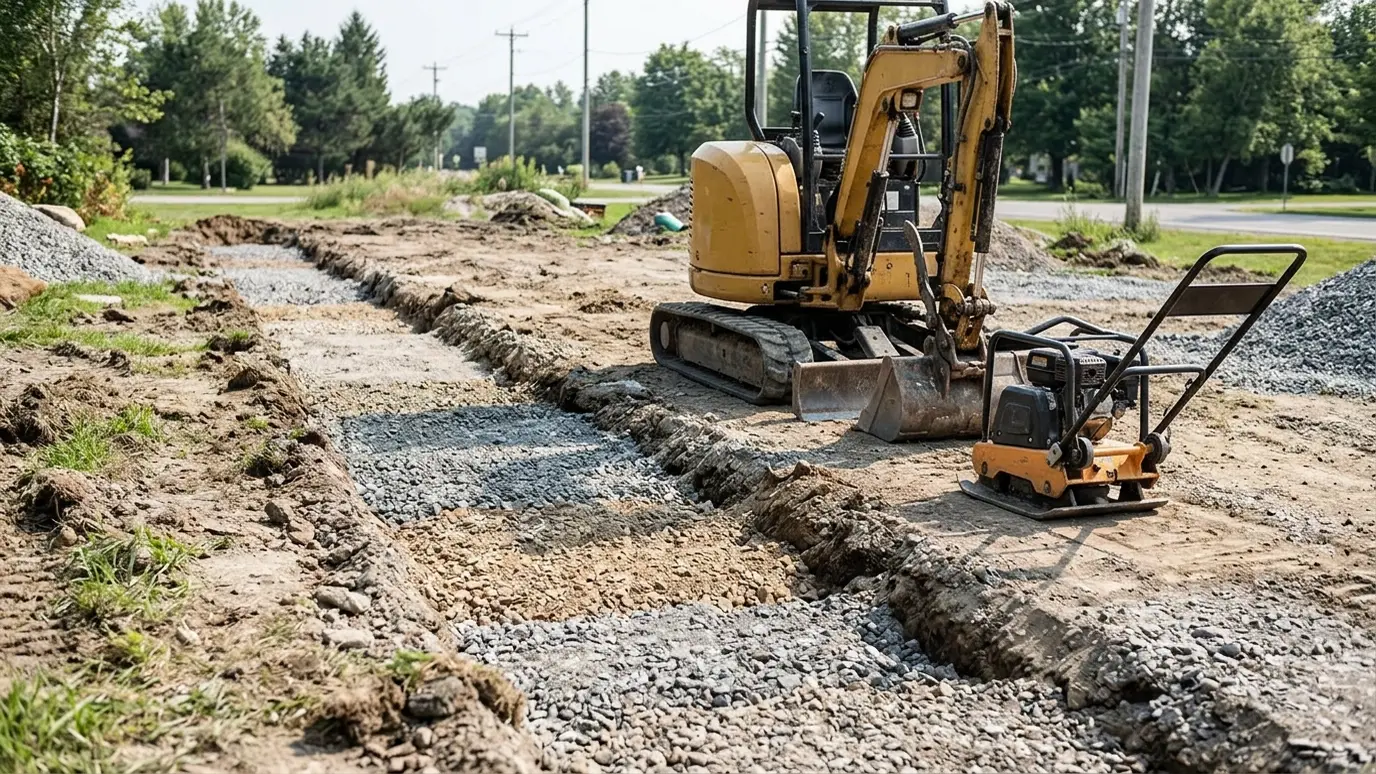
Excavators swing and trucks back up. Stay out of the swing radius and make eye contact with the operator before you approach.
Do not enter a trench yourself
Homeowners should never enter a deep trench. A few feet is enough to be fatal in a cave-in. Let trained crews handle it.
Stay out of trenches, stay back from the edge and keep everyone else away.