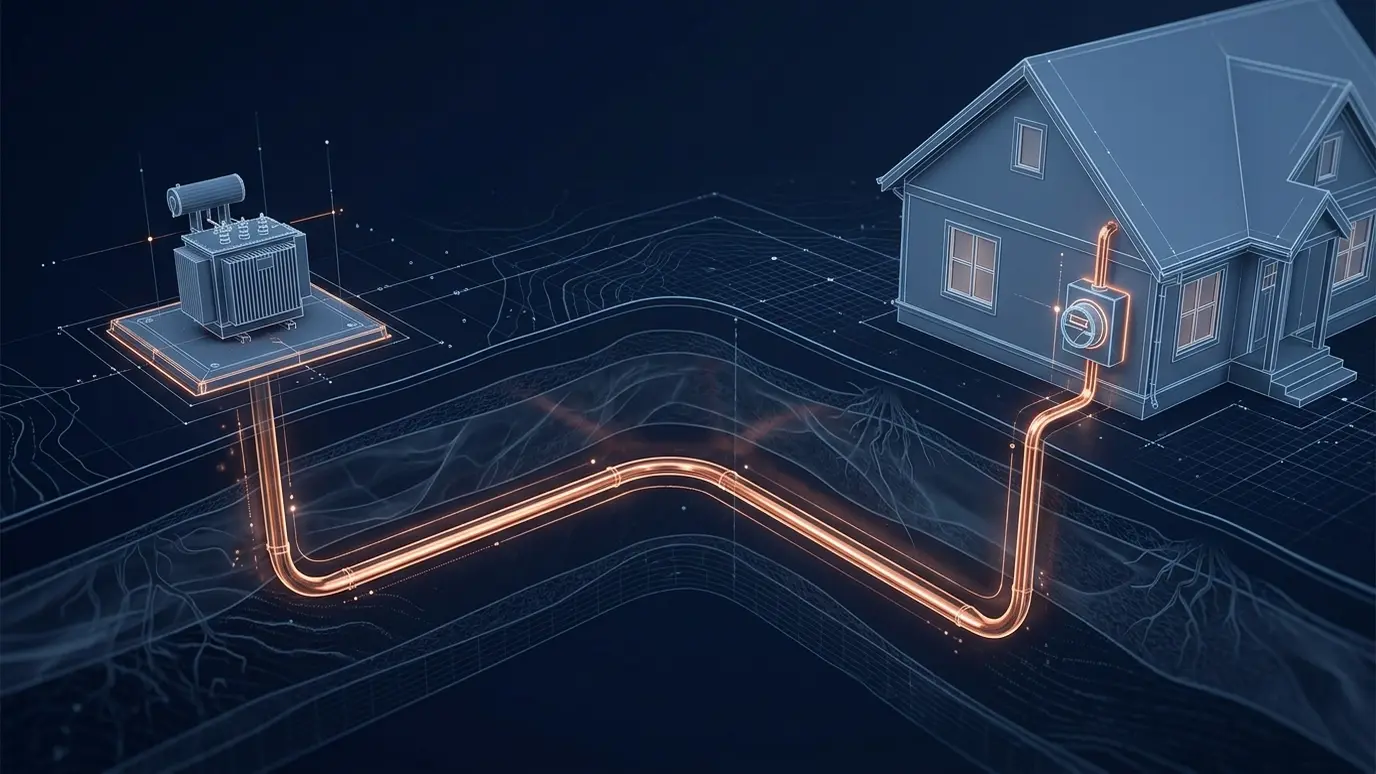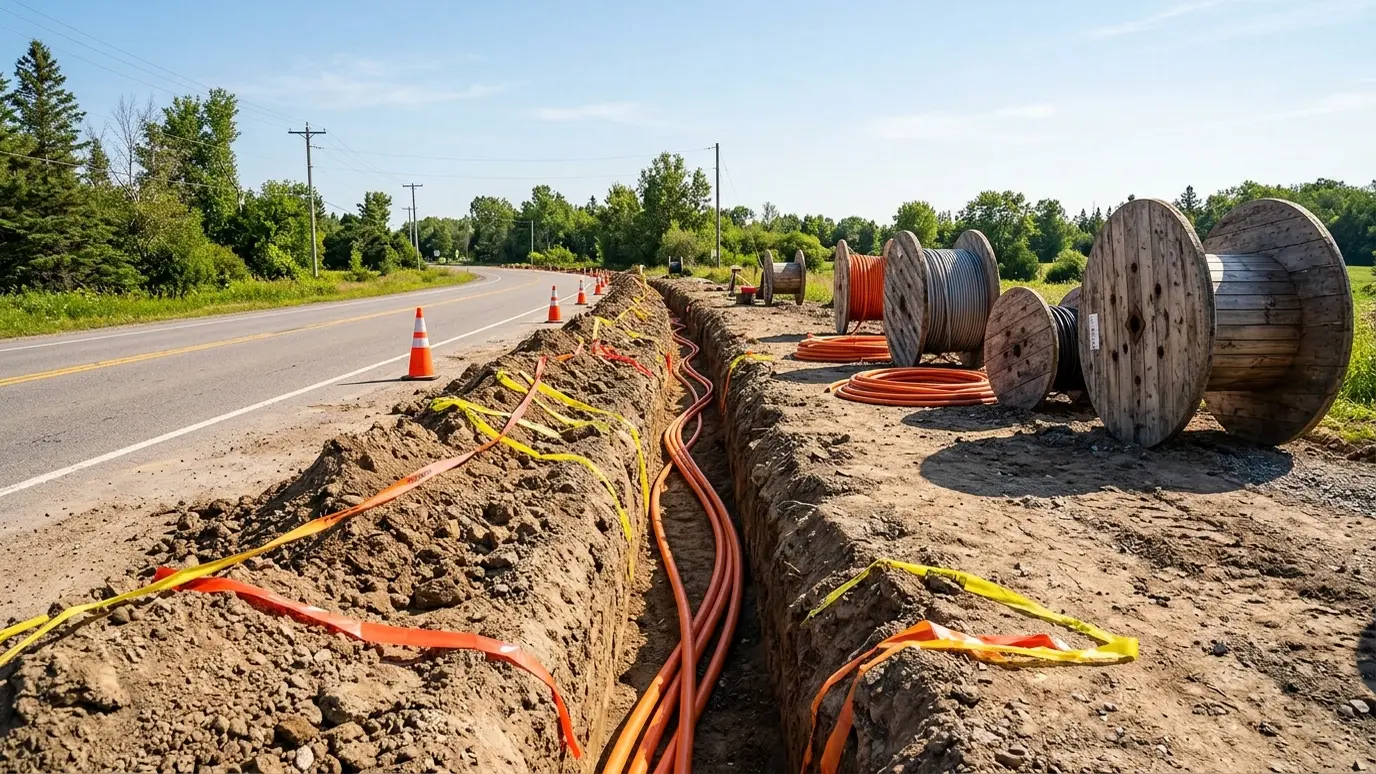
Primary and secondary power lines placed underground in trenches and bores, built to the utility specification.
Burying power lines is one of the most reliable improvements a developer, a farm or a business can make. The line is protected from weather, safer for people and out of sight. It is also a job where the rules are strict, because the cost of a mistake is measured in outages and injuries.
We excavate the route, install conduit, set pull boxes and bury the line to the utility specification for depth, separation and marking. Cable pulling and energizing are done by the utility or its approved crews. We deliver a clean, accurate trench and conduit system, and we mark and record it so the line can be found for the life of the property.
Each utility has its own standard for depth, bedding, spacing and tape. We build to it and ask for clarification early so rework never happens.
Power, water, sewer and gas each need clearance from one another. We plan the route so separation is maintained, and we pothole to confirm existing utilities where lines cross.
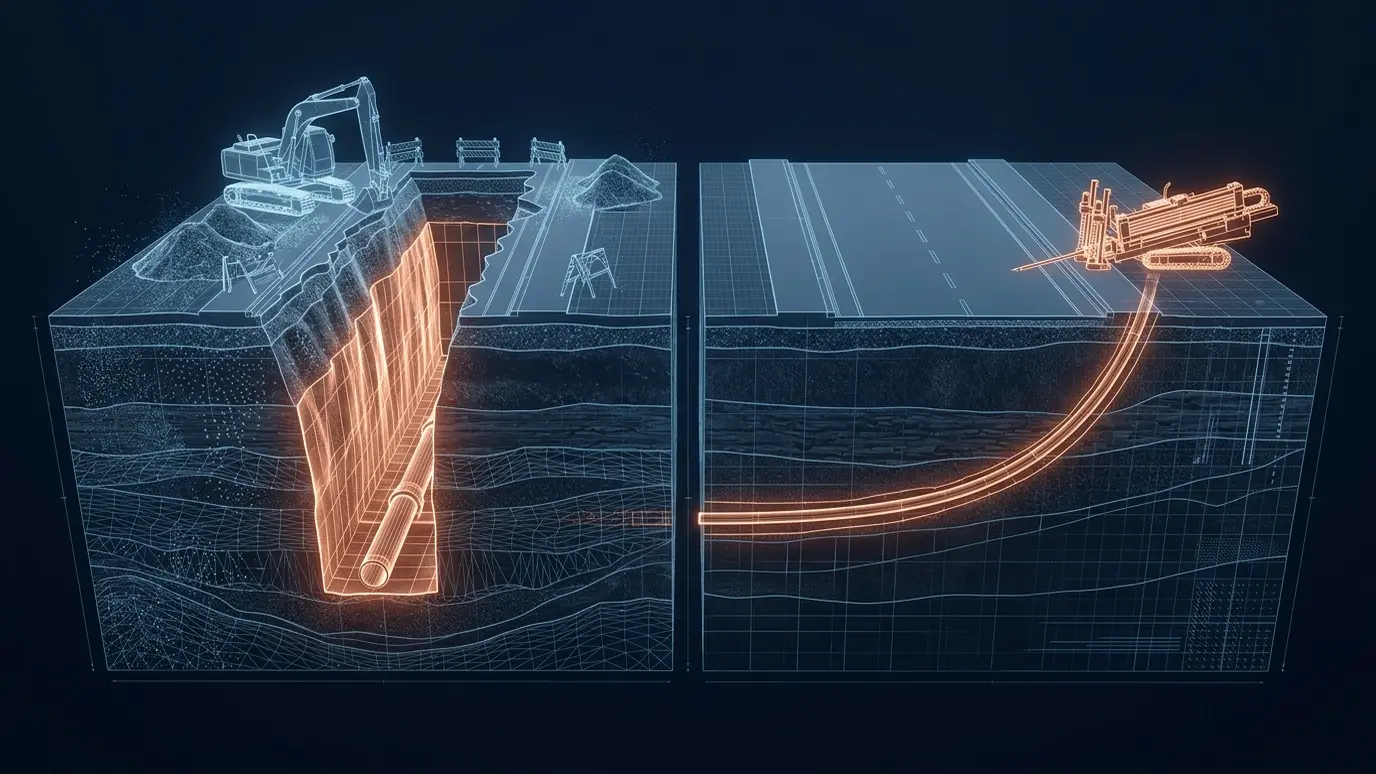
Boring avoids cutting pavement and disturbing traffic. We use directional drilling for crossings wherever it makes sense.
Cover depth and warning tape are the main defenses against a future dig-in. We build to the depth required and add tape so a shovel hits plastic before it hits a cable.
Drag the handle to compare.
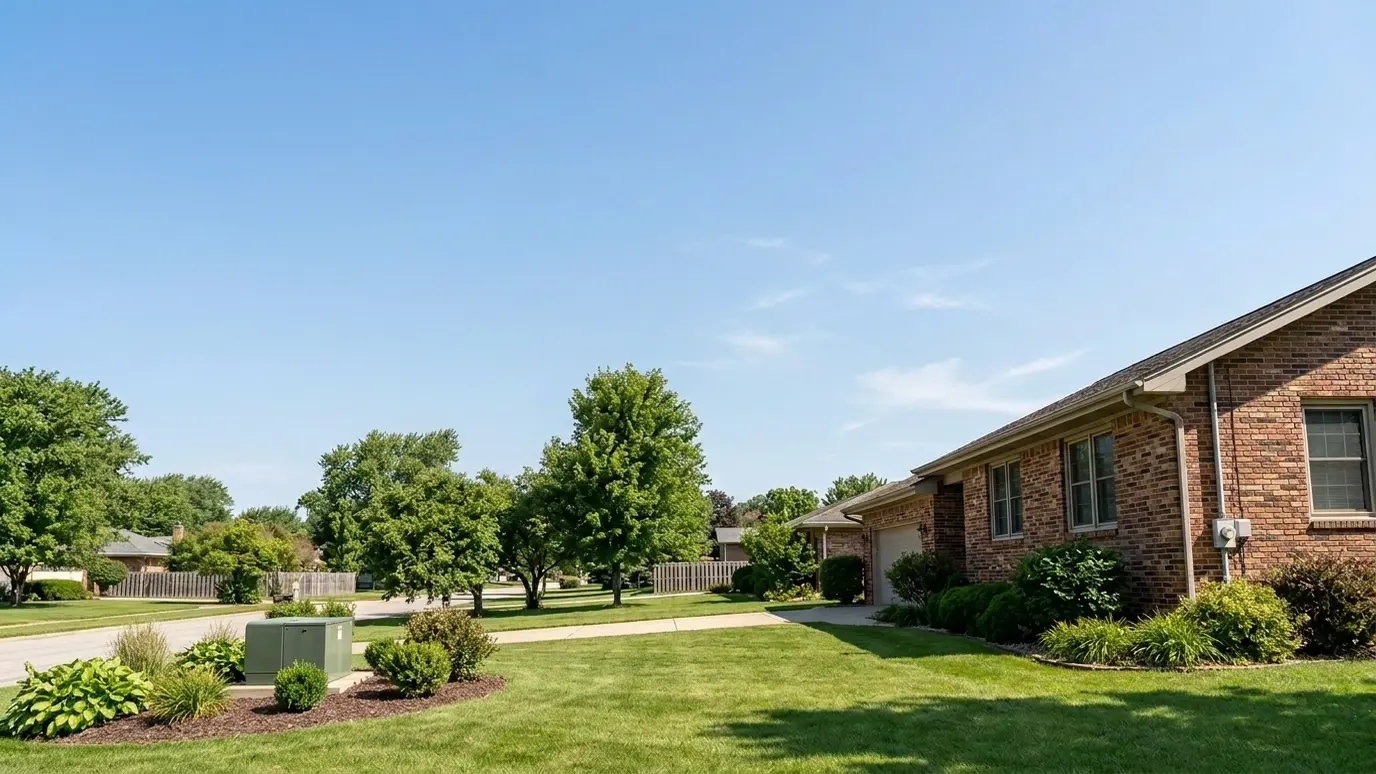
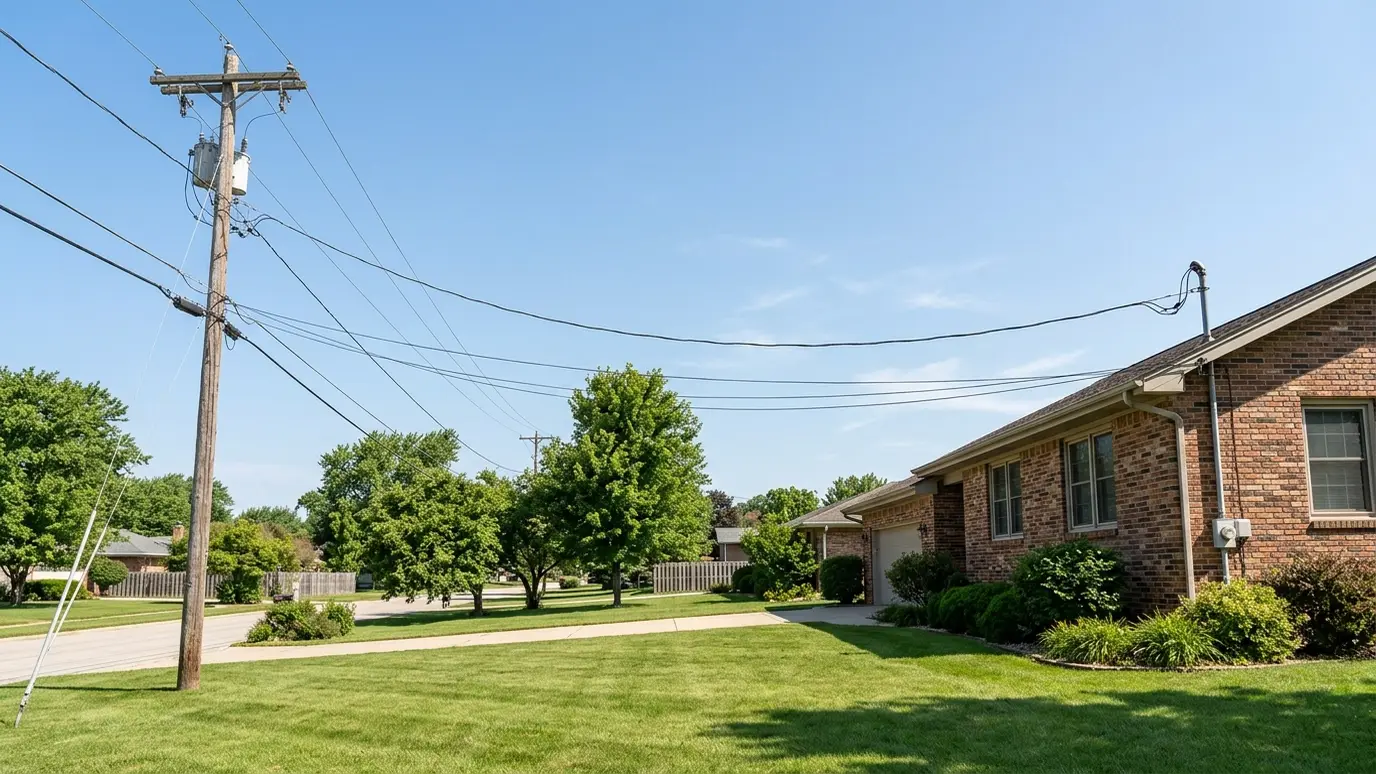 BeforeAfter
Depth, bedding and tape to standard.
Potholing where lines cross.
Roads and drives left intact.
Route documented for later.
Smooth sweeps and pull boxes.
Inspections and energizing scheduled.
Every topic has its own page with what to expect and how we approach it.
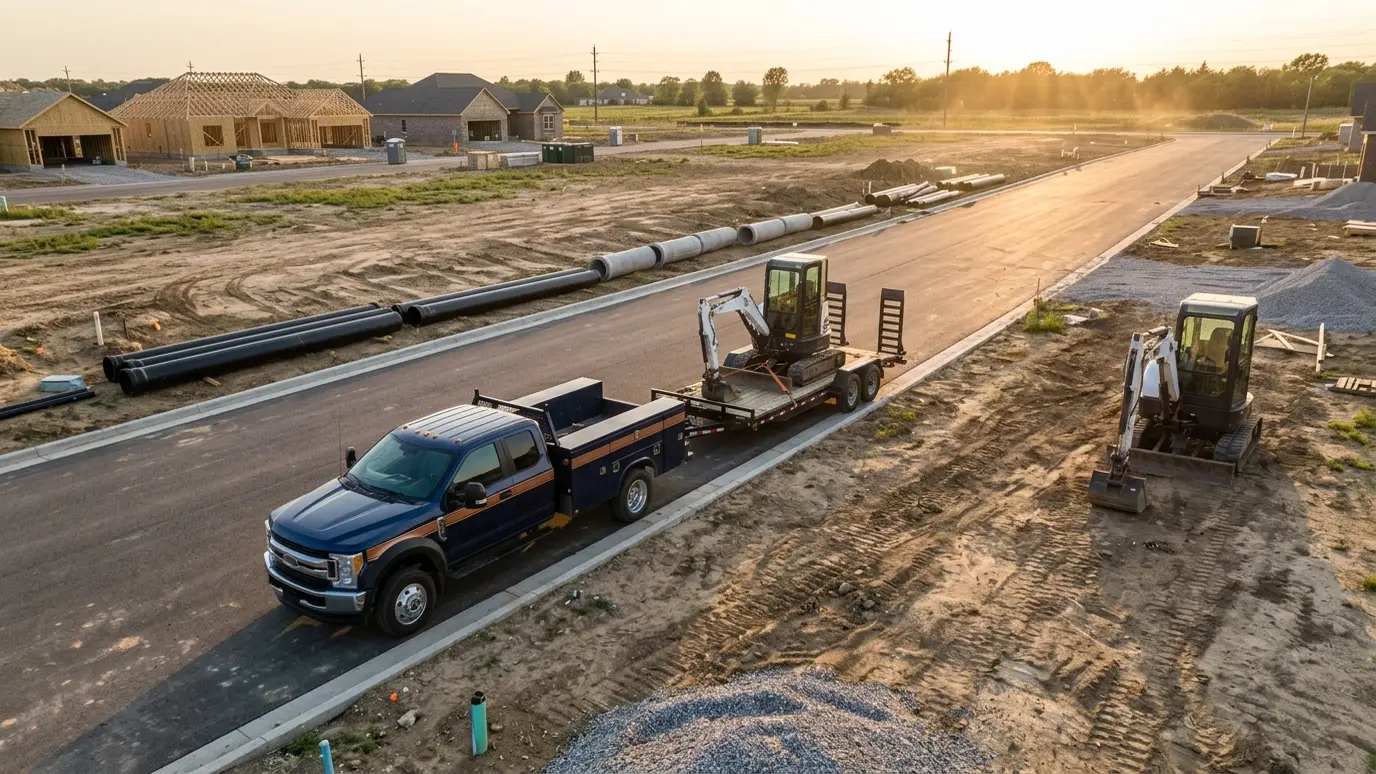 SituationDevelopers and BuildersInfrastructure for subdivisions and multi-lot projects: schedules, sequencing, inspections and clean hand-offs to the next trades.Learn more
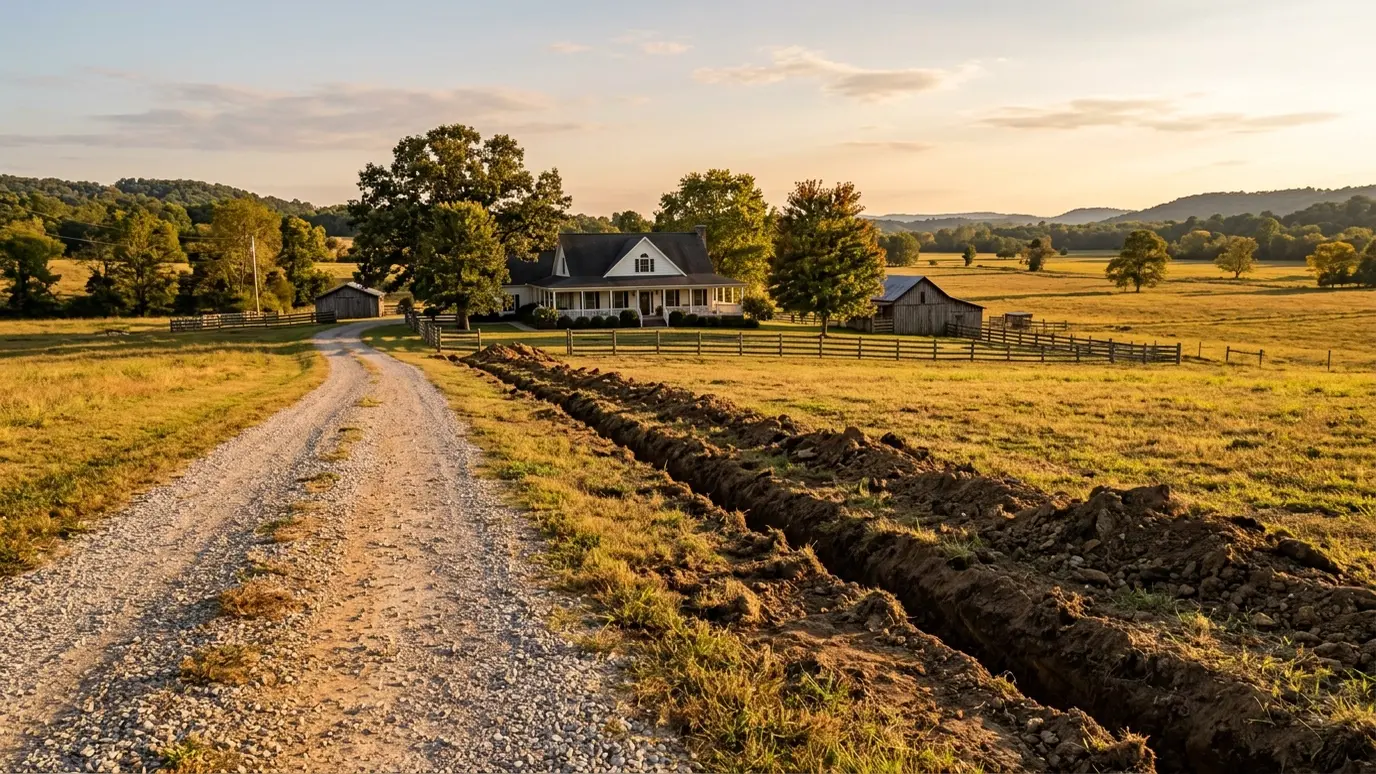 SituationRural and AcreageLong runs for water, power, propane and septic on farms and country lots, through rock, creeks and fields.Learn more
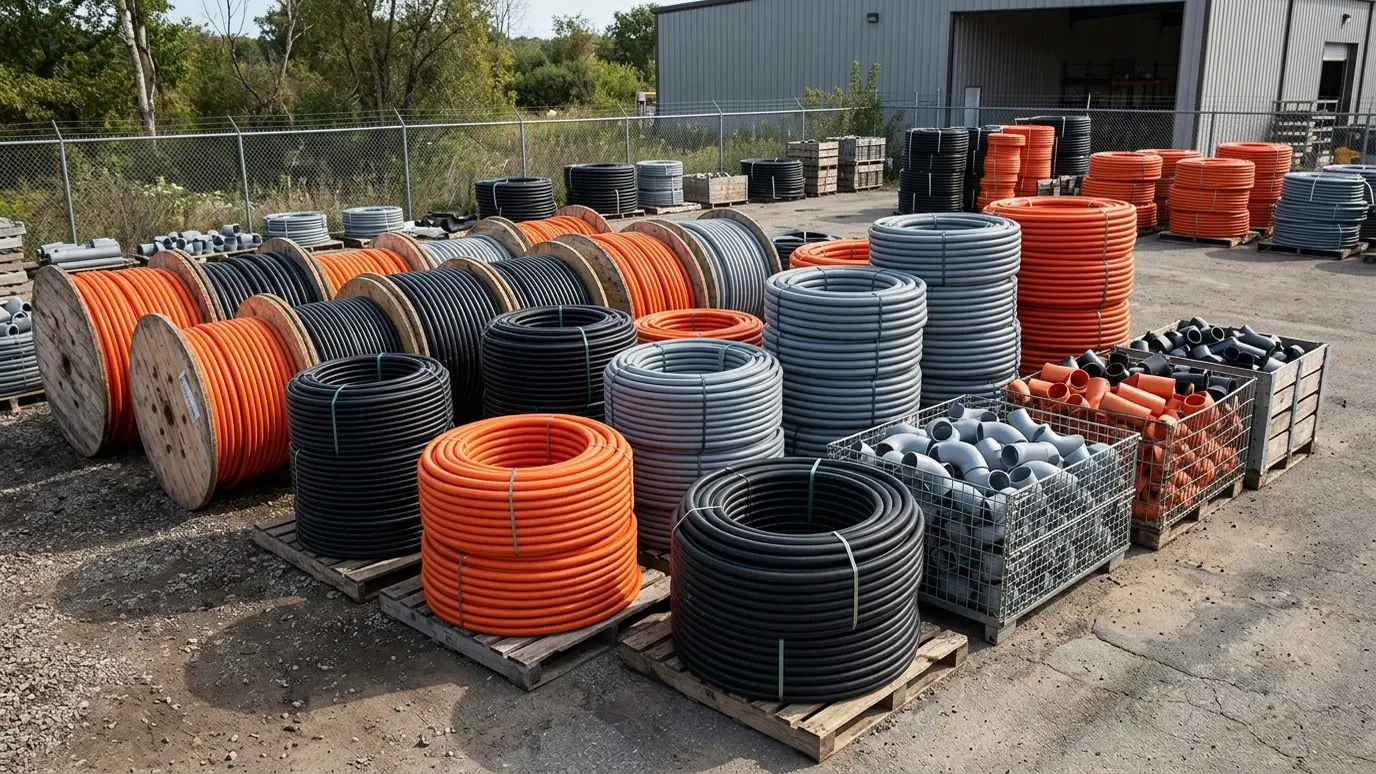 Material guideElectrical ConduitPVC, rigid steel, HDPE and flexible conduit: which kind goes where, how deep it is buried and how…Learn more
Enter trench length, width and depth and see cubic yards of soil, truckloads and bedding stone to plan for.
Tell us what you need and send photos or a site plan if you can. We plan the visit so we arrive ready.
We call 811, walk the site, confirm lines and plan the route and depth.
You get a clear written price, and we agree a day and an arrival window.
Trenching or boring to the plan, with safe walls, careful spoil handling and protection for your lawn.
Pipe or conduit laid on a good bed, joints checked, tests and inspections done before cover-up.
Compacted backfill, grading, sod or paving repair and a walk-through with you.
That work is done by the utility or qualified electrical crews. We build the trench, conduit and boxes that make it possible.
Required separation depends on local rules and the utilities involved. We plan the layout to meet it and tell you if a crossing needs special handling.
Yes, with rock trenching or boring. It takes the right equipment and more time.
Warning tape and, where specified, tracer wire help locate it. We also provide a simple route record.
Yes. It alerts a digger that a line is below and prompts them to stop and check.
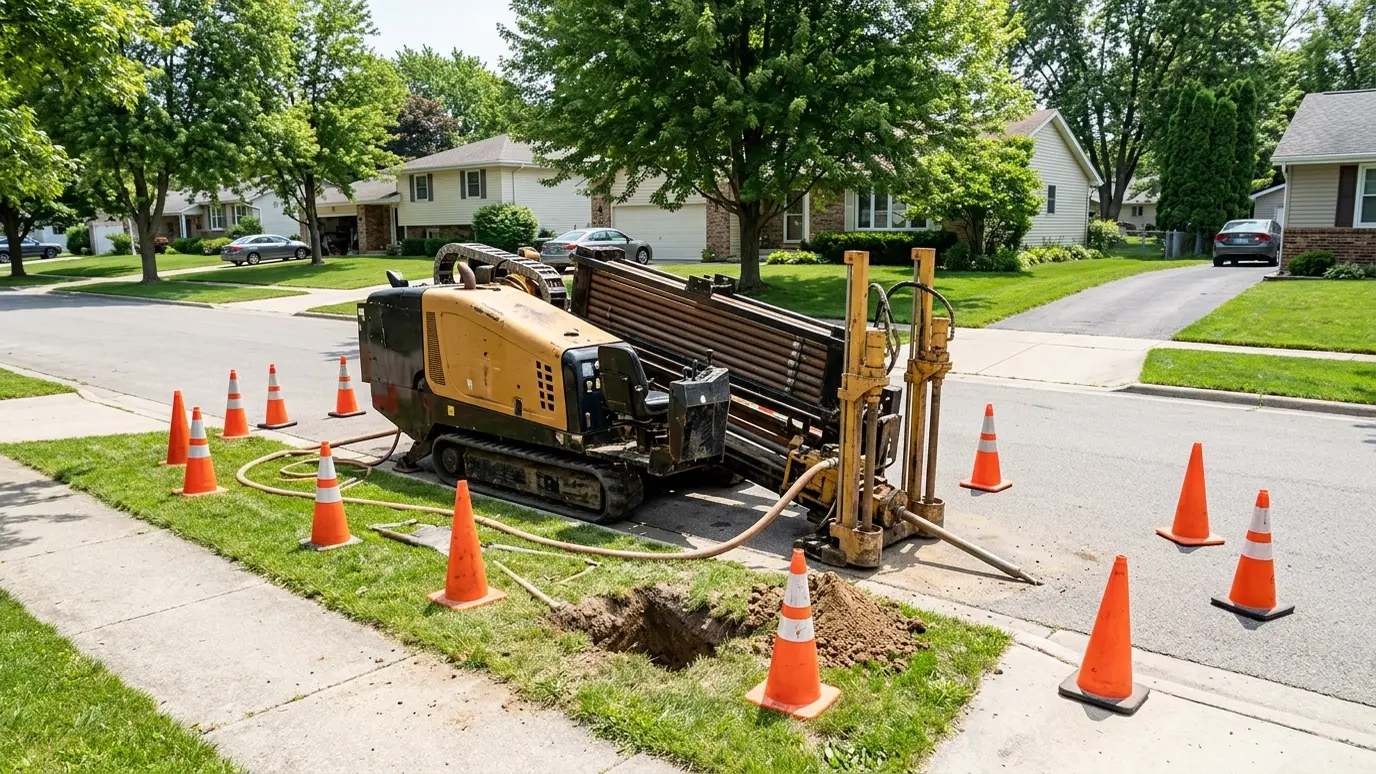 Directional DrillingSteerable drilling that installs pipe and conduit beneath roads, driveways, creeks and landscaping without opening a trench.Explore
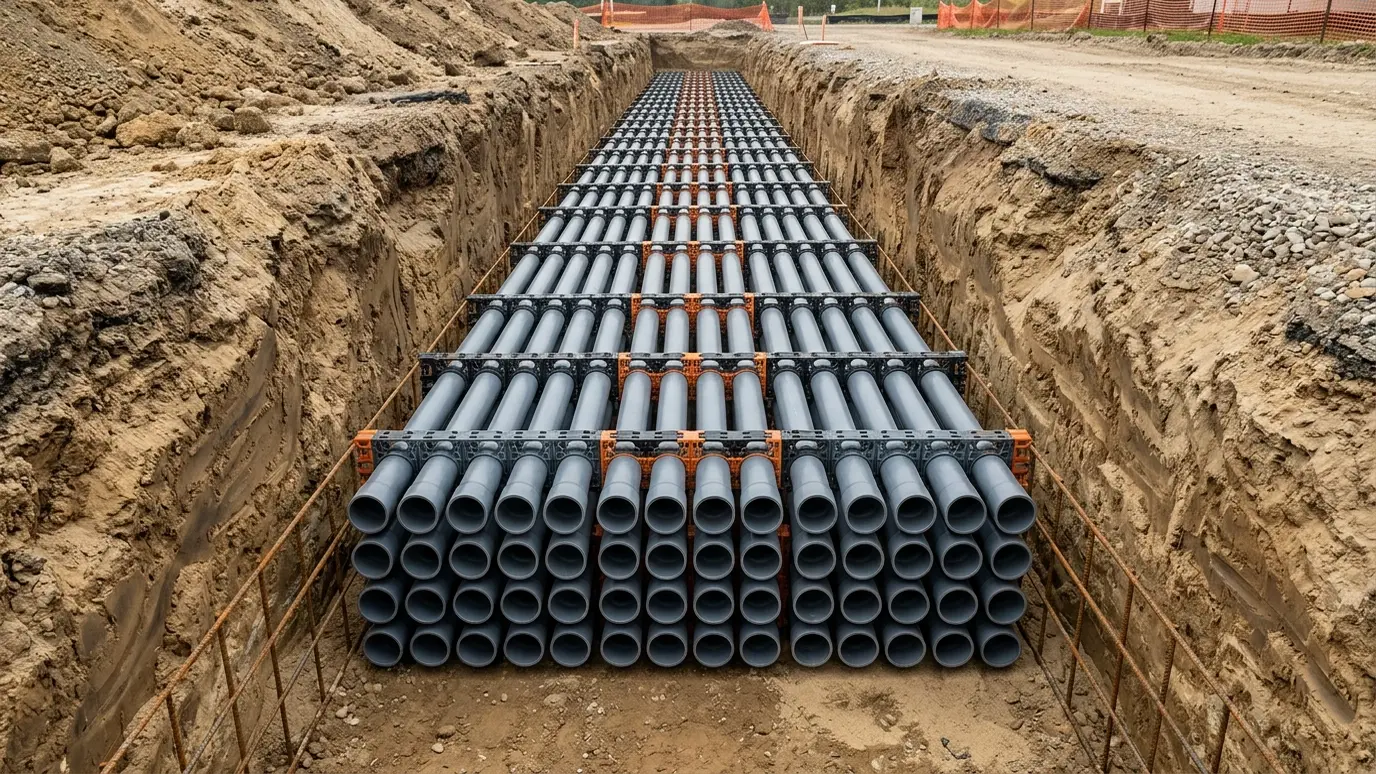 Conduit and Duct BanksSingle conduits and multi-duct banks, spaced, supported and encased so cable can be pulled now and added later.Explore
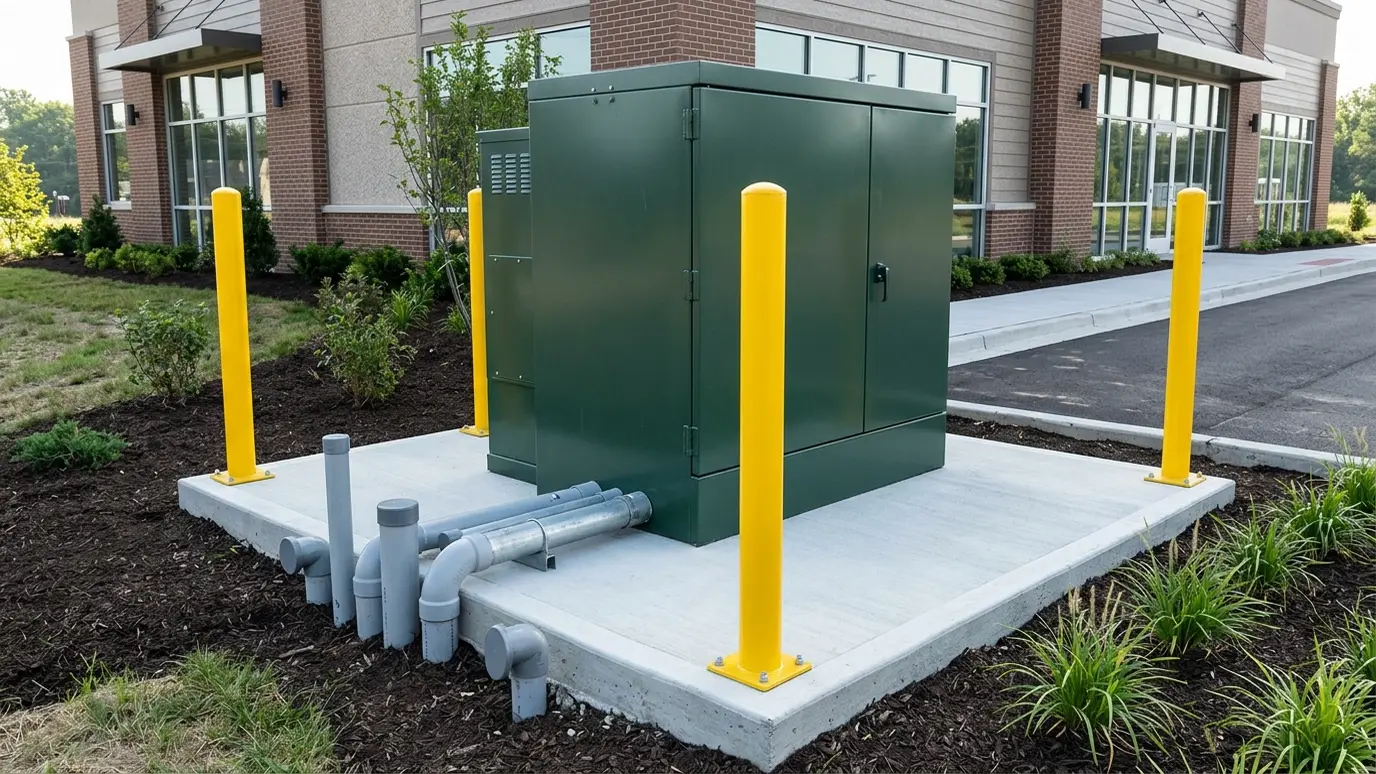 Transformer Pads and PedestalsConcrete pads, conduit stubs, bollards and pedestal bases for transformers and service equipment, built to the utility detail.Explore
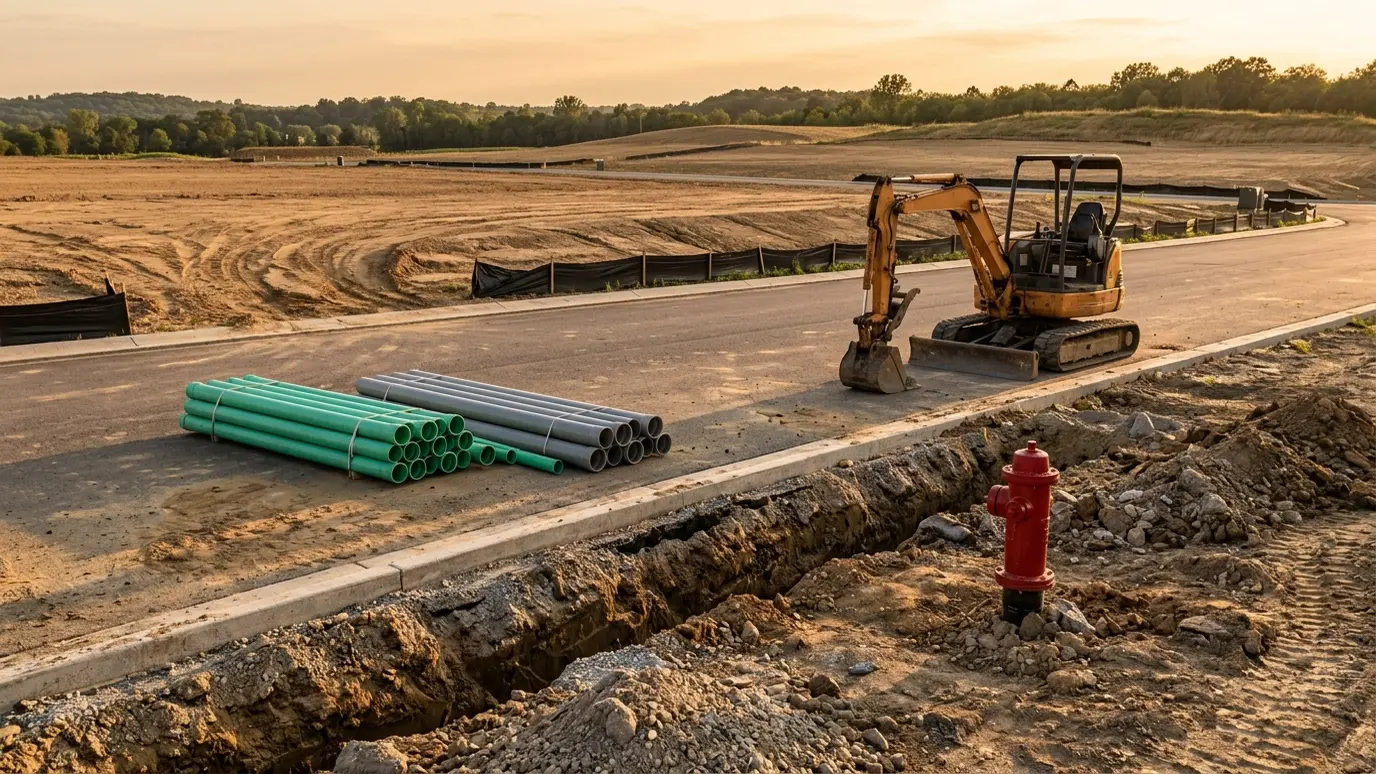 Subdivision UtilitiesWater, sewer, storm drainage, power and communications installed lot by lot and street by street, on a schedule…Explore
Tell us about the job and we will call you back quickly.
Or call (615) 357-7797 to talk now.